HOME HEALTH SERVICES PROVIDER IN ILLINOIS
By Fatumata Kaba · 2025-07-19 · 5 min read
Understanding Home Health Agency Licensing and Enrollment in Illinois
Establishing a Home Health Agency (HHA) in Illinois requires navigating a rigorous regulatory framework designed to ensure that patients receive high-quality, medically necessary care in their own residences. To operate legally, providers must secure licensure from the Illinois Department of Public Health (IDPH) and maintain compliance with the rigorous standards set by the Centers for Medicare & Medicaid Services (CMS) and the Illinois Department of Healthcare and Family Services (HFS).
This process is foundational for organizations aiming to deliver skilled nursing, physical therapy, occupational therapy, and personal care services under the Illinois Medicaid State Plan or Medicare programs. Success in this sector depends on a deep understanding of state licensure statutes, clinical documentation protocols, and the technical requirements for provider enrollment via the IMPACT and PECOS systems.
Who Governs Home Health Service Delivery in Illinois?
The regulatory landscape for Illinois home health providers involves three primary entities, each playing a distinct role in oversight, reimbursement, and compliance. Ensuring your agency remains in good standing requires consistent coordination with these agencies throughout the life of your organization.
- Illinois Department of Public Health (IDPH) — Division of Health Care Facilities and Programs: Acts as the primary regulatory body responsible for licensing home health agencies. IDPH conducts the necessary pre-licensure and periodic surveys to verify that agencies meet all state operational and clinical requirements.
- Illinois Department of Healthcare and Family Services (HFS): Serves as the state’s Medicaid authority. HFS manages the provider enrollment process through the IMPACT system, handles service authorizations, and oversees the reimbursement structures for Medicaid-funded home health services.
- Centers for Medicare & Medicaid Services (CMS): Dictates the federal Conditions of Participation (CoPs). Agencies seeking to serve Medicare beneficiaries must adhere to these national standards, which focus on quality of care, patient safety, and clinical outcomes.
What Are the Essential Steps for Agency Licensure and Certification?
The path to becoming an authorized provider begins with formal business formation and proceeds through a structured series of regulatory milestones. Initial preparation is critical, as the state and federal survey processes are exhaustive and require a high degree of administrative and clinical readiness.
Providers must first register the business entity with the Illinois Secretary of State and obtain an Employer Identification Number (EIN) and a Type 2 National Provider Identifier (NPI). Once the business structure is established, the agency must draft a comprehensive Policy and Procedure Manual. This document is a foundational requirement, serving as the blueprint for how the agency will manage admissions, clinical documentation, emergency protocols, and internal quality assurance.
Following the submission of the licensure application to IDPH, the agency must undergo an on-site survey. This inspection confirms that the facility’s physical and operational systems align with state regulations. For those pursuing Medicare certification, an additional survey by the state on behalf of CMS is required to confirm compliance with federal CoPs. Only after achieving these milestones can an agency finalize enrollment in the Medicaid IMPACT system and the CMS PECOS portal to begin billing for services.
What Clinical and Administrative Staffing is Required?
The quality of a Home Health Agency is defined by the competency of its staff. Illinois regulations mandate specific credentials for key roles to ensure that patients receive care from qualified professionals who are capable of managing complex health needs in a home setting.
- Administrator: Responsible for the daily operations and overall management of the agency; typically requires prior experience in home health operations and successful background clearance.
- Clinical Director / Director of Nursing (DON): Must be a licensed Registered Nurse (RN) with at least one year of supervisory experience in home health to ensure all clinical standards are upheld.
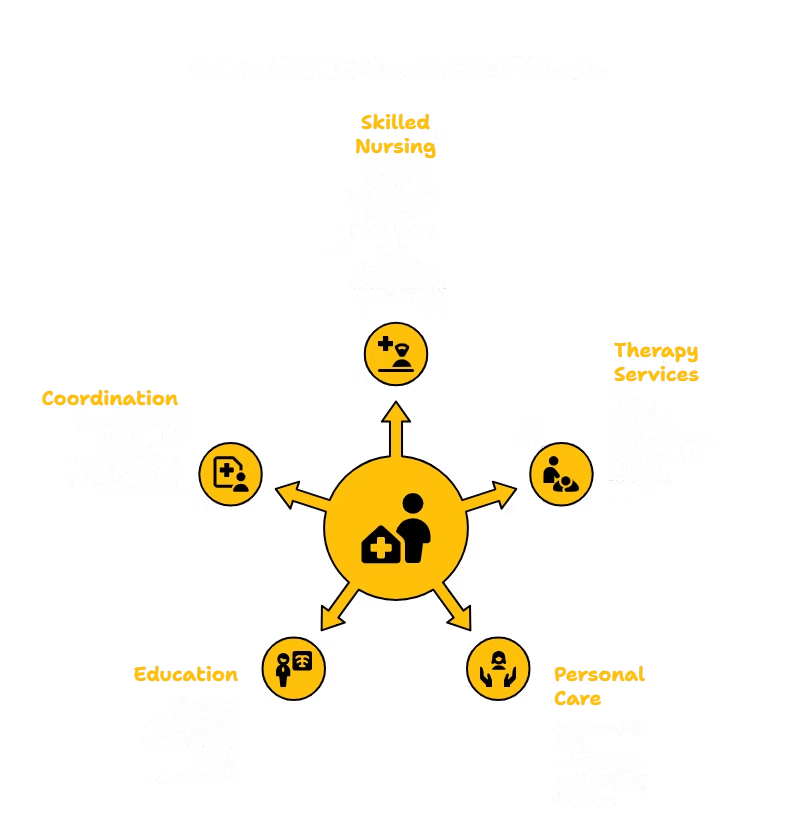
- Direct Care Staff: Includes RNs, LPNs, Physical Therapists, Occupational Therapists, and Speech-Language Pathologists, all of whom must hold active Illinois licensure and current CPR certification.
- Home Health Aides (HHAs): Must complete a state-approved training program and competency evaluation to perform personal care duties such as grooming and toileting.
How Does the Medicaid and Medicare Reimbursement Model Work?
Reimbursement for home health services is contingent upon the medical necessity of the care provided, as ordered by a licensed physician. The Illinois Medicaid State Plan provides coverage for eligible participants, while Medicare Part A offers a benefit for short-term, medically necessary skilled services for patients who meet the specific "homebound" status criteria.
Beyond standard state plan and Medicare services, some participants may be served through various Medicaid Waiver programs. These waivers are designed to allow for expanded in-home service options for targeted populations, such as the elderly or individuals with disabilities. Providers must be proficient in documenting care plans and physician orders, as these records serve as the legal evidence for medical necessity during audit and billing processes.
Frequently Asked Questions
What is the typical timeline to launch a Home Health Agency in Illinois?
The launch process is comprehensive and generally spans several months. Business formation and initial licensing preparation typically take 2–4 months, followed by an additional 2–4 months for staffing and policy development. The IDPH and CMS survey phase can take 3–6 months, while final billing enrollment and system setup require an additional 3–4 months.
Are background checks mandatory for all staff members?
Yes, all administrative and clinical staff must undergo thorough background screenings to maintain compliance with state regulations and to ensure the safety of the patient population being served.
What is the role of the Home Health Policy and Procedure Manual?
The manual is a mandatory regulatory document that outlines every aspect of agency operations, including patient admission, care planning, emergency preparedness, infection control, and HIPAA compliance. It is the primary reference tool for staff and the first document reviewed by surveyors during an inspection.
Professional Guidance for Agency Start-ups
Waiver Consulting Group provides specialized assistance to organizations navigating the complexities of launching home health services in Illinois. From business registration and IDPH licensure applications to the development of robust Policy & Procedure Manuals and Medicaid/Medicare billing setup, professional support helps ensure that agencies are prepared for the rigorous survey and certification process. By aligning clinical documentation systems with state and federal standards, new agencies can focus on delivering high-quality, sustainable care to the communities they serve.
Key Takeaway: Successfully launching a Home Health Agency in Illinois requires a meticulous approach to business formation, strict adherence to IDPH and CMS regulatory standards, and a commitment to maintaining comprehensive, audit-ready clinical and administrative documentation.
Last verified: October 2023. Disclaimer: This information is for educational purposes only and does not constitute legal or professional consulting advice. Regulations are subject to change; always verify current requirements with the Illinois Department of Public Health (IDPH), the Illinois Department of Healthcare and Family Services (HFS), and the Centers for Medicare & Medicaid Services (CMS) before making business decisions.