HOME HEALTH SERVICES PROVIDER IN CONNECTICUT
By Fatumata Kaba · 2025-07-07 · 5 min read
Becoming a Home Health Services provider in Connecticut requires navigating a rigorous regulatory landscape to deliver essential skilled nursing, rehabilitative therapies, and personal care to individuals in their homes. Authorized through the Connecticut Department of Public Health (DPH) and the Department of Social Services (DSS), providers must maintain strict adherence to state statutes and Medicaid compliance standards to support patients effectively while managing chronic conditions or recovering from illness.
Navigating the Regulatory Framework for Connecticut Home Health Care
The operational foundation for any home health agency in Connecticut begins with understanding the specific roles of state and federal governing bodies. The Connecticut Department of Public Health (DPH) serves as the primary licensing authority, responsible for monitoring agencies to ensure they meet the rigorous public health code requirements established for Home Health Care Agencies (HHCAs). Compliance with these standards is the prerequisite for all subsequent legal and operational activities.
Beyond state licensure, the Connecticut Department of Social Services (DSS) manages the reimbursement structures for Medicaid and various home and community-based services (HCBS) programs, including the Connecticut Home Care Program for Elders (CHCPE) and the Personal Care Assistance (PCA) Waiver. Furthermore, if an agency intends to provide services under federal mandates, the Centers for Medicare & Medicaid Services (CMS) oversees Medicare-certified home health operations, ensuring that patient care delivery aligns with federal HCBS waiver compliance mandates.
Establishing Your Agency: Licensing and Provider Enrollment
The journey to becoming a certified provider is a phased process that begins with formal business formation. Entrepreneurs must register their business with the Connecticut Secretary of the State, secure an Employer Identification Number (EIN) from the IRS, and obtain a Type 2 National Provider Identifier (NPI). These administrative steps form the legal identity of the organization required for all regulatory filings.
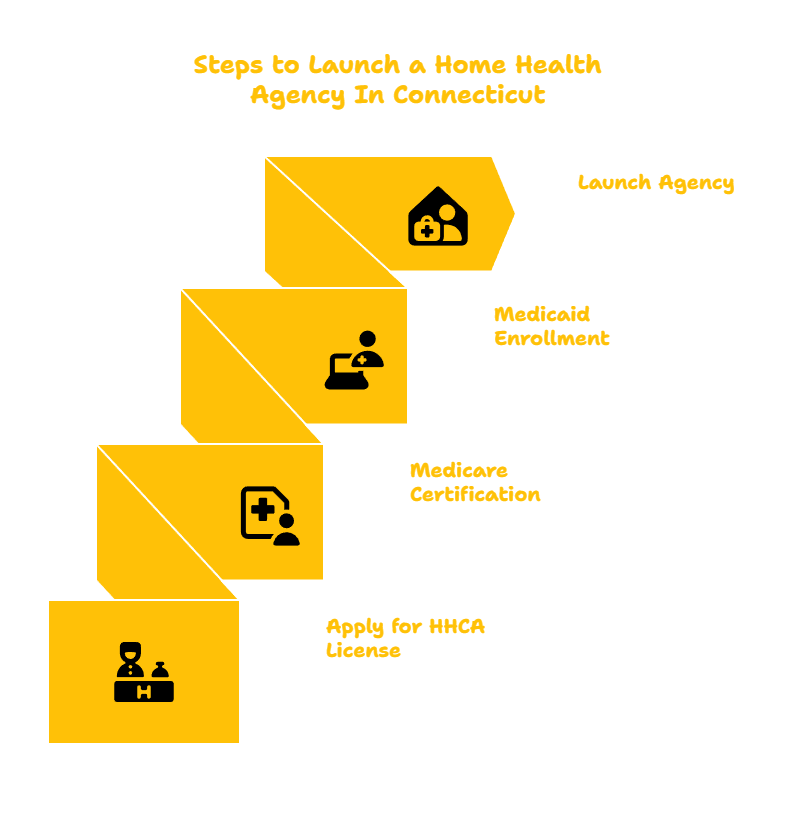
Once the business structure is established, the provider must apply for an HHCA license through the DPH. This process involves submitting comprehensive clinical and operational policies, demonstrating appropriate staffing qualifications, and preparing for an onsite survey. Following the receipt of a DPH license, agencies may choose to pursue optional Medicare certification through CMS, which requires a separate federal survey, before completing final enrollment as a Medicaid provider through the DSS Medicaid Provider Enrollment Portal.
- Register business entity with the Connecticut Secretary of the State.
- Obtain IRS EIN and Type 2 NPI.
- Submit DPH application including policies, staff credentials, and infection control plans.
- Complete onsite DPH inspection.
- Enroll in the DSS Medicaid Provider Portal to link the agency to specific waiver programs.
Clinical Documentation and Operational Requirements
Maintaining high-quality documentation is a core requirement for regulatory compliance and continuity of care. Agencies must develop and implement a robust policy and procedure manual that covers every aspect of the patient journey, from initial admission criteria and plan of care development to detailed medication management logs and HIPAA-compliant record-keeping. Documentation must demonstrate that all services provided are medically necessary and consistent with the participant’s individualized care goals.
Documentation systems should also track home health aide task sheets and electronic visit verification (EVV) to ensure that billing aligns with service delivery. Proper maintenance of clinical staff supervision records, incident reports, and performance evaluations is essential not only for internal quality assurance but also to prepare the agency for periodic state and federal audits. Accuracy in these records validates the agency’s professional standing and ensures continued eligibility for state and federal reimbursements.
Staffing Standards and Professional Qualifications
Success in the home health sector relies on the caliber of the clinical team. The Administrator or Clinical Director must be a Registered Nurse (RN) licensed in Connecticut with documented experience in home health or equivalent supervisory roles. This position serves as the linchpin for clinical oversight, ensuring that the agency’s policies are translated into safe, effective patient care.
Supporting the clinical director is a multidisciplinary team that may include additional RNs, Licensed Practical Nurses (LPNs), and certified Home Health Aides (HHAs). All staff must meet state-mandated training requirements, which include orientation, infection control, and emergency response procedures. Furthermore, agencies may integrate specialized roles such as physical, occupational, and speech therapists, as well as medical social workers, provided they maintain current licensure and meet the necessary clinical supervision standards.
- Administrator/Clinical Director: Must hold a current CT RN license and have home health experience.
- Nursing Staff: RNs and LPNs must be CPR certified and possess active CT licensure.
- Home Health Aides: Must have completed a state-approved training program and cleared background checks.
- Ongoing Training: All personnel require annual skills reviews and specialized training for high-risk care areas.
Integrating Services into Medicaid Waiver Programs
Home Health Services in Connecticut are deeply integrated into various HCBS programs designed to prevent institutionalization and allow residents to age in place. These programs, including CHCPE, the PCA Waiver, and the Acquired Brain Injury (ABI) Waivers I & II, require providers to work closely with care managers and state reassessment teams. Alignment with these waiver goals is essential for reimbursement and program participation.
Providers must be prepared to deliver a comprehensive scope of service that includes skilled nursing, medication management, and ADL support. The ability to effectively coordinate with primary care physicians ensures that the agency’s service delivery remains evidence-based and responsive to the evolving needs of the patient population. As regulatory landscapes shift, staying current with DSS requirements for waiver participation is a critical task for agency leadership.
Frequently Asked Questions
What is the primary difference between DPH licensing and Medicare certification?
DPH licensing is a mandatory state requirement for any agency to operate as a Home Health Care Agency in Connecticut. Medicare certification, however, is a voluntary federal designation that allows an agency to bill the Medicare program for services, requiring adherence to a stricter set of federal Conditions of Participation.
How long should an agency expect the licensing process to take?
The timeline varies based on the agency's readiness. Business formation typically takes 1–2 weeks, while the DPH licensing phase often requires 90–150 days. Medicaid enrollment via the DSS portal generally adds an additional 30–60 days to the process.
What documentation is essential for initial Medicaid enrollment?
Agencies must provide their articles of incorporation, EIN confirmation, NPI, valid DPH HHCA license, and detailed banking information. Additionally, proof of professional liability insurance and comprehensive clinical policy manuals are required during the enrollment process.
Key Takeaway
Launching a Home Health Services provider in Connecticut requires a methodical approach that balances rigorous clinical standards with complex administrative compliance. By focusing on establishing a solid regulatory foundation through DPH and DSS, maintaining detailed documentation, and prioritizing high-quality, credentialed staffing, healthcare entrepreneurs can build a sustainable agency that effectively serves the Connecticut home-based care market.
Last verified: August 2024. This article is for informational purposes only and does not constitute legal or professional consulting advice. Requirements for Medicaid and state-funded programs are subject to change; always verify current regulations through the Connecticut Department of Social Services (DSS) and the Connecticut Department of Public Health (DPH) official portals.