HOME HEALTH SERVICES PROVIDER IN COLORADO
By Fatumata Kaba · 2025-07-06 · 5 min read
Home Health Services in Colorado provide essential medical, rehabilitative, and personal care to individuals recovering from illness, managing chronic conditions, or requiring support to remain in their own homes rather than in institutional settings. These services are reimbursed under the Colorado Medicaid State Plan and are frequently accessed through Home and Community-Based Services (HCBS) waivers, such as the Elderly, Blind, and Disabled (EBD) waiver, to ensure comprehensive care delivery in the community.
Launching a Home Health Agency requires navigating a rigorous regulatory landscape overseen by the Colorado Department of Health Care Policy and Financing (HCPF), the Colorado Department of Public Health and Environment (CDPHE), and federal guidance from the Centers for Medicare & Medicaid Services (CMS). This guide outlines the essential steps for providers to achieve licensure, enrollment, and operational readiness within the Colorado Medicaid ecosystem.
What Are the Primary Regulatory Agencies and Oversight Roles?
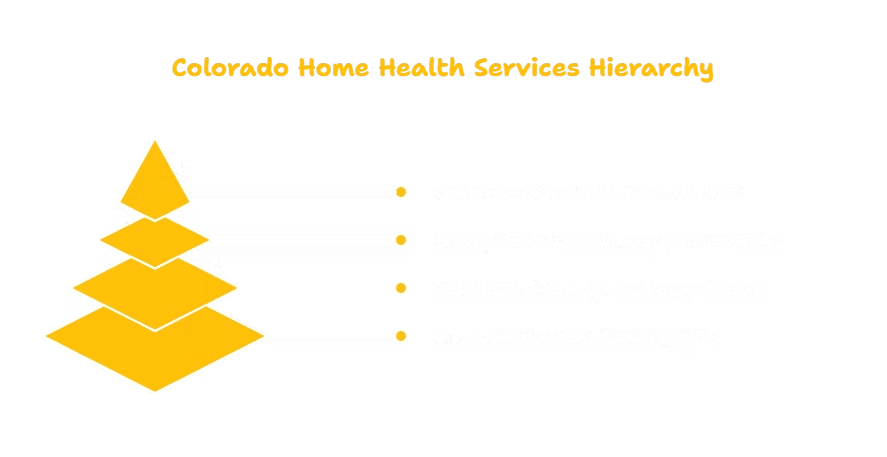
The Colorado home health landscape is governed by a tripartite structure of state and federal agencies. Understanding the unique role of each is critical for maintaining compliance and securing reimbursement. The Colorado Department of Health Care Policy and Financing (HCPF) serves as the primary authority for Medicaid reimbursement and policy development, ensuring that services provided to Medicaid members adhere to state plan requirements.
Complementing HCPF, the Colorado Department of Public Health and Environment (CDPHE) acts as the licensing body for all Class A Home Care Agencies. They are responsible for conducting facility inspections, verifying clinical safety protocols, and ensuring that providers meet the standard of care required to deliver skilled medical services. On a federal level, the Centers for Medicare & Medicaid Services (CMS) sets the national framework and guidance for Medicaid-covered home health services, which informs both state policy and provider Conditions of Participation.
How Do Providers Obtain Licensure and Medicaid Enrollment?
The path to becoming an approved provider begins with establishing the legal business structure, which includes registering with the Colorado Secretary of State, obtaining an Employer Identification Number (EIN) from the IRS, and securing a Type 2 National Provider Identifier (NPI). Once the legal foundation is established, the agency must seek a Class A Home Care Agency license from the CDPHE, which involves submitting detailed clinical policies and safety protocols for review followed by a formal inspection.
Following licensure, the provider must enroll in the Colorado Medicaid program via the Gainwell Medicaid Provider Portal. This stage requires the submission of all licensure documentation, staff qualifications, and business registrations. If a provider intends to seek dual certification to serve Medicare beneficiaries, they must also meet the federal Medicare Conditions of Participation. Building a robust referral network with hospitals, physician offices, and Case Management Agencies (CMAs) is the final operational hurdle to ensure consistent service authorization and client intake.
Which Services Are Authorized Under Medicaid and Waiver Programs?
Home Health Services in Colorado are designed to provide both short-term recovery support and long-term management of chronic health conditions. These services are strictly provided under a physician’s order and must be documented as medically necessary. By delivering care in the patient’s home, agencies effectively prevent unnecessary hospitalizations and support long-term health outcomes.
Approved providers are authorized to deliver a diverse range of clinical and supportive services, including:
- Skilled nursing visits, such as complex wound care, IV therapy, and medication administration.
- Physical, occupational, and speech therapy sessions aimed at functional improvement.
- Certified Nursing Aide (CNA) support for Activities of Daily Living (ADLs) under nurse supervision.
- Medical social work services and comprehensive care coordination.
- Continuous health status assessments, patient and family education, and real-time physician communication.
What Are the Essential Documentation and Policy Requirements?
Compliance hinges on the maintenance of a comprehensive policy and procedure manual. This documentation is the cornerstone of any Medicaid audit and must cover the entire lifecycle of a patient’s care, from admission and initial physician order verification to incident reporting and discharge planning. Agencies must demonstrate that every service rendered is supported by clinical notes, therapy plans, and updated care plans.
Key components of the required policy manual include:
- Infection control and emergency response plans to ensure patient safety.
- Strict HIPAA compliance protocols to protect patient confidentiality.
- Detailed templates for nursing and therapy documentation to ensure billing accuracy.
- Standardized procedures for incident reporting and identifying changes in a patient's condition.
- Formal staff credentialing processes, including ongoing CEU tracking and supervision documentation.
- Established protocols for client rights, informed consent, and formal service agreements.
What Are the Staffing and Training Requirements for Home Health Agencies?
The quality of care in home health is directly tied to the qualifications of the field staff. All Registered Nurses (RNs) must hold an active Colorado nursing license and demonstrate competency in skilled nursing, CPR, and infection control. Similarly, CNAs must be licensed in Colorado and work under the direct supervision of an RN to provide high-quality ADL support. Therapists—including physical, occupational, and speech therapists—must also hold current state licensure and possess specialized experience in a home-based care setting.
Beyond individual licensure, agencies are responsible for comprehensive, recurring staff training. Mandatory training areas include:
- Comprehensive infection control, HIPAA awareness, and emergency safety training.
- Specific protocols for abuse prevention and mandatory incident reporting.
- Standardized documentation training to ensure compliance with the Plan of Care.
- Annual Continuing Education Units (CEUs) and site-specific in-service training to stay current with evolving HCPF regulations.
Frequently Asked Questions
What is the typical timeline for launching a Home Health Agency in Colorado?
The launch process is sequential. Business formation typically takes 1–2 weeks, while the CDPHE licensing process generally spans 60–90 days. Following licensure, Medicaid enrollment through the Gainwell portal can take an additional 30–60 days, with referral network development functioning as an ongoing, long-term process.
Which Medicaid programs reimburse for home health services?
Services are reimbursed through the Colorado Medicaid State Plan as well as several HCBS waivers, including the Elderly, Blind, and Disabled (EBD) waiver, the Brain Injury (BI) waiver, and various Children’s HCBS waivers such as CHCBS and CLLI.
Does the state require specific liability insurance for providers?
Yes, providers are required to maintain appropriate business coverage, including general liability, professional liability, and workers’ compensation insurance, as part of the operational and licensure requirements to protect both the agency and the patients served.
Key Takeaway: Successfully operating a home health agency in Colorado requires a dual focus: meeting the rigorous clinical and safety standards mandated by CDPHE for licensure, and maintaining the documentation precision required by HCPF for Medicaid reimbursement. By prioritizing compliance, credentialed staffing, and strong relationships with Case Management Agencies, providers can deliver essential care to the most vulnerable members of the community.
Last verified: October 2023. This information is for educational purposes only and does not constitute legal or professional advice. Always consult with the Colorado Department of Health Care Policy and Financing (HCPF) or a qualified consultant for the most current regulations and specific compliance guidance.