HOME HEALTH SERVICES PROVIDER IN ARIZONA
By Fatumata Kaba · 2025-07-01 · 5 min read
DELIVERING SKILLED MEDICAL CARE AND PERSONALIZED SUPPORT TO INDIVIDUALS IN THE COMFORT OF THEIR OWN HOMES
Home health services in Arizona are essential clinical and supportive interventions designed to assist individuals with chronic conditions, disabilities, or recovery needs within their own residences. By providing skilled medical care and personalized support, these services empower patients to maintain their independence while effectively avoiding the need for institutionalized care settings such as nursing facilities.
Operating under the Arizona Long Term Care System (ALTCS) and various Home and Community-Based Services (HCBS) waivers, these programs require rigorous adherence to state licensing and federal Medicaid requirements. Providers must coordinate closely with the Arizona Health Care Cost Containment System (AHCCCS) and, when applicable, the Department of Economic Security (DES) Division of Developmental Disabilities (DDD) to ensure that care delivery meets all regulatory standards for safety and efficacy.
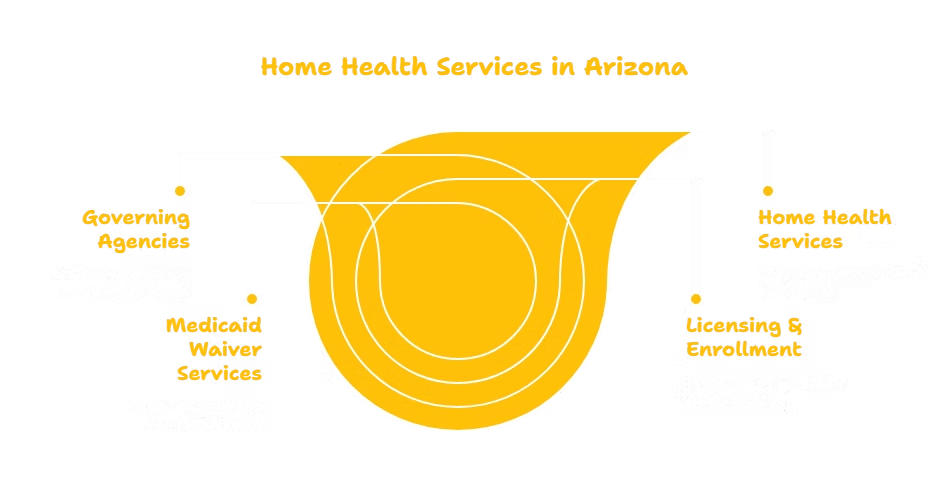
What Are the Governing Agencies and Oversight Roles for Arizona Home Health?
The regulatory framework for home health providers in Arizona is multi-layered, ensuring that clinical standards, fiscal integrity, and beneficiary rights are strictly maintained. Agencies operate in tandem to oversee different facets of the operational lifecycle, from the initial facility licensing to the complexities of Medicaid reimbursement.
The primary governing bodies include:
- Arizona Department of Health Services (ADHS) – Bureau of Medical Facilities Licensing: Responsible for the initial and ongoing licensure of home health agencies, ensuring all operations comply with state medical care standards and safety protocols.
- Arizona Health Care Cost Containment System (AHCCCS): Manages the state’s Medicaid program, overseeing provider enrollment, reimbursement structures, and overall program compliance.
- Arizona Department of Economic Security (DES) – Division of Developmental Disabilities (DDD): Manages waiver services specifically for individuals with developmental disabilities and oversees Qualified Vendor authorizations.
- Centers for Medicare & Medicaid Services (CMS): Provides the overarching federal guidance and regulatory framework for Medicaid-funded home health services.
What Services Do Home Health Agencies Provide Under Medicaid?
Home health services are defined by their clinical necessity and focus on stabilizing or improving a patient’s health status in a home-based environment. All services must be ordered by a physician or explicitly included in an individual’s person-centered care plan. Delivery must be performed by licensed professionals who operate under the direct or indirect supervision of a registered nurse or a designated medical director.
Authorized services commonly include:
- Skilled nursing care, such as complex wound care, administration of injections, catheter maintenance, and medication management.
- Licensed Practical Nurse (LPN) services, performed under the active supervision of a Registered Nurse (RN).
- Home Health Aide services for activities of daily living (ADLs) and fundamental personal care.
- Physical, occupational, or speech therapy services, if the agency is licensed and authorized to provide them.
- Comprehensive medical monitoring, health education for family caregivers, and ongoing care coordination.
How Do Providers Navigate Licensing and Medicaid Enrollment?
The path to becoming an approved provider is a structured process requiring attention to detail across administrative and clinical domains. Founders must first establish a legal business entity, obtain tax and identification credentials, and secure appropriate liability and malpractice insurance. Following business formation, the agency must move through sequential phases of regulatory approval.
The process generally involves these critical steps:
- ADHS Licensing: Submit a formal home health agency license application to the ADHS, which includes preparation for a comprehensive inspection of clinical protocols, staff files, and facility safety procedures.
- AHCCCS Enrollment: Register as a Medicaid provider through the AHCCCS portal. This requires the submission of licensure verification, NPI documentation, and the setup of the portal for future claims submission.
- QVADS Application (For DDD Providers): Agencies intending to serve DDD members must apply through the Qualified Vendor Application and Directory System (QVADS), providing staffing plans and agency profiles to obtain a vendor contract.
What Are the Essential Staffing and Operational Policies?
Maintaining high-quality care requires adherence to strict staffing requirements and the implementation of robust internal policies. A successful agency must appoint a Clinical Administrator or Director of Nursing who holds an active Arizona RN license and possesses relevant home health experience. Staffing models typically include RNs, LPNs, and certified Home Health Aides, all of whom must be trained in infection control, HIPAA compliance, and emergency response.
Comprehensive agency documentation should include:
- Clearly defined clinical intake procedures and a system for managing physician orders.
- Established standards for nursing documentation, including care notes, medication logs, and tracking systems.
- Protocols for incident reporting, grievance processes, and client rights protection.
- Standardized staff supervision, ongoing continuing education, and annual skills assessment logs.
Frequently Asked Questions
How long does the licensing and enrollment process typically take?
The timeline varies based on the agency's readiness and the response times of the regulatory bodies. Business formation takes 1–2 weeks; the ADHS licensing and survey preparation takes 60–90 days; AHCCCS enrollment takes 45–60 days; and QVADS applications generally range from 30–60 days.
Are Home Health Services available under the ALTCS waiver?
Yes, home health services are authorized under the ALTCS Elderly and Physically Disabled (EPD) waiver, as well as the ALTCS Division of Developmental Disabilities (DDD) waiver, Children’s Rehabilitative Services (CRS), and the Arizona Early Intervention Program (AzEIP).
What are the primary operational requirements for a new agency?
Agencies must register with the Arizona Corporation Commission, obtain an EIN and NPI (Type 2), secure an ADHS Home Health Agency license, enroll with AHCCCS as a Medicaid provider, and ensure all staff are properly credentialed and trained in HIPAA-compliant documentation practices.
Key Takeaway
Launching and maintaining a successful home health agency in Arizona requires a proactive approach to regulatory compliance, precise clinical documentation, and a deep understanding of the AHCCCS and DDD environments. By ensuring that all licensing, credentialing, and staffing protocols are met early in the development phase, providers can focus on their core mission of delivering essential medical care to vulnerable populations within the state’s waiver programs.
Last verified: May 2024. Disclaimer: This article is for informational purposes only and does not constitute legal or professional advice. Requirements for Medicaid and state licensing are subject to change; always consult with the relevant state agencies or a professional consultant for the most current regulations.