HOME HEALTH CARE SERVICES PROVIDER IN MISSOURI
By Fatumata Kaba · 2025-08-07 · 5 min read
Home Health Care Services in Missouri provide essential clinical and personal support to individuals with disabilities, chronic health conditions, or those recovering from acute medical events within their own homes. These services, administered through the Missouri Department of Health and Senior Services (DHSS) and the Department of Social Services (DSS), are critical components of the Home and Community-Based Services (HCBS) Waiver landscape designed to improve patient outcomes, maintain independence, and reduce reliance on institutionalized care.
What Are the Governing Agencies and Regulatory Frameworks?
The delivery of home health services in Missouri is governed by a multi-tiered regulatory structure that ensures compliance with both state health standards and federal Medicaid requirements. The Missouri Department of Health and Senior Services (DHSS) serves as the primary regulatory body, overseeing the licensing of home health agencies and ensuring that clinical practices meet state health safety benchmarks. Their role is fundamental to patient welfare and agency legitimacy.
The Missouri Department of Social Services (DSS) manages the intersection of clinical care and financial reimbursement. DSS oversees the Medicaid provider enrollment process, service authorization, and payment processing, ensuring that care delivered under the HCBS waivers aligns with programmatic budgets and patient eligibility. Finally, the Centers for Medicare & Medicaid Services (CMS) provides federal oversight, setting the overarching standards for waiver compliance that Missouri must maintain to receive federal matching funds.
- Missouri Department of Health and Senior Services (DHSS): Administers Medicaid and HCBS Waiver programs and enforces clinical licensing standards.
- Missouri Department of Social Services (DSS): Oversees Medicaid provider enrollment, claims processing, and service authorization.
- Centers for Medicare & Medicaid Services (CMS): Provides federal oversight and ensures state-level compliance with federal waiver requirements.
How Can You Navigate the Home Health Agency Licensing and Enrollment Process?
Launching a home health agency requires strict adherence to a sequenced administrative pathway. Before providing clinical services, an organization must be legally recognized by the state, which begins with registering the business with the Missouri Secretary of State. Following legal formation, the organization must secure an Employer Identification Number (EIN) from the IRS and a Type 2 National Provider Identifier (NPI) for claims billing purposes.
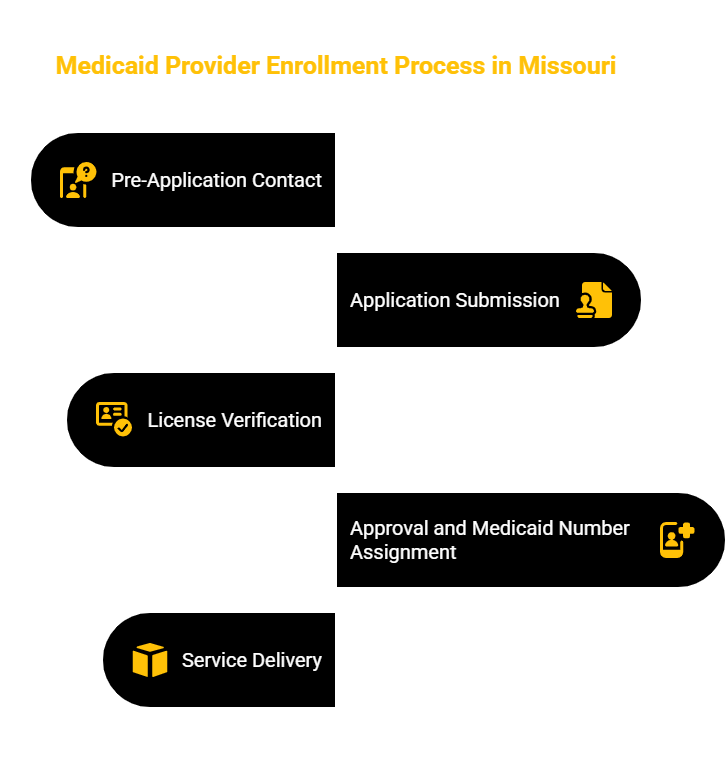
The operational phase involves securing a Home Health Agency License through the DHSS. This license validates the agency’s ability to provide medical and personal care. Once the license is issued, the organization must navigate the DSS Medicaid provider enrollment process. This involves submitting business documentation, proof of liability insurance, and detailed clinical service descriptions to confirm eligibility to receive Medicaid reimbursement for services rendered under approved HCBS waivers.
- Register the business with the Missouri Secretary of State.
- Obtain an EIN from the IRS and a Type 2 NPI.
- Secure a Home Health Agency License from the DHSS.
- Complete the Medicaid provider enrollment application with the DSS.
What Constitutes the Scope of Home Health Care Services?
Home health care services are dictated by the Individual Service Plan (ISP) or Person-Centered Plan (PCP) established for each client. These services are designed to address both acute medical needs and ongoing chronic disease management. Agencies are responsible for maintaining a clinical environment that supports complex medical requirements while ensuring the patient’s comfort and autonomy within their residence.
Commonly provided services include skilled nursing interventions such as wound care and IV therapy, as well as rehabilitative services like physical, occupational, and speech therapy. Additionally, agencies play a vital role in medication management, chronic disease monitoring, and patient education. Personal care assistance, including help with activities of daily living (ADLs) such as bathing, grooming, and mobility, is frequently integrated into the care plan to ensure holistic support.
- Skilled nursing care (wound care, IV therapy).
- Physical, occupational, and speech therapy services.
- Medication management, administration, and patient education.
- Chronic disease management (diabetes, heart failure).
- Personal care assistance (bathing, grooming, mobility).
What Are the Staffing and Documentation Requirements?
Operational success hinges on maintaining a qualified, credentialed staff. The Program Manager, typically a Registered Nurse (RN) with specialized experience in home healthcare management, oversees clinical operations and ensures regulatory adherence. Direct care staff, including additional RNs, Licensed Practical Nurses (LPNs), and Certified Nursing Assistants (CNAs), must hold active state licenses or certifications and demonstrate competency in their respective fields.
Documentation is the backbone of compliance. Agencies must maintain a comprehensive policy and procedure manual that covers infection control, medication protocols, and emergency safety. Furthermore, every interaction must be documented through patient progress logs, which are essential for audit purposes and communication with the interdisciplinary care team. Staff must undergo regular training on health monitoring, patient communication strategies, and the specific requirements associated with the HCBS waiver programs they serve.
Which Medicaid Waivers Cover Home Health Care Services?
Missouri offers several Medicaid waiver programs designed to provide alternatives to institutional care. Agencies must be authorized to provide services under these specific programs to receive reimbursement for the clinical care provided to participants. These waivers prioritize keeping participants in their communities by funding essential home-based medical and support services.
The primary waivers include the Aged and Disabled Waiver (ADW), the Independent Living Waiver, and the Medically Fragile Adult Waiver. Each waiver has specific eligibility criteria and service limits, necessitating a thorough understanding of the requirements for each program. Approved providers under these waivers facilitate critical skilled nursing, rehabilitative therapies, and personal care services that align with the specific health goals of the waiver participants.
- Aged and Disabled Waiver (ADW): Focuses on supporting elderly individuals and those with disabilities to remain at home.
- Independent Living Waiver: Designed for individuals who require supports to maintain an independent lifestyle.
- Medically Fragile Adult Waiver: Provides intensive services for adults with complex medical conditions.
Frequently Asked Questions
What is the typical timeline to launch a home health agency?
The launch timeline varies based on administrative efficiency, but generally spans several months. Business formation takes 1–2 weeks, clinical setup and safety compliance takes 2–4 weeks, staff hiring and training takes 30–45 days, and Medicaid provider enrollment typically requires 60–90 days.
Are all home health care staff required to have a clinical license?
Not necessarily. While RNs and LPNs must hold active nursing licenses, CNAs and Home Health Aides (HHAs) must hold appropriate certifications. All staff, regardless of clinical status, must clear background checks and TB screenings to meet health and safety standards.
What is the primary role of the Program Manager?
The Program Manager must be a licensed Registered Nurse with experience in home healthcare management. They are responsible for overseeing the clinical care of patients, managing staff competencies, and ensuring that the agency’s operations comply with both DHSS licensing and DSS Medicaid regulations.
Key Takeaway
Establishing a successful Home Health Care provider agency in Missouri requires a rigorous commitment to the regulatory standards set by the DHSS and DSS. By prioritizing compliant policy and procedure documentation, maintaining a highly trained clinical workforce, and strictly adhering to the service requirements of the Aged and Disabled, Independent Living, and Medically Fragile Adult waivers, administrators can effectively deliver high-quality, reimbursable care to Missouri’s most vulnerable populations.
Last verified: August 2024. This content is provided for informational purposes only and does not constitute legal or professional advice. Please consult directly with the Missouri Department of Health and Senior Services or the Missouri Department of Social Services for official guidance regarding provider enrollment and regulatory compliance.