HOME HEALTH CARE SERVICES PROVIDER IN MAINE
By Fatumata Kaba · 2025-08-12 · 5 min read
SUPPORTING INDIVIDUALS’ INDEPENDENCE AND WELL-BEING THROUGH IN-HOME MEDICAL AND SUPPORTIVE CARE
Home health care services in Maine provide essential medical and non-medical support that enables seniors and individuals with disabilities to maintain their independence within their own homes. These services, supported by MaineCare (Maine’s Medicaid program), Medicare, and private insurance, are critical for managing chronic conditions and facilitating recovery after hospitalization.
What are the Regulatory and Governing Agencies for Maine Home Health Providers?
The regulatory landscape for home health providers in Maine is structured to ensure that high standards of care and federal compliance are consistently met. At the state level, the Maine Department of Health and Human Services (DHHS) oversees the licensing and regulation of agencies and the administration of Home and Community-Based Services (HCBS) Waiver programs.
The Office of MaineCare Services is responsible for administering the Medicaid-funded portions of home health and personal support, specifically under Section 40 and Section 19 waivers. Furthermore, the Division of Licensing and Certification (DLC) acts as the primary regulatory body for licensing home health agencies and conducting necessary compliance inspections. Finally, the Centers for Medicare & Medicaid Services (CMS) provides federal oversight to ensure Maine’s programs align with national HCBS standards, protecting beneficiary health and welfare.
What Scope of Services and Clinical Standards are Required?
Home health care providers are expected to offer a comprehensive suite of services that address both medical acuity and personal daily living needs. These services generally include skilled nursing, such as complex wound care and medication management, alongside physical, occupational, and speech therapy. Non-medical support, such as assistance with bathing, dressing, toileting, and basic homemaker services, is also a vital component of the care plan.
Crucially, all services must be ordered by a physician and must be strictly aligned with the individual’s person-centered service plan (PCSP). Beyond direct care, providers are expected to facilitate care coordination, case management, and, where appropriate, implement telehealth support and monitoring to ensure consistent oversight of the client’s condition.
- Skilled nursing (e.g., wound care, medication management)
- Physical, occupational, and speech therapy
- Personal support (e.g., bathing, dressing, toileting)
- Homemaker services (e.g., light housekeeping, laundry)
- Care coordination and case management
- Telehealth support and monitoring
What are the Licensing and Provider Approval Prerequisites?
Establishing a home health agency requires a disciplined, multi-step approach to documentation and regulatory adherence. Before entering the market, founders must register their business entity with the Maine Secretary of State and secure a federal EIN and a Type 2 NPI. These foundational elements allow the agency to function as a legal entity and a recognized healthcare provider in the eyes of the government.
The core of the authorization process involves obtaining a Home Health Agency (HHA) license through the Division of Licensing and Certification. Following this, the agency must enroll as a Medicaid provider through the Health PAS Online Portal. Success in these applications hinges on the submission of comprehensive liability insurance, clinical policies, and robust staff credentialing procedures that meet the specific requirements outlined by Maine state regulations.
How Do Providers Navigate MaineCare Enrollment and Waiver Participation?
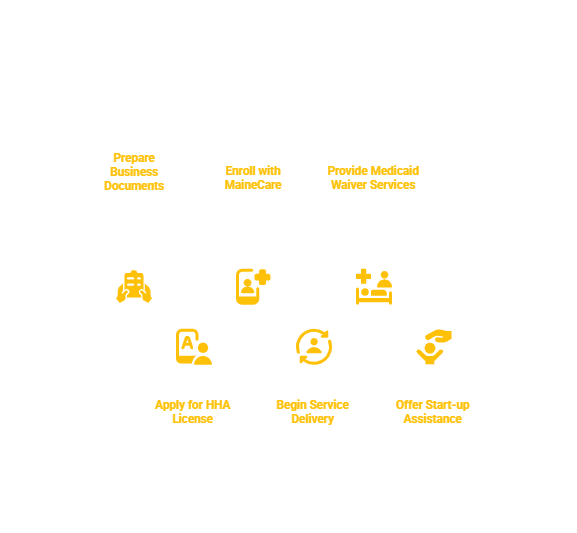
The path to becoming an active provider involves four distinct phases, beginning with the internal preparation of business and clinical documents. Agencies must develop a detailed organizational chart, internal policies and procedures, and strict HIPAA compliance protocols. Ensuring that staff background checks are completed and professional licensure is verified during this phase is essential for a smooth application.
Once internal structures are in place, the agency must apply for an HHA license via the DLC, which may include an on-site survey to verify operational readiness. After receiving the license, the final step involves completing the MaineCare provider enrollment through the Health PAS Online portal for specific program sections, such as Section 19 or Section 40. Once approved, the agency can begin accepting referrals from case managers and hospital discharge planners, integrating their services into the existing continuum of care.
What Operational Documentation and Staffing Standards Must Be Met?
Operational success is maintained through meticulous documentation. Every agency must possess a comprehensive policy and procedure manual that covers physician orders, plan of care templates, incident reporting, and medication administration logs. Furthermore, the agency must maintain clear records regarding infection control, emergency response plans, and documented evidence of client rights and grievance procedures.
Staffing requirements are rigorous to ensure patient safety. Registered Nurses (RNs) must hold a current Maine license, CPR certification, and relevant experience. Home Health Aides (HHAs) must hold a CNA license or equivalent training and remain under the direct supervision of an RN. Additionally, all staff must undergo mandatory training on HIPAA, infection control, home safety, and emergency documentation, with annual continuing education requirements to keep clinical skills sharp and compliant.
Frequently Asked Questions
What is the typical timeline for launching a home health agency in Maine?
The timeline varies based on operational readiness. Business formation typically takes 1–2 weeks, while the state licensure application process via the DLC can take 30–90 days, potentially including an on-site survey. MaineCare enrollment usually takes an additional 30–60 days after licensure is granted.
Which MaineCare sections are most relevant for home health providers?
Providers generally focus on Section 40 for Home Health Services, Section 19 for the Elderly and Adults with Disabilities Waiver, and Section 96 for Private Duty Nursing, depending on the specific clinical services the agency is authorized to provide.
What resources are available for administrative and compliance support?
Agencies can utilize resources from the Maine Division of Licensing and Certification, the Office of MaineCare Services, and the Health PAS Online Portal. These entities provide the necessary forms, policy guidelines, and enrollment tools required for maintaining a compliant and successful operation.
Key Takeaway
Success as a home health provider in Maine requires a commitment to regulatory excellence and clear, systematic administrative workflows. By aligning business operations with the specific requirements of the DLC and the Office of MaineCare Services, founders can build sustainable agencies that effectively serve the needs of Maine’s vulnerable populations while remaining fully compliant with state and federal healthcare standards.
Last verified: October 2023. This information is for educational purposes only and does not constitute legal or professional advice. Requirements and regulations are subject to change. Please consult the official Maine DHHS and MaineCare websites or a qualified professional for the most current information regarding licensing and enrollment.