HOME-DELIVERED MEALS SERVICES PROVIDER IN DELAWARE
By Fatumata Kaba · 2025-07-07 · 5 min read
Nourishing individuals at home with balanced meals that support health, independence, and well-being.
Home-Delivered Meals Services in Delaware provide nutritionally balanced, ready-to-eat, or reheat-and-serve meals to individuals who are homebound due to disability, illness, or age-related limitations. These services are vital for maintaining the health and stability of participants and are covered under the Delaware Lifespan Waiver, certain Medicaid State Plan options, and programs administered by the Division of Services for Aging and Adults with Physical Disabilities (DSAAPD).
What Are the Governing Agencies and Regulatory Oversight?
The delivery of home-based nutrition services in Delaware is a coordinated effort between several state divisions to ensure participant safety and nutritional adequacy. Understanding the roles of these agencies is the first step in establishing a compliant and effective service model. Providers must maintain adherence to both state-level requirements and federal guidelines established by the Centers for Medicare & Medicaid Services (CMS).
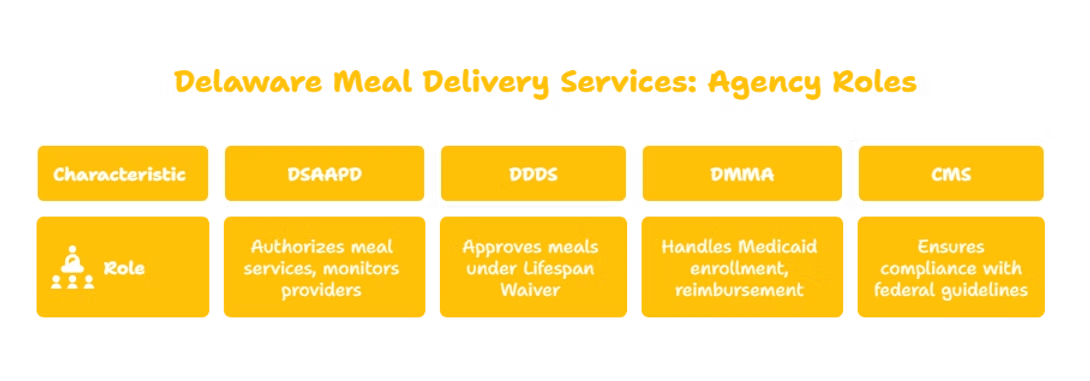
Agency oversight includes:
- Delaware Division of Services for Aging and Adults with Physical Disabilities (DSAAPD): Authorizes meal services for older adults and adults with disabilities and monitors provider performance.
- Delaware Division of Developmental Disabilities Services (DDDS): Approves Home-Delivered Meals under the Lifespan Waiver for eligible individuals.
- Delaware Division of Medicaid and Medical Assistance (DMAP/DMMA): Handles Medicaid enrollment and processes reimbursement for eligible meal services.
- Centers for Medicare & Medicaid Services (CMS): Ensures ongoing compliance with federal HCBS waiver guidelines.
How Do Providers Meet Service and Nutritional Standards?
Home-Delivered Meals Services are designed to support individuals who are unable to prepare their own food and lack reliable caregiver support. Because these meals often serve as a primary source of nutrition for vulnerable populations, providers must ensure every meal meets rigorous standards. This includes not just the quality of the food, but the logistics of delivery and the observation of the participant's well-being.
Approved providers are expected to execute the following service components:
- Daily or weekly delivery of hot, chilled, or frozen meals.
- Adherence to menus aligned with USDA and state dietary standards.
- Provision of specialty meals (e.g., diabetic, low-sodium, puree) as ordered by the care plan.
- Performance of wellness checks at the time of delivery to monitor for sudden health or safety concerns.
- Diligent documentation of all deliveries, non-delivery attempts, and regular communication with care managers.
What Are the Prerequisites for Licensing and Provider Approval?
Entering the Delaware HCBS market as a meal provider requires a structured approach to business foundation and regulatory compliance. Before a provider can be authorized to receive Medicaid or state-funded reimbursement, they must establish a legal business entity and secure the necessary infrastructure to handle food safety and delivery logistics.
Key prerequisites include:
- Registering the business with the Delaware Division of Corporations.
- Obtaining an Employer Identification Number (EIN) from the IRS and a Type 2 National Provider Identifier (NPI).
- Enrollment as a Medicaid waiver provider through the Delaware Medical Assistance Program (DMAP).
- Securing access to a commercial or state-licensed kitchen, whether owned by the provider or a vetted partner vendor.
- Meeting all food safety requirements enforced by the Delaware Division of Public Health (DPH).
- Maintaining robust commercial liability and vehicle insurance policies to protect the business and its participants.
How Is the Provider Enrollment Process Sequenced?
The transition from a business concept to an authorized provider involves a multi-step enrollment process. It is critical to address kitchen and food safety compliance early, as these are foundational to receiving approval from the governing state agencies. Providers should anticipate a timeline spanning several months for full operational status.
The standard sequence for enrollment follows these phases:
- Step 1 (Business Formation): Secure a licensed kitchen or formalize a subcontracting agreement with an existing approved vendor. Ensure all food safety inspections are passed.
- Step 2 (Medicaid/Waiver Enrollment): Apply as a waiver service provider under the Lifespan Waiver via the DMAP portal. Submit all required business credentials and delivery protocols.
- Step 3 (Contracting): Apply to become a DSAAPD meals provider by responding to relevant RFPs or establishing direct contracts for aging-population services.
- Step 4 (Service Coordination): Coordinate directly with DDDS or individual care coordinators to receive referrals and service authorizations for eligible participants.
What Are the Required Documentation and Staffing Standards?
Operational success relies heavily on the ability to produce, deliver, and document services in a manner that satisfies state audits. Providers must maintain a comprehensive policy and procedure manual that covers everything from intake assessments to emergency protocols. Additionally, staffing must be handled with care, as delivery personnel act as the eyes and ears of the health system in the participant's home.
Staffing and documentation requirements include:
- Staffing Requirements: All delivery personnel must pass background checks, complete First Aid training, and hold a valid driver's license. Food service coordinators should demonstrate expertise in nutrition and dietary accommodations.
- Training Mandates: Staff must be trained in HIPAA compliance, mandatory reporting of abuse, and incident response protocols.
- Required Documentation: Providers must maintain detailed files including Articles of Incorporation, food safety certificates, liability insurance, and comprehensive logs for intake, delivery, and grievance management.
Frequently Asked Questions
Is prior experience in food service required to become a provider?
While industry experience is beneficial, the primary requirement is the ability to maintain compliance with Delaware’s food safety regulations and Medicaid documentation standards. Partnering with a licensed commercial kitchen vendor is a common path for new entrants to meet health safety standards.
How are meal providers reimbursed for their services?
Reimbursement is managed through the Delaware Medicaid system for waiver participants or directly through DSAAPD for specific Older Americans Act-funded meal services. Providers must submit claims through the approved Medicaid provider portal after verifying that all services were authorized and delivered in accordance with the participant’s care plan.
What should a provider do if a client is not home for a delivery?
Providers must follow a formal "missed delivery" protocol outlined in their policy and procedure manual. This typically involves documenting the attempt, attempting to contact the participant or their emergency contact, and notifying the assigned care manager immediately to ensure the individual's safety.
Key Takeaway
Establishing a Home-Delivered Meals service in Delaware requires a blend of rigorous food safety compliance, meticulous administrative record-keeping, and proactive coordination with DSAAPD and DDDS. By prioritizing HIPAA-compliant delivery documentation and maintaining active, verified relationships with Medicaid enrollment authorities, agencies can ensure long-term stability and success in supporting Delaware’s most vulnerable residents.
Last verified: October 2023. Disclaimer: This information is for educational purposes only and does not constitute legal or professional medical advice. Please consult with the Delaware Division of Services for Aging and Adults with Physical Disabilities (DSAAPD) and the Delaware Division of Medicaid and Medical Assistance (DMMA) for current state-specific regulations and requirements.