HOME CARE TECHNOLOGY SERVICES PROVIDER IN MICHIGAN
By Fatumata Kaba · 2025-07-27 · 5 min read
ENHANCING INDEPENDENCE THROUGH TECHNOLOGICAL INNOVATION IN HOME CARE
Home Care Technology Services in Michigan represent a critical evolution in long-term care, providing essential support to older adults and individuals with disabilities through the integration of specialized digital systems within the home environment. By leveraging Medicaid Home and Community-Based Services (HCBS) waivers, approved providers supply, install, and maintain technology that fosters independence, enhances safety, and enables effective remote health monitoring. These services must strictly adhere to the regulatory frameworks and compliance protocols established by the Michigan Department of Health and Human Services (MDHHS) to ensure high standards of care and participant security.
Understanding the Governing Framework for Home Care Technology
The provision of home care technology within Michigan is a highly regulated sector that requires coordination between state and federal oversight bodies. The primary governing entity is the Michigan Department of Health and Human Services (MDHHS), which holds authority over provider enrollment, service authorization, and the ongoing monitoring of Medicaid compliance. All operational practices must align with the broader directives established by the Michigan Medicaid Agency, which serves as the fiscal intermediary responsible for provider reimbursement and the administration of Medicaid funds.
At the federal level, the Centers for Medicare & Medicaid Services (CMS) provide overarching supervision for the Home and Community-Based Services (HCBS) waivers. CMS ensures that Michigan’s programs remain consistent with national standards regarding participant safety, person-centered planning, and fiscal responsibility. Providers operating in this space must maintain a thorough understanding of these regulatory relationships, as compliance is foundational to retaining eligibility for Medicaid billing and program participation.
- MDHHS: Manages state-level provider enrollment and compliance.
- Michigan Medicaid Agency: Oversees reimbursement and operational policies.
- CMS: Provides the federal regulatory framework and oversight for HCBS waivers.
Core Service Offerings and Provider Scope
Home Care Technology Services are designed to support the specific functional needs of waiver participants, allowing them to remain in their homes rather than in institutional settings. Providers are responsible for the end-to-end management of these technologies, including the procurement of hardware, professional installation, routine maintenance, and user-focused technical support. The scope of these services is tailored to each individual's person-centered plan, ensuring that the technology implemented is both appropriate and effective for their unique circumstances.
Approved providers generally deliver a variety of specialized solutions, such as smart home systems designed for accessibility, personal emergency response systems, and sophisticated telehealth platforms that integrate with existing medical care. Beyond the initial setup, a critical component of the provider’s role is the delivery of comprehensive training to both the participant and their caregivers. This ensures that the user can operate the equipment confidently and that troubleshooting protocols are understood, maintaining consistent service effectiveness throughout the period of care.
Requirements for Provider Licensing and Approval
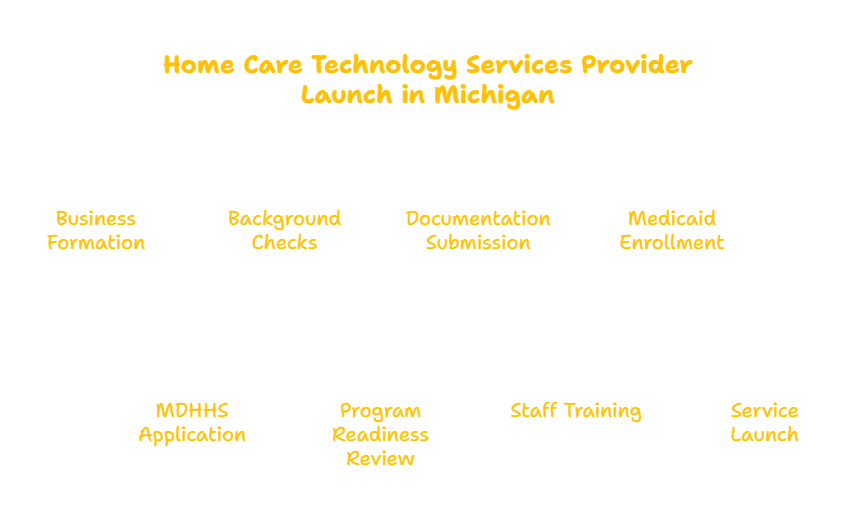
Entering the Michigan HCBS market as a technology provider requires a structured approach to business registration and credentialing. Before seeking MDHHS approval, organizations must be officially registered with the Michigan Department of Licensing and Regulatory Affairs (LARA) and must possess a valid Employer Identification Number (EIN) from the IRS, as well as a Type 2 National Provider Identifier (NPI). These foundational steps establish the business as a legitimate legal and medical entity capable of entering into state contracts.
Operational requirements include maintaining a physical office or service location within the state of Michigan to ensure proximity to the individuals being served. Providers must demonstrate a high degree of technical competency in smart home automation and assistive devices, and they must employ qualified staff capable of installing, monitoring, and servicing this hardware. Furthermore, providers must develop and maintain robust internal protocols that address device calibration, data privacy, and rapid response strategies to address technical malfunctions.
The Provider Enrollment and Program Readiness Process
The enrollment process is initiated by requesting the Home Care Technology Provider Application Packet from the MDHHS. This submission requires a comprehensive business plan that clearly outlines the applicant's approach to technology integration, maintenance scheduling, and client training. Applicants must also document their policies regarding safety management, ensuring that every installed device complies with privacy regulations and that data security is handled according to state and federal standards.
Once the application is submitted, the agency conducts a thorough background and credentialing review. This includes vetting staff members who will interact with participants to ensure they meet professional standards and have the necessary technical expertise. Following documentation approval, a program readiness review is performed. During this phase, the provider must demonstrate their ability to manage a caseload, prove their capacity for rapid technical support, and confirm that all service-related documentation—such as client service logs and equipment maintenance records—will be managed in accordance with state guidelines.
Staffing, Training, and Operational Documentation
Staffing a home care technology agency requires a blend of technical expertise and a commitment to patient-centered care. Key roles include the Technology Program Manager, who oversees the technical strategy and compliance, and the Installation Technician, responsible for the physical deployment and maintenance of equipment. Additionally, Customer Support Specialists are required to facilitate user education and provide a direct point of contact for troubleshooting. All staff must undergo rigorous training, including the MDHHS orientation, HCBS waiver-specific requirements, and specialized instruction on ethics, client rights, and confidentiality.
Required documentation is extensive, as it serves as the evidence base for regulatory audits. Providers must maintain organized files for all staff, including background check clearance, and for all participants, including installation records and service effectiveness logs. Standard documentation includes articles of incorporation, proof of office location, and a comprehensive Policy and Procedure Manual. This manual acts as the backbone of the organization, detailing how the provider addresses everything from device malfunctions to data security and financial tracking.
Frequently Asked Questions
Which Medicaid waivers currently authorize Home Care Technology Services in Michigan?
Home Care Technology Services are authorized under the MI Choice Waiver, the Habilitation Supports Waiver, and the Children’s Waiver Program.
What is the typical timeline for launching a Home Care Technology business?
The launch process includes business formation (0–1 week), MDHHS application review (60–90 days), device procurement and staff training (30–60 days), and final Medicaid enrollment (60–90 days).
What are the primary responsibilities of a Home Care Technology provider regarding client data?
Providers are required to maintain strict data privacy and security guidelines for all client information, ensuring that any remote monitoring or telehealth integration complies with state and federal healthcare data protection standards.
Key Takeaway
Success as a Home Care Technology provider in Michigan depends on a diligent approach to state-specific enrollment requirements, rigorous staff training, and the development of robust internal policies. By aligning technical expertise with the regulatory expectations of the MDHHS and the specific goals of the MI Choice, Habilitation Supports, and Children’s Waiver programs, providers can effectively improve the safety and independence of the individuals they serve.
Last verified: October 2023. Disclaimer: This article is for informational purposes only and does not constitute legal or professional advice. Requirements for Medicaid provider enrollment in Michigan are subject to change; always consult directly with the Michigan Department of Health and Human Services (MDHHS) or the appropriate state governing bodies for the most current regulations and official guidance.