HOME CARE TECHNOLOGY SERVICES PROVIDER IN MASSACHUSETTS
By Fatumata Kaba · 2025-08-07 · 5 min read
LEVERAGING INNOVATIVE TECHNOLOGIES TO MONITOR, SUPPORT, AND ENHANCE IN-HOME CARE FOR INDIVIDUALS WITH DISABILITIES OR CHRONIC CONDITIONS
Home Care Technology Services in Massachusetts enable individuals receiving care at home to maintain safety, independence, and better health outcomes through the use of digital tools, remote monitoring, and assistive systems. These services are increasingly supported by MassHealth Home and Community-Based Services (HCBS) waivers, the Money Follows the Person (MFP) program, and other Medicaid-funded long-term care initiatives, providing a vital bridge between clinical care and independent living.
The Regulatory Framework and Governing Agencies
Operating as a Home Care Technology provider in Massachusetts requires a clear understanding of the hierarchy of oversight. MassHealth (Massachusetts Medicaid) serves as the primary entity for approving and reimbursing home care technologies, provided they are deemed medically necessary and formally documented within an individual’s person-centered care plan. Without this designation, reimbursement is generally not available, making the clinical link essential for every project.
Beyond MassHealth, the Executive Office of Health and Human Services (EOHHS) maintains broad oversight of waiver programs and Medicaid-funded innovations. Furthermore, the Massachusetts Rehabilitation Commission (MRC) often plays a crucial role in coordinating these services, particularly for participants transitioning through the Money Follows the Person (MFP) initiative. Finally, the Centers for Medicare & Medicaid Services (CMS) provides the overarching federal authority, ensuring that 1915(c) waiver programs meet federal standards for health, safety, and fiscal accountability.
Defining Scope: Essential Home Care Technology Services
Home care technology services encompass a holistic approach to patient support, including the selection, professional installation, staff training, and ongoing technical maintenance of devices. These systems are designed to enhance environmental control, facilitate communication, and provide passive health monitoring for individuals with diverse needs. To be eligible for reimbursement, every device must directly align with the goals outlined in the individual’s Plan of Care (POC) or Individual Support Plan (ISP) and must avoid duplicating existing services.
Typical technology solutions integrated into these plans include:
- Emergency alert systems and fall detection sensors for immediate crisis response.
- Smart medication dispensers that ensure adherence and provide automated reminders.
- Remote patient monitoring devices, such as digital blood pressure cuffs and glucose monitors.
- Motion sensors and door alarms tailored for elopement prevention.
- Voice-activated assistants configured to support daily routines and care plan goals.
- Home automation tools including smart lighting, thermostat regulation, and automated window treatments.
- Two-way video communication platforms for virtual caregiver check-ins and telehealth.
- Mobile applications designed to assist with daily living documentation and activity scheduling.
Navigating Licensing and Operational Prerequisites
While Massachusetts does not mandate a specific clinical license for technology providers, the operational and administrative requirements for participating as a Medicaid provider are rigorous. Prospective providers must first establish a formal business entity, register with the Massachusetts Secretary of the Commonwealth, and obtain both an IRS EIN and a Type 2 NPI. Financial and cybersecurity protections are non-negotiable, requiring comprehensive general liability insurance and robust data security protocols.
Operationally, providers must ensure that all systems comply with HIPAA regulations regarding the handling of personal health information. Because technology often interfaces with medical data, it is imperative to implement internal policies that mandate coordination with clinicians when monitoring health metrics. Maintaining a professional environment requires that all staff undergo thorough background checks and receive specialized training in device deployment, client privacy, and the specific nuances of working with individuals with disabilities.
The Enrollment and Implementation Roadmap
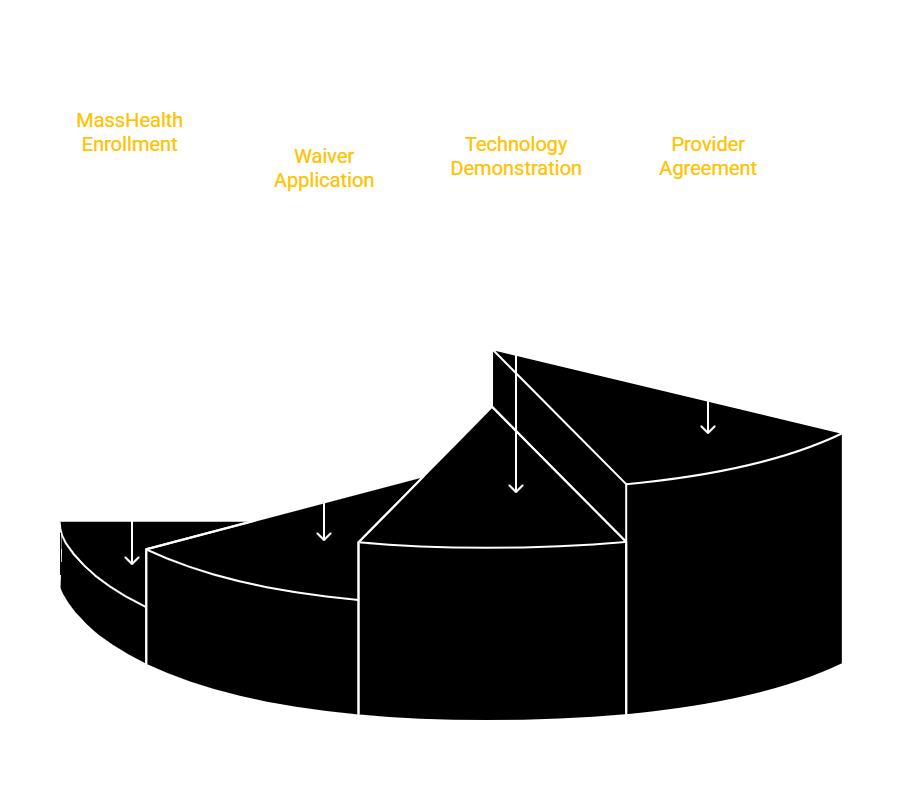
The path to becoming a recognized waiver provider begins with the MassHealth Provider Enrollment process, which is initiated through the Provider Online Service Center (POSC). Following this registration, providers must apply to specific waiver programs such as the ABI, MFP, or DDS programs. This application requires a comprehensive documentation package detailing the provider’s technology inventory, procurement strategy, and staff roles.
Once enrolled, the implementation phase involves a clear demonstration of how technology impacts patient outcomes. Providers are expected to produce sample workflows that illustrate how specific devices solve identified challenges within an individual’s Plan of Care. Following the final execution of the provider agreement, success relies on the consistent coordination with case managers, therapists, and care coordinators, as these are the primary channels for service referrals and authorized project start dates.
Staffing, Training, and Institutional Documentation
Effective program management hinges on a well-structured team capable of balancing high-level technical installation with sensitive client interaction. Key roles include Technology Specialists, who manage the physical installation of systems, and Client Support Representatives, who provide the training necessary for individuals to actually utilize the technology provided. Oversight is provided by a Program Supervisor, who serves as the central point of contact for service referrals and device lifecycle management.
Required training protocols for all personnel include:
- Comprehensive HIPAA and data privacy compliance training.
- Instruction on universal design principles and accessibility standards.
- Troubleshooting workflows for common device failures and remote support.
- Emergency protocols to handle system malfunctions or urgent client needs.
- Cultural competence and disability sensitivity training.
Frequently Asked Questions
Is a clinical license required to install home care technology?
No, a clinical license is not required for the physical installation of non-medical technology, but providers must ensure that any devices monitoring clinical health metrics are utilized in strict coordination with the individual's existing clinical care team.
How does a provider ensure all documentation is ready for an audit?
Providers should maintain a comprehensive Policy & Procedure Manual that includes standardized installation logs, user training checklists, device warranty tracking, and HIPAA-compliant data handling logs. Audit readiness is maintained by keeping these records updated at every stage of the service cycle.
What types of Massachusetts Medicaid waivers cover these services?
Home care technology services are generally reimbursable under various HCBS waivers, including the Acquired Brain Injury (ABI) waivers, the Money Follows the Person (MFP) programs, Department of Developmental Services (DDS) waivers, and the Community Living waiver for aging adults and individuals with physical disabilities.
Key Takeaway
Entering the Massachusetts home care technology market requires a disciplined approach to regulatory compliance, rigorous staff training, and the ability to seamlessly integrate digital solutions into the existing Medicaid-funded clinical care framework. By focusing on the direct connection between technology and the specific goals identified in a patient’s support plan, providers can deliver essential services that improve independence and safety for vulnerable populations.
WAIVER CONSULTING GROUP’S START-UP ASSISTANCE SERVICE — MASSACHUSETTS HOME CARE TECHNOLOGY PROVIDER. WCG supports tech startups, DME providers, and in-home care companies in launching Medicaid-approved home care technology programs across Massachusetts. Scope of Work: Business and MassHealth enrollment, Waiver program application support (DDS, ABI, MFP), Technology policy & procedure manual creation, Staff onboarding materials and technical training resources, Installation logs, emergency protocols, and support scripts, Billing documentation systems and HIPAA compliance setup, Referral coordination with discharge planners and case managers.
Last verified: September 2023. Disclaimer: Waiver Consulting Group is a consulting firm that provides information and support services. We are not a government agency. All information provided is for educational purposes and should be verified with the relevant state departments before making business decisions.