HOME CARE SERVICES PROVIDER IN TEXAS
By Fatumata Kaba · 2026-03-30 · 5 min read
Establishing a Home Care Services agency in Texas requires navigating a complex regulatory framework designed to ensure that Medicaid participants receive high-quality, non-medical personal assistance. By providing essential support for activities of daily living (ADLs), these agencies play a critical role in allowing elderly and disabled Texans to age in place safely while maintaining their independence within home and community settings.
Home Care Services provide non-medical, personal assistance to Medicaid participants, which is distinct from home health services that require skilled nursing or professional therapies. These services are primarily delivered through state-managed programs such as STAR+PLUS, the Medically Dependent Children Program (MDCP), and State Plan Personal Care Services (PCS), all of which are overseen by the Texas Health and Human Services Commission (HHSC) and the Texas Department of State Health Services (DSHS).
What Are the Governing Agencies and Regulatory Roles in Texas?
The regulatory environment for Texas home care providers is divided among three primary entities. The Texas Health and Human Services Commission (HHSC) serves as the central authority, administering the Medicaid and waiver programs, authorizing service delivery, and conducting oversight to ensure compliance with state standards. Their role is to manage the fiscal and programmatic integrity of the Medicaid system, ensuring that providers meet the requirements necessary for reimbursement.
In addition to HHSC, the Texas Department of State Health Services (DSHS) is responsible for the licensing of Home and Community Support Services Agencies (HCSSAs). This licensure is a mandatory prerequisite for any agency intending to deliver non-skilled personal assistance. Furthermore, the Centers for Medicare & Medicaid Services (CMS) provides the federal framework, establishing the national standards that dictate how Medicaid home care services must be delivered and monitored to ensure participant safety and program accountability.
What Services Do Home Care Providers Typically Deliver?
Home care services are designed to support individuals with functional impairments by offering hands-on assistance and supervision tailored to their unique daily routines. These services are not intended to replace medical care but rather to bridge the gap between medical needs and independent living. Each service plan is authorized based on a physician’s order or a specific waiver service plan, requiring consistent daily documentation to justify the care provided.
Commonly provided personal assistance services include the following:
- Bathing, grooming, and dressing assistance
- Mobility support and physical transfers
- Meal preparation, feeding assistance, and nutritional oversight
- Toileting and comprehensive incontinence care
- Light housekeeping, laundry, and maintaining a safe environment
- Accompaniment to medical appointments or necessary community errands
- Ongoing safety monitoring and social companionship
What Are the Essential Licensing and Enrollment Requirements?
Launching a compliant home care agency involves a sequential process of legal, administrative, and clinical preparations. Before an agency can begin billing for Medicaid services, it must establish a formal business entity, obtain a federal Employer Identification Number (EIN), and secure a Type 2 National Provider Identifier (NPI). These foundational steps provide the legal footing necessary to enter into contracts with state agencies.
The operational prerequisites are equally rigorous. An agency must obtain an HCSSA license from the DSHS, specifically under the “Licensed Home Care Services” category. Once licensed, the agency must enroll with the Texas Medicaid & Healthcare Partnership (TMHP) and successfully negotiate contracts with the HHSC for specific programs such as STAR+PLUS or MDCP. Maintaining comprehensive general liability and workers’ compensation insurance is mandatory throughout the lifecycle of the business to protect both the agency and the participants served.
How Is the Provider Enrollment Process Structured?
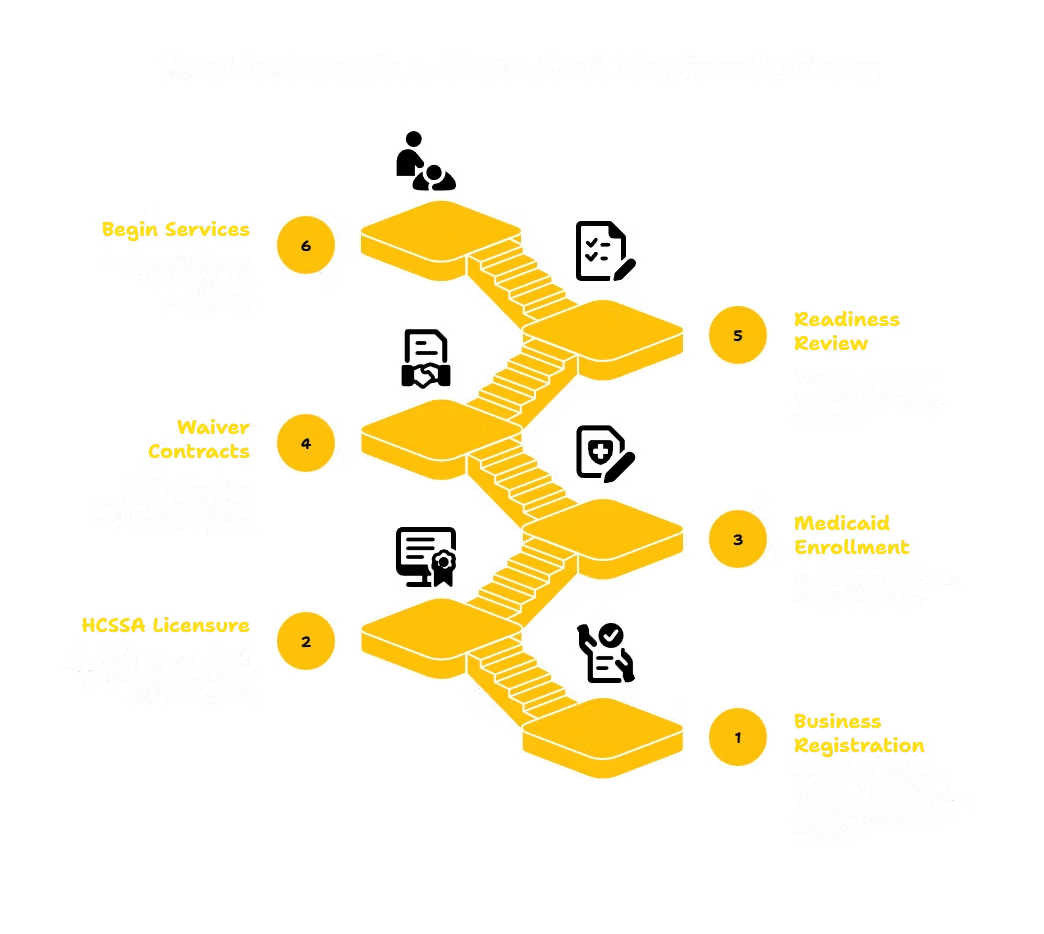
The journey from business formation to active service delivery is structured into a multi-phase enrollment process. Initially, providers must focus on obtaining the proper legal standing and the necessary HCSSA license through the DSHS, which includes submitting a formal application, paying the associated fees, and passing an on-site survey. This phase is critical, as regulatory compliance is non-negotiable for Medicaid participation.
Following licensure, the focus shifts to the TMHP and HHSC enrollment stages. Providers must register with TMHP as a Medicaid provider and subsequently apply for specific waiver contracts if they intend to serve participants in programs like STAR+PLUS or MDCP. The final phase involves a readiness review conducted by the state, where the agency must demonstrate its operational capacity. Once all approvals are granted, the agency can begin receiving referrals and delivering billable services.
What Are the Staffing and Documentation Requirements?
Effective staffing and precise documentation are the cornerstones of a successful home care operation. While personal care attendants (PCAs) do not require a professional medical license, they must meet minimum age requirements, undergo thorough background checks, and demonstrate competency in CPR and First Aid. All staff must complete comprehensive orientation training covering ADL assistance, abuse prevention, and HIPAA-compliant documentation practices.
Administrative rigor is required for the agency’s internal systems. A robust Home Care Services Policy & Procedure Manual must be maintained, detailing the participant intake process, staff supervision protocols, incident reporting mechanisms, and billing procedures. Consistent daily service notes and timekeeping tools are essential, as these documents are the primary evidence used by state auditors to verify that authorized care was actually delivered to the participant.
Frequently Asked Questions
Is a medical license required to start a non-skilled home care agency in Texas?
No, non-skilled home care services do not require the owner to hold a medical license; however, the agency must be licensed by the DSHS as an HCSSA to legally operate and provide personal assistance services.
How long does the licensing and enrollment process typically take?
The timeline varies, but generally, business formation and HCSSA licensure take 2–4 months, while Medicaid enrollment and waiver contracting take an additional 2–3 months, followed by 30–45 days for system setup and staff training.
What is the difference between STAR+PLUS and State Plan Personal Care Services?
STAR+PLUS is an integrated managed care program for elderly and disabled adults that includes HCBS waivers, whereas State Plan Personal Care Services primarily focus on providing assistance to children and youth under 21 who meet specific medical and functional criteria.
Key Takeaway
Launching a home care agency in Texas requires meticulous attention to state-mandated licensure, Medicaid enrollment procedures, and the maintenance of rigorous policy documentation. Success depends on the provider’s ability to manage staff effectively while ensuring that all service delivery adheres strictly to HHSC and DSHS regulations, ultimately ensuring the safety and well-being of the Medicaid participants entrusted to their care.
Last verified: October 2023. Disclaimer: This article is for informational purposes only and does not constitute legal or professional consulting advice. Regulations governing Texas Medicaid and waiver programs are subject to change; always consult the official Texas Health and Human Services Commission (HHSC) and Texas Department of State Health Services (DSHS) websites for the most current rules and requirements.