HOME AND COMMUNITY-BASED SERVICES (HCBS) PROVIDER IN OREGON
By Fatumata Kaba · 2025-10-06 · 6 min read
Becoming an approved Home and Community-Based Services (HCBS) provider in Oregon is a strategic opportunity to deliver essential, person-centered support that enables Oregonians with disabilities, chronic illnesses, or aging-related needs to thrive independently in their own homes. This process requires navigating a complex regulatory landscape overseen by the Oregon Department of Human Services (ODHS) and the Oregon Health Authority (OHA) to ensure compliance with Medicaid standards and quality of care.
Understanding the Oregon HCBS Regulatory Landscape
The delivery of HCBS in Oregon is governed by a multi-layered structure of federal and state agencies. At the federal level, the Centers for Medicare & Medicaid Services (CMS) sets the overarching standards for all 1915(k) and waiver-funded services. Locally, the Oregon Department of Human Services (ODHS)—specifically the Aging and People with Disabilities (APD) and Developmental Disabilities Services (DDS) divisions—manages the delivery of these services. These divisions work in tandem with local offices, Community Developmental Disabilities Programs (CDDPs), and Area Agencies on Aging (AAAs) to authorize services for eligible participants.
In addition to these clinical and oversight bodies, the Oregon Health Authority (OHA) serves as the primary administrator for the Oregon Health Plan (OHP), which acts as the state’s Medicaid program. Administrative compliance begins with the Oregon Secretary of State (SOS), where all new business entities must register to maintain corporate legitimacy. Navigating this structure requires a firm understanding of which agencies govern specific service types, as provider enrollment and service-specific approvals are often handled by distinct arms of the ODHS/APD/DDS framework.
Defining the Scope of HCBS Service Offerings
HCBS providers in Oregon may offer a diverse array of services, ranging from fundamental personal care assistance to specialized clinical and behavioral supports. The objective of these services is to reduce institutionalization by offering high-quality alternatives that allow individuals to remain in their homes and communities. Providers are expected to tailor their operations to the specific needs of their participants, as defined by their authorized Individual Support Plans (ISPs).
- Personal Care Assistance: Comprehensive help with daily living activities, including bathing, grooming, dressing, and toileting.
- Homemaker and Chore Services: Essential household support such as laundry, housekeeping, and meal preparation.
- Skilled Nursing Services: Professional medical care including wound management, medication administration, and chronic condition monitoring.
- Habilitation and Life Skills Training: Educational support to foster independence in communication and daily living skills.
- Behavioral Support Services: Clinical assessments, behavior coaching, and the development of structured support plans.
- Respite Care: Temporary, short-term relief for primary caregivers to ensure the continuity of safe home-based care.
Navigating the Provider Enrollment and Approval Process
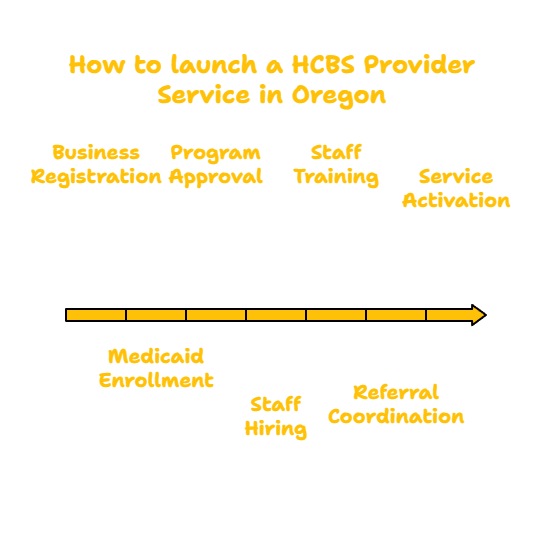
The path to becoming a recognized Medicaid provider involves a systematic, multi-step sequence that begins with foundational business setup. Before any client can be served or any claim submitted, the agency must be legally registered, hold a federal Employer Identification Number (EIN), and obtain a Type 2 National Provider Identifier (NPI). These items serve as the building blocks for the OHA provider portal enrollment, which is the gateway for billing and systemic participation.
Following OHA enrollment, the provider must seek service-specific approval or certification from the relevant ODHS division. This stage involves rigorous vetting, including the review of organizational policies, staff background check protocols, and safety compliance systems. Once certified, the provider enters a phase of operational readiness, coordinating with local entities like CDDPs or AAAs to accept service authorizations. Effective coordination during this phase is vital to transitioning from a newly approved business to an active provider of Medicaid-funded supports.
Maintaining Compliance through Required Documentation
Operational compliance is maintained through meticulous documentation and record-keeping. The foundation of this system is a comprehensive Policy & Procedure Manual, which must be tailored to the specific scope of services provided. This manual functions as the "living document" that guides daily operations, ensuring that every service delivered is compliant with state and federal regulations. Auditors frequently look for consistency between the documented policy and the actual daily practice of staff members.
- Legal and Corporate Documents: Articles of Incorporation and active registration certificates.
- Policy Manuals: Detailed protocols covering care planning, incident reporting, HIPAA privacy, and grievance procedures.
- Staff Records: Documentation of background checks, mandatory trainings, and competency reviews.
- Billing and Verification: Templates for Electronic Visit Verification (EVV) and standard Medicaid billing protocols.
- Operational Safety: Emergency preparedness plans and documentation of periodic fire or safety drills.
Meeting Staffing and Professional Development Standards
The quality of HCBS is directly linked to the competency of the direct support workforce. All staff, including Direct Support Professionals (DSPs) and Personal Support Workers (PSWs), must undergo rigorous background checks and demonstrate proficiency in their assigned roles. Supervisors and Program Coordinators bear the responsibility of ensuring that all staff members remain compliant with ongoing training requirements, including annual continuing education and service-specific skills refreshers.
Training curricula must encompass HIPAA compliance, client rights, abuse reporting, and specialized procedures like medication administration or ISP implementation. Because HCBS is built on a model of person-centered care, staff must also be trained in how to honor individual choices and communicate effectively with participants. Maintaining a centralized credentialing tracker is recommended to ensure that no staff member falls out of compliance, as this could jeopardize the agency’s ability to bill for services provided by those individuals.
Frequently Asked Questions
What is the typical timeline to launch an HCBS agency in Oregon?
The startup timeline generally spans 4 to 8 months. Initial business registration and policy manual development typically take 1–2 months, followed by 2–3 months for Medicaid enrollment and state-level certification. Staff hiring, onboarding, and final training compliance usually require an additional 30–60 days before the agency is ready to accept referrals and initiate service delivery.
Which Medicaid waiver programs are most common for new providers?
Providers often engage with the 1915(k) Community First Choice program, which covers broad in-home supports. Additionally, the Comprehensive and Support Services waivers for individuals with intellectual and developmental disabilities (IDD) are significant areas of service. APD-specific waivers for seniors and adults with physical disabilities also offer critical pathways for provider participation.
What role does the HCBS Policy & Procedure Manual play in audits?
The manual is the primary document reviewed by state surveyors during compliance audits. It serves as evidence that the agency has established systems for care planning, quality assurance, and incident management. If a policy is not documented in the manual or if actions do not match the documented policy, the agency may face findings or corrective action requirements.
Waiver Consulting Group (WCG) assists new and expanding HCBS providers in Oregon by providing the infrastructure necessary to launch and maintain sustainable, person-centered programs. WCG services include business registration assistance, tailored Policy & Procedure Manual creation, staff onboarding and credentialing tools, and guidance on Medicaid billing and quality assurance systems. Through professional support, WCG helps providers navigate the complex OHA and ODHS requirements to ensure operational readiness and regulatory compliance.
Key Takeaway: Successful HCBS provision in Oregon relies on a firm commitment to regulatory compliance, robust internal policies, and the delivery of high-quality, person-centered care. By strictly adhering to the requirements set forth by OHA and ODHS, providers can build sustainable organizations that provide vital support to the most vulnerable members of the Oregon community.
Last verified: October 2023. This information is for educational purposes only and does not constitute legal or professional advice. Requirements for Oregon Medicaid programs are subject to change; always verify current statutes and regulations through official government portals.