HABILITATION SERVICES PROVIDER IN OKLAHOMA
By Fatumata Kaba · 2025-09-08 · 5 min read
Building Skills for Independence: The Role of Habilitation Services in Oklahoma
Habilitation Services in Oklahoma provide essential support for individuals with intellectual and developmental disabilities (IDD) by fostering the acquisition, retention, and improvement of life skills necessary for community living. These services are delivered through Oklahoma Medicaid (SoonerCare) under various Home and Community-Based Services (HCBS) waivers, ensuring that participants receive person-centered instruction tailored to their unique needs and long-term goals.
Unlike rehabilitation services that focus on restoring lost functions, habilitation is a developmental approach designed to teach skills an individual may not have previously mastered. By operating within the participant’s home and community, habilitation providers play a critical role in facilitating greater independence, inclusion, and a higher quality of life for Oklahomans living with disabilities.
Who Governs Habilitation Services in Oklahoma?
The regulatory framework for HCBS habilitation is a collaborative effort between state and federal agencies to ensure service quality, fiscal responsibility, and participant safety. The Oklahoma Health Care Authority (OHCA) acts as the primary agency for Medicaid management, overseeing SoonerCare enrollment, provider billing protocols, and the reimbursement processes that sustain these programs.
On the operational front, the Oklahoma Department of Human Services (OKDHS) through Developmental Disabilities Services (DDS) serves as the primary governing body for service delivery. DDS is responsible for approving habilitation service providers, authorizing individualized service plans, and conducting ongoing monitoring to ensure providers maintain established delivery standards. Additionally, the Centers for Medicare & Medicaid Services (CMS) provides federal oversight to ensure all Oklahoma programs remain compliant with federal HCBS regulations, particularly those centered on community integration and the rights of participants.
How Do Habilitation Services Support Participant Development?
Habilitation services utilize structured and consistent teaching strategies to help participants navigate daily life with greater confidence. Because these services can occur in the home, throughout the community, or within specialized day programs, the training is contextual, allowing individuals to practice skills in the environments where they will actually be used.
Approved providers are tasked with implementing comprehensive skill-building programs. Core service areas typically include the following:
- Daily Living Skills: Training in essential hygiene routines such as bathing, dressing, and grooming, as well as housekeeping and meal preparation.
- Social and Communication Support: Teaching the nuances of holding conversations, emotional regulation, and strategies for building meaningful interpersonal relationships.
- Community Integration: Providing travel training, such as navigating public transportation, managing errands, and accessing community events.
- Financial Literacy: Teaching the practical use of currency, debit cards, and basic budgeting skills.
- Health and Safety: Educating participants on medication self-administration, emergency response protocols, and routine health maintenance.
What Are the Essential Licensing and Provider Approval Requirements?
Becoming an approved habilitation provider requires a systematic approach to business development and compliance. Prospective agencies must first establish a legal business entity with the Oklahoma Secretary of State and obtain the necessary federal identifiers, including an Employer Identification Number (EIN) and a Type 2 National Provider Identifier (NPI). This foundational step ensures the agency is recognized for Medicaid billing purposes.
Beyond basic business registration, agencies must focus heavily on infrastructure and policy development. Before seeking authorization, a provider must develop a comprehensive Habilitation Services Policy & Procedure Manual. This document serves as the backbone of the organization, detailing how the provider will maintain HIPAA compliance, manage incident reporting, protect participant rights, and ensure staff competency. Furthermore, agencies must maintain adequate general and professional liability insurance to protect both the organization and the individuals served.
How Should New Agencies Navigate the Enrollment Process?
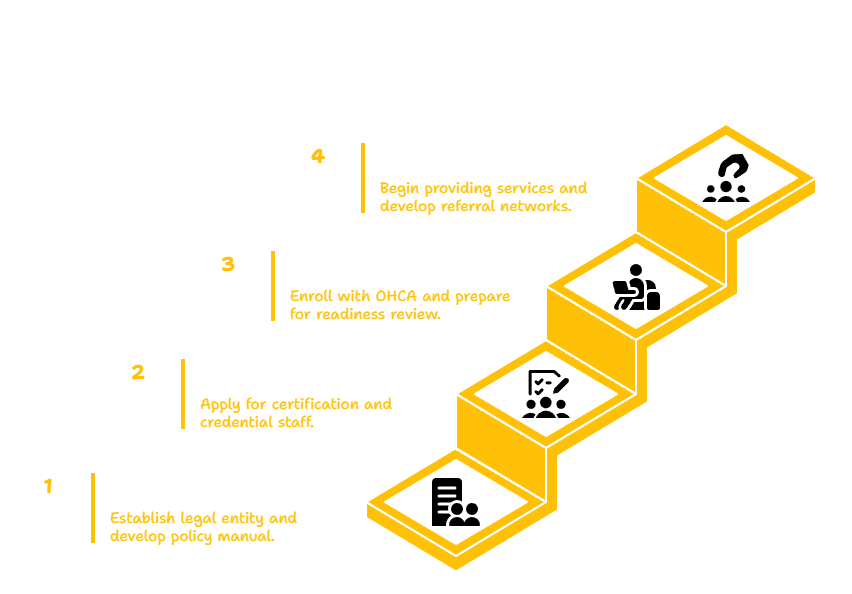
The provider enrollment journey in Oklahoma is a multi-phased process that requires coordination between business formation and regulatory vetting. Initially, an agency must apply for certification through OKDHS DDS. This stage involves a rigorous review of the agency’s service descriptions, staff credentials, and internal training protocols to ensure they meet state-specific standards for IDD care.
Once certified by DDS, the agency proceeds to the OHCA SoonerCare provider enrollment portal. This enrollment connects the agency to the Medicaid reimbursement system. Following formal enrollment, the agency must undergo a readiness review, which confirms that the business is prepared to deliver services in accordance with HCBS requirements. Only after these steps are completed will the agency be eligible to receive referrals and authorizations from DDS case managers.
- Step 1: Form the legal business entity and secure appropriate business licensing.
- Step 2: Submit a formal provider application to OKDHS DDS for certification.
- Step 3: Enroll with OHCA as a SoonerCare provider to facilitate billing.
- Step 4: Conduct a readiness review and finalize staff training certifications.
- Step 5: Activate service delivery upon receipt of participant referrals and individualized plans.
What Are the Staffing and Training Expectations?
The quality of habilitation services is directly tied to the competency of the direct support staff and program supervisors. Every Habilitation Training Specialist (Direct Support Professional) must meet specific baseline criteria, including holding a high school diploma or GED, successfully passing a criminal background check, and completing mandatory CPR/First Aid training. Experience working with individuals with IDD is highly preferred and often essential for effective service delivery.
Staff development is an ongoing commitment rather than a one-time requirement. All staff members must undergo the DDS core training curriculum, which includes instruction on person-centered planning, positive behavior support, and rights-based service delivery. Program managers are expected to provide consistent oversight, ensuring that documentation—such as daily service logs and progress notes—accurately reflects the participant's skill acquisition toward their specific goal plans.
Frequently Asked Questions
Which Medicaid waiver programs allow for habilitation services?
Habilitation services are authorized under the Community Waiver, the In-Home Supports Waiver (IHSW) for both adults and children, and the Living Choice Program. Additionally, these services can be integrated into self-directed waiver models where participants have greater autonomy over their staff and service delivery.
What is the typical timeline for starting a habilitation agency?
The timeline varies based on the agency's readiness, but generally, business formation and policy development take 1–2 months. DDS certification and staff credentialing usually require 2–3 months, while OHCA enrollment and readiness reviews typically span 60–90 days. Total preparation time is generally estimated at 5–8 months.
What documentation must be maintained for ongoing compliance?
Providers must maintain meticulous records, including individual service plans, progress notes that track specific skill acquisition, incident reports, staff training logs, and HIPAA-compliant participant files. These documents are vital for periodic audits conducted by OKDHS DDS and OHCA to ensure continued eligibility for Medicaid reimbursement.
The path to becoming an approved habilitation services provider requires a commitment to rigorous documentation, specialized training, and strict adherence to Oklahoma state and federal Medicaid standards. By prioritizing person-centered care and systematic service delivery, new agencies can effectively support the IDD community while building a sustainable and compliant business model within the SoonerCare network.
Last verified: 2024. The information provided in this article is for educational purposes only and does not constitute legal or professional advice. Always consult with the Oklahoma Health Care Authority (OHCA), the Oklahoma Department of Human Services (OKDHS), and the Centers for Medicare & Medicaid Services (CMS) for the most current rules, regulations, and official guidance regarding Medicaid provider requirements.