HABILITATION SERVICES PROVIDER IN KANSAS
By Fatumata Kaba · 2025-07-24 · 5 min read
How to Become a Habilitation Services Provider in Kansas
Becoming a Habilitation Services provider in Kansas involves navigating a rigorous regulatory framework overseen by the Kansas Department for Aging and Disability Services (KDADS) and the Kansas Department of Health and Environment (KDHE). These services are critical components of the Intellectual/Developmental Disability (IDD) Waiver under the KanCare program, designed to assist individuals in achieving greater independence through structured, goal-oriented support.
Prospective agency founders must demonstrate organizational readiness, ensure strict adherence to federal and state standards, and successfully complete a multi-phase enrollment process. By providing essential training in daily living, communication, and community integration, habilitation providers play a vital role in the long-term success and quality of life for Kansas citizens with developmental disabilities.
Understanding the Governance and Regulatory Environment
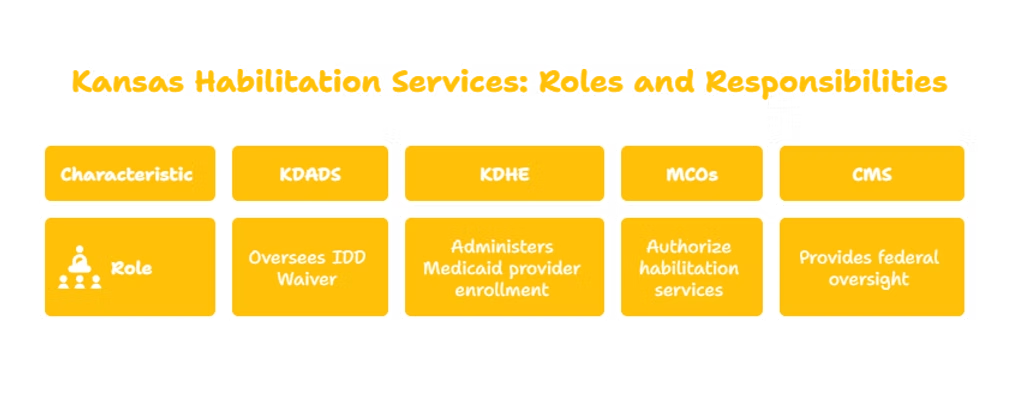
The provision of habilitation services in Kansas is governed by a collaboration of state and federal agencies tasked with protecting participant rights and ensuring service quality. KDADS serves as the primary entity responsible for the IDD Waiver, establishing the standards for care, the qualifications for staff, and the criteria for organizational certification. Understanding the jurisdictional boundaries of these agencies is the first step in maintaining compliance.
KDHE, through its Division of Health Care Finance, handles the financial aspects of the program, including Medicaid provider enrollment and reimbursement protocols. Concurrently, the KanCare Managed Care Organizations (MCOs)—Sunflower Health Plan, UnitedHealthcare Community Plan, and Aetna Better Health of Kansas—manage the day-to-day authorization of services based on the participant’s Individualized Service Plan (ISP). At the federal level, the Centers for Medicare & Medicaid Services (CMS) provides oversight to ensure that all Kansas waiver programs remain in alignment with HCBS (Home and Community-Based Services) federal regulations under 1915(c) waivers.
Establishing Your Habilitation Service Model
A habilitation services provider must offer clear, actionable support structures that facilitate skill-building in an individualized or group setting. Whether operating residential habilitation programs or day-based services, providers must ensure their activities are directly tied to the participant's ISP. This involves creating a supportive environment where goals are measurable, tracked, and consistently evaluated for progress.
Approved providers generally deliver services that include:
- Residential Habilitation (24/7 or scheduled support in a home setting)
- Day Habilitation (center- or community-based group skill-building)
- Individual Habilitation Support (one-on-one training for ADLs/IADLs)
- Life skills training, including hygiene, cooking, and home management
- Social and communication skills development
- Community participation and integration coaching
- Safety awareness, health management, and behavior support implementation
Navigating the Licensing and Enrollment Workflow
The path to becoming a provider is a sequenced process that moves from business entity formation to contract execution with MCOs. Before applying for program-specific certifications, organizations must ensure they are registered with the Kansas Secretary of State and possess a valid EIN and an NPI (Type 2). Once the foundational business identity is established, the agency must apply for IDD Waiver certification through KDADS, which typically includes an organizational readiness review.
Following KDADS certification, the agency must enroll in the Kansas Medical Assistance Program (KMAP). This state-level enrollment is a prerequisite for receiving reimbursement for services. Finally, the provider must undergo a credentialing process with each KanCare MCO to begin accepting participant referrals. This stage often requires evidence of comprehensive insurance coverage, including general liability, professional liability, and workers' compensation.
Mandatory Documentation and Operational Compliance
Maintaining audit-ready records is a critical obligation for any HCBS provider. A robust Policy and Procedure Manual must be in place before service delivery begins. This manual should explicitly detail how the agency manages participant intake, ISP implementation, and incident reporting. Providers must demonstrate that they have clear, written protocols for emergency situations, abuse prevention, and the protection of participant privacy as mandated by HIPAA.
Essential documentation and record-keeping requirements include:
- Participant intake records and ongoing ISP coordination logs
- Skill-building program outlines and tracking metrics for goal achievement
- Transportation and community safety procedural manuals
- Staff training logs, background check records, and supervision documentation
- Medicaid billing forms and daily service notes that justify every claim submitted
Staffing, Training, and Professional Requirements
The quality of habilitation services is highly dependent on the competency of the staff. Agencies are responsible for hiring a Program Supervisor who possesses experience in developmental disability services or a related human services field. This individual is typically responsible for overseeing the quality of service delivery and ensuring that all Direct Support Professionals (DSPs) are performing their roles according to the ISP.
All staff members must undergo rigorous training before providing direct care. This includes comprehensive education on person-centered planning, the prevention of abuse, neglect, and exploitation, and HIPAA confidentiality standards. Regular performance reviews and annual continuing education are essential to ensure the agency remains compliant with evolving state requirements and best practices in disability support.
Frequently Asked Questions
What is the typical timeline to launch a habilitation agency in Kansas?
The timeline varies based on the state’s processing capacity, but generally, business formation and policy development take 1–2 months. Subsequent phases involving staff hiring, credentialing, and KMAP/MCO enrollment typically span an additional 6–9 months combined before the agency is ready for active billing.
Are there specific insurance requirements for habilitation providers?
Yes. Providers are required to maintain general liability, professional liability, and workers' compensation insurance. These policies must be active and compliant with Kansas state standards throughout the entire period of provider enrollment.
How do I receive referrals for my habilitation services?
Referrals are typically coordinated through KanCare MCO case managers. Once your agency is fully credentialed with Sunflower, UnitedHealthcare, and Aetna, you should focus on developing professional relationships with these case management entities, as they are responsible for connecting participants with qualified providers who match their individual needs.
Key Takeaway
Successfully launching a Habilitation Services agency in Kansas requires careful attention to state-mandated certification processes, robust policy development, and a steadfast commitment to person-centered care. By adhering to the regulatory structures defined by KDADS and KMAP, providers create a foundation for delivering essential services that empower individuals with disabilities to lead independent and integrated lives within their communities.
Last verified: September 2024. The information provided is for educational purposes and does not constitute legal or financial advice. Readers should consult the official Kansas Department for Aging and Disability Services (KDADS) and KMAP websites for the most current regulatory updates and specific application instructions.