HABILITATION SERVICES PROVIDER IN IDAHO
By Fatumata Kaba · 2025-07-17 · 5 min read
Building Skills for Greater Independence: The Role of Habilitation Services in Idaho
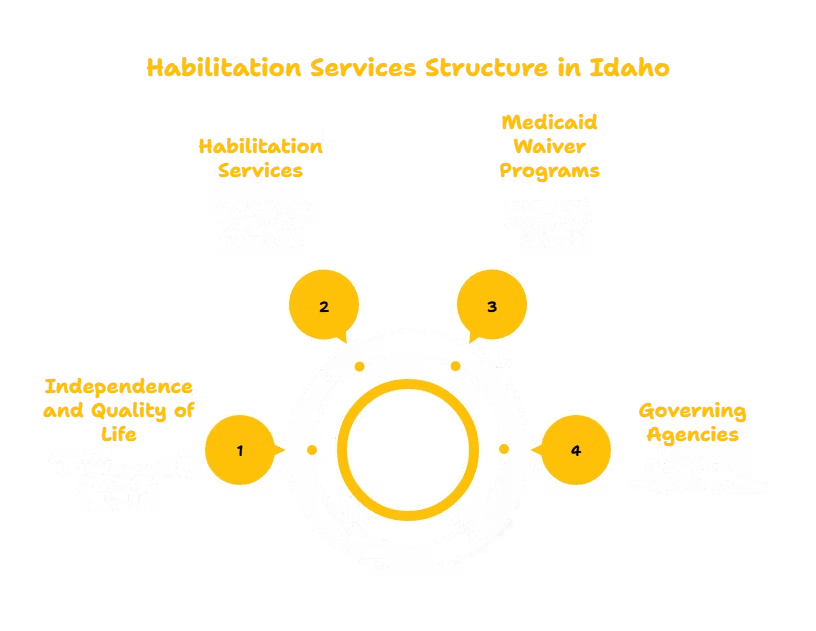
Habilitation Services in Idaho are designed to assist individuals with disabilities in acquiring, retaining, and improving the self-help, socialization, and adaptive skills necessary to reside successfully in home and community-based settings. These services, authorized under Idaho’s Medicaid Home and Community-Based Services (HCBS) waiver programs, serve as a foundational pillar for promoting long-term independence, self-determination, and an enhanced quality of life for participants.
As a provider, operating within this space requires strict adherence to federal and state standards, including the person-centered planning requirements mandated by the Centers for Medicare & Medicaid Services (CMS). By facilitating community integration and daily living mastery, habilitation providers play a vital role in the Idaho healthcare ecosystem, ensuring that participants have the support structures needed to thrive outside of institutional care.
Navigating Regulatory Oversight and Governance
The provision of Habilitation Services is governed by a collaborative framework involving both state and federal entities. The Idaho Department of Health and Welfare (IDHW), specifically the Division of Medicaid, serves as the primary regulatory body responsible for provider enrollment, the authorization of services, and the management of reimbursement processes. Providers must operate within the specific guidelines established by the IDHW to remain compliant with state-level Medicaid mandates.
At the federal level, the Centers for Medicare & Medicaid Services (CMS) provides the overarching regulatory structure. CMS ensures that Idaho’s HCBS waiver programs align with national standards for person-centered planning and community-based care. This oversight is intended to guarantee that service delivery is not only effective but also protects the rights and safety of the participants being served. Maintaining familiarity with both IDHW and CMS regulations is essential for any agency aiming to achieve and maintain long-term operational viability.
Understanding the Scope of Habilitation Services
Habilitation Services are inherently focused on growth and maintenance. Approved providers are tasked with delivering targeted interventions that help participants achieve maximum independence. Because each participant has unique needs, all services must be strictly aligned with the goals outlined in the participant’s Individualized Service Plan (ISP). This ensures that the support provided is both relevant and measurable.
The scope of service delivery typically encompasses a diverse array of functional areas, including personal care, domestic management, and community engagement. When implementing these services, providers should be prepared to support participants in the following domains:
- Personal care skill-building, such as hygiene, grooming, and dressing.
- Domestic skills, including meal preparation, laundry, and general housekeeping.
- Money management and personal budgeting education.
- Community navigation, including the safe use of public transportation and shopping.
- Social and communication skill development for better interpersonal interaction.
- Self-advocacy, self-direction, and personal safety training.
- Behavioral support skills to assist with emotional regulation and social interaction.
- Employment readiness activities, provided these are explicitly included in the participant’s service plan.
Establishing Your Agency: Licensing and Provider Approval
The launch of a Habilitation Services agency requires a systematic approach to business formation and Medicaid credentialing. Before seeking authorization, a provider must establish a formal business entity, register with the Idaho Secretary of State, and obtain an Employer Identification Number (EIN) from the IRS. Furthermore, securing a Type 2 National Provider Identifier (NPI) is a mandatory step for the electronic billing process within the Medicaid system.
In addition to these foundational business steps, providers must demonstrate operational readiness. This involves maintaining comprehensive general and professional liability insurance, which protects the agency and its clients. Furthermore, agencies must develop robust, participant-centered policies that cover critical areas such as skill assessment methodology, service delivery protocols, safety standards, and emergency response procedures. Developing these internal controls early is essential for passing the IDHW readiness review process.
The Provider Enrollment and Readiness Process
The enrollment process through the Idaho Medicaid Management Information System (MMIS) is a rigorous exercise in compliance. Providers must submit a comprehensive application package that includes Articles of Incorporation, proof of federal tax registration, NPI documentation, and detailed service policies. The application process serves as the gatekeeper for service authorization, requiring evidence that the agency is prepared to meet the high standards expected in HCBS delivery.
During the program readiness review, the IDHW examines the provider’s ability to manage staff training, ensure participant protection, and maintain billing integrity. Providers are expected to present examples of their skill-building plans, daily documentation logs, and established participant safety protocols. Once the review is successfully completed and the provider is approved, the agency must finalize the configuration of Medicaid billing codes—which are generally billed on an hourly basis—to ensure that service claims are processed accurately and efficiently.
Staffing, Training, and Quality Assurance
The quality of habilitation support is directly tied to the competency of the direct support staff. The Habilitation Program Manager or Supervisor should typically hold a bachelor’s degree in a relevant field such as human services, psychology, or education, supplemented by experience in disability support. Habilitation Technicians and Direct Support Professionals (DSPs) must hold a high school diploma or GED, with experience in direct care highly preferred.
Beyond baseline qualifications, staff must undergo comprehensive, ongoing training to ensure the delivery of high-quality care. Required areas of focus include:
- HIPAA confidentiality, privacy standards, and participant rights.
- Person-centered planning and specific habilitation skill-building methodologies.
- Emergency preparedness, incident reporting, and abuse prevention.
- Regular competency evaluations and annual continuing education to keep staff updated on best practices.
Frequently Asked Questions
What waivers in Idaho cover Habilitation Services?
Habilitation Services are primarily authorized under the Developmental Disabilities (DD) Waiver, though they may also be available under the Aged and Disabled (A&D) Waiver for participants with specific habilitation needs.
How long does the launch process take for a new provider?
The timeline varies based on organizational readiness, but the general phase for business formation is 1–2 weeks, staff hiring and development takes 2–3 months, the Medicaid enrollment and readiness review typically requires 60–90 days, and final billing system configuration takes 30–45 days.
What documentation is required for the Medicaid application?
Providers must submit business registration documents (Articles of Incorporation), an EIN, an NPI, proof of insurance, and a comprehensive Policy and Procedure manual that addresses intake, skill assessment, safety, billing compliance, and staff training protocols.
Key Takeaway
Launching a Habilitation Services agency in Idaho requires a dedicated focus on compliance, staff competency, and person-centered service delivery. By meticulously following IDHW and CMS guidelines, and maintaining a focus on documentation and quality assurance, providers can successfully build a sustainable program that empowers participants to achieve greater independence in their communities.
Last verified: 2024. The information provided in this article is for informational purposes only and does not constitute legal or professional advice. Readers should consult directly with the Idaho Department of Health and Welfare or professional consultants for guidance specific to their individual circumstances and current state regulations.