HABILITATION SERVICES PROVIDER IN CONNECTICUT
By Fatumata Kaba · 2025-07-08 · 5 min read
How to Become a Habilitation Services Provider in Connecticut
Becoming a habilitation services provider in Connecticut involves navigating a rigorous regulatory framework designed to ensure that individuals with intellectual and developmental disabilities (I/DD) receive high-quality, person-centered support. This process requires formal approval from the Connecticut Department of Developmental Services (DDS) and successful enrollment with the Connecticut Department of Social Services (DSS) to participate in Medicaid Home and Community-Based Services (HCBS) waiver programs. By establishing an agency that meets these strict standards, providers can play a vital role in helping participants acquire, maintain, and improve the adaptive skills necessary for community integration and independent living.
The regulatory environment for habilitation services is strictly defined by state and federal mandates, specifically the guidelines set forth by the Centers for Medicare & Medicaid Services (CMS). Prospective providers must be prepared to demonstrate operational readiness, fiscal responsibility, and a robust commitment to participant-centered outcomes. This article outlines the essential steps, requirements, and governing standards necessary to launch and maintain a compliant habilitation services agency within the Connecticut healthcare landscape.
Understanding the Governance of Connecticut Habilitation Services
The delivery of habilitation services in Connecticut is overseen by a structured hierarchy of agencies, each with a distinct role in ensuring participant safety and program integrity. The Connecticut Department of Developmental Services (DDS) serves as the primary agency responsible for managing the delivery of these services, ensuring that the care provided under HCBS waivers is effective and adheres to person-centered principles. DDS is the primary point of contact for service authorization, provider qualification, and quality assurance.
The Connecticut Department of Social Services (DSS) acts as the state’s Medicaid agency, holding responsibility for provider enrollment and fiscal oversight. Once an organization is qualified by DDS, it must enroll through the DSS Medicaid management information system to facilitate reimbursement. Finally, the Centers for Medicare & Medicaid Services (CMS) provides federal oversight, setting the overarching rules for HCBS waivers to ensure that states maintain high standards for habilitation, community inclusion, and participant rights.
- Connecticut Department of Developmental Services (DDS): Manages habilitation service delivery for individuals with developmental disabilities under HCBS waivers.
- Connecticut Department of Social Services (DSS): Oversees Medicaid provider enrollment and ensures Medicaid compliance.
- Centers for Medicare & Medicaid Services (CMS): Provides federal oversight to ensure that habilitation services meet HCBS rules and participant-centered standards.
Core Components of Habilitation Service Delivery
Habilitation services are designed to be individualized, meaning every service plan must be rooted in the participant’s unique goals. Providers are responsible for teaching adaptive skills that foster independence. This includes daily life tasks, social navigation, and community participation. Because these services are funded through Medicaid waivers, every action taken by the provider must be documented to show progress toward the goals identified in the participant’s person-centered plan.
Approved providers generally offer a range of support services that can be delivered in home or community settings. These services range from fundamental life skills, such as hygiene and nutrition, to complex social and safety skills. By facilitating these learning experiences, providers help participants transition from a state of reliance to one of greater autonomy and community involvement.
- Life skills training (personal hygiene, grooming, dressing, and cooking)
- Communication and social skills development
- Community integration activities (using public transportation, banking, shopping)
- Support with employment readiness and volunteer experiences
- Development of self-advocacy and decision-making skills
- Safety skills (recognizing hazards, emergency preparedness)
- Behavioral support and positive behavior interventions (where authorized)
Navigating the DDS Provider Enrollment and Readiness Process
Launching a service agency requires a systematic approach to the DDS Qualified Provider Application. The process begins with the initial interest stage, where prospective providers contact DDS to obtain the necessary application materials. It is highly recommended that founders attend a DDS provider orientation session, as this provides clarity on the specific expectations for new entities entering the waiver program.
After the application is submitted, the agency must undergo a program readiness review. This phase is critical; DDS will evaluate the applicant’s operational policies, service delivery models, and administrative capacity. The agency must provide comprehensive documentation, including staffing plans, sample curricula for skill development, and detailed incident reporting protocols. If the review is successful and the entity meets all qualification criteria, it can proceed to enroll with DSS as a Medicaid provider to begin billing for authorized services.
Staffing, Credentialing, and Professional Requirements
The quality of habilitation services is inherently linked to the qualifications and training of the staff. A successful agency must have a clearly defined leadership structure, typically led by a Program Director or Habilitation Services Supervisor. This individual is responsible for overseeing clinical and operational compliance, and they generally possess a background in education, social work, or rehabilitation, coupled with relevant experience in disability services.
Direct Support Professionals (DSPs) are the frontline staff who deliver the habilitation services. They are required to meet minimum educational standards, such as a high school diploma or GED, and must hold current CPR and First Aid certifications. Beyond initial hiring, all staff members must complete mandatory training on participant rights, HIPAA compliance, abuse prevention, and the specific behavioral support strategies required by the individuals they serve. Ongoing, annual refresher training is a standard requirement for maintaining compliance.
Frequently Asked Questions
What are the primary Medicaid waivers that cover habilitation services in Connecticut?
Habilitation services are authorized under three primary DDS-managed waivers: the Comprehensive Supports Medicaid Waiver, the Individual and Family Support Medicaid Waiver, and the Employment and Day Support Medicaid Waiver.
What documentation is essential for the DDS Qualified Provider Application?
Applicants must submit a comprehensive package including their Articles of Incorporation, proof of liability insurance, NPI and EIN documentation, and a full policy and procedure manual that covers everything from participant intake and goal-setting to emergency response, incident reporting, and staff training logs.
What is the typical timeline for launching a habilitation services agency?
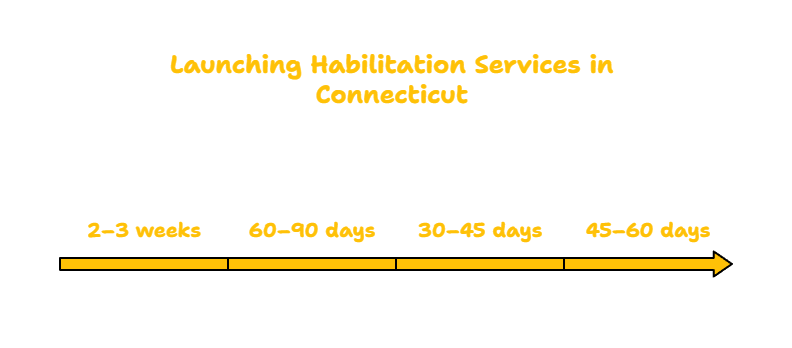
The process generally spans several months, including 2–3 weeks for business formation, 60–90 days for the DDS application and readiness review, 30–45 days for hiring and training, and 45–60 days for Medicaid enrollment and billing setup.
Key Takeaway
Establishing a habilitation services agency in Connecticut requires a disciplined adherence to both DDS qualification requirements and DSS Medicaid billing regulations. By building a foundation on rigorous policy development, evidence-based staff training, and a firm commitment to person-centered planning, new providers can effectively support individuals with I/DD while ensuring long-term operational sustainability within the HCBS waiver system.
Last verified: 2024. This information is for general educational purposes only and does not constitute legal or professional consulting advice. Prospective providers should consult directly with the Connecticut Department of Developmental Services (DDS) and the Connecticut Department of Social Services (DSS) for the most current regulatory requirements.