FINANCIAL ASSISTANCE SERVICES PROVIDER IN FLORIDA
By Fatumata Kaba · 2025-07-11 · 5 min read
Understanding Financial Assistance Services in the Florida Medicaid Landscape
Financial Assistance Services in Florida serve as a critical safety net for individuals with disabilities, chronic illnesses, or long-term care needs who require targeted resources to maintain community-based living. Authorized under Florida’s Medicaid Home and Community-Based Services (HCBS) waiver programs, these services are designed to stabilize living arrangements, prevent unnecessary institutionalization, and support the person-centered goals of waiver participants by covering specific, essential one-time expenses.
These services are not intended to function as ongoing income or long-term financial support. Instead, they provide the logistical bridge necessary for an individual to transition into or maintain a stable, independent home environment. By covering vital start-up costs, such as housing deposits and utility setup fees, these services directly address the social determinants of health that contribute to long-term stability and success for Florida's most vulnerable populations.
Who Governs Florida’s Financial Assistance Services?
The delivery of Financial Assistance Services is governed by a tripartite framework of oversight, ensuring that Medicaid funds are managed with fiscal integrity and that services meet the rigorous standards required for HCBS programs. At the state level, the Florida Agency for Health Care Administration (AHCA) oversees the broader Medicaid landscape, including enrollment, reimbursement processes, and service compliance. Their role is to ensure that all providers adhere to state and federal billing regulations.
The Florida Agency for Persons with Disabilities (APD) acts as the operational lead for participants enrolled in the iBudget Florida Waiver, managing the day-to-day coordination and authorization of these services. Finally, the Centers for Medicare & Medicaid Services (CMS) provides federal oversight, setting the core requirements for HCBS waiver programs to ensure that state-level delivery aligns with national Medicaid standards for health, safety, and participant outcomes.
- AHCA: Regulates enrollment, reimbursement, and policy compliance.
- APD: Coordinates participant-specific services for the iBudget Florida Waiver.
- CMS: Provides federal guidance and mandates program compliance standards.
Scope of Services and Approved Expenses
Financial Assistance Services provide limited funding and payment arrangements for essential expenses that are directly linked to a participant's health, safety, and community stability. Because these services are governed by individualized service plans (ISP), providers must ensure that every expenditure is pre-authorized and documented as a necessary step for the individual to remain in a community setting. These services are essentially non-recurring and are not intended for ongoing maintenance or lifestyle support.
Approved providers may facilitate several essential types of support. These include securing one-time assistance for housing security deposits, covering the initial utility setup fees (such as electricity, gas, or water), and purchasing essential household start-up items like basic furniture or appliances. In specific circumstances where authorized by the plan of care, providers may also facilitate emergency rent assistance to prevent the displacement of an individual, provided the expense meets all state-mandated documentation requirements.
Steps for Provider Enrollment and Program Readiness
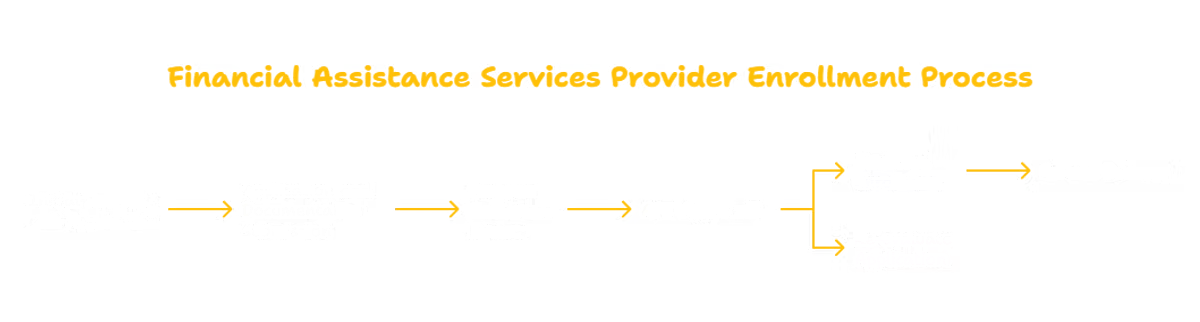
Becoming an approved provider requires a methodical approach to business formation and regulatory compliance. Organizations must first be registered with the Florida Division of Corporations (Sunbiz) and obtain both an EIN from the IRS and a Type 2 NPI. Once the legal entity is established, prospective providers must submit a Qualified Provider Application to the APD, which involves an intensive review of the organization’s financial management infrastructure, internal controls, and adherence to participant rights protection.
Following the submission of the application, the APD will evaluate the provider’s readiness to deliver services. This review focuses on the organization's ability to verify participant eligibility, manage fund disbursements, and maintain clear audit trails for all expenses. Once the APD grants approval, the final stage is to complete the Medicaid enrollment process through the Florida Medicaid Provider Enrollment Portal, where the provider must correctly configure their service billing codes to ensure accurate reimbursement for delivered services.
- Phase 1: Legal registration and tax/NPI documentation.
- Phase 2: Submission of the APD Qualified Provider Application.
- Phase 3: Program readiness review covering internal controls and audit systems.
- Phase 4: Final Medicaid enrollment and billing code configuration.
Documentation and Operational Requirements
Maintaining audit readiness is a cornerstone of being a successful Medicaid provider. Beyond the basic business licenses, agencies must maintain a comprehensive Policy & Procedure Manual that details every aspect of the service delivery cycle. This manual must explicitly cover participant intake, protocols for needs assessment, and the precise procedures for authorizing, paying, and documenting expenses. Internal controls must be clearly defined to ensure that Medicaid funds are safeguarded at all times.
In addition to operational policies, providers must maintain rigorous records regarding staff credentialing and training. Every staff member, from program managers to support staff, must undergo background screenings and complete mandatory training modules. These modules include HIPAA compliance, participant rights, abuse prevention, and incident reporting. Providers must also demonstrate that they have a functional system for tracking Medicaid service authorizations and billing history, which must be readily available for review during state or federal audits.
Staffing Standards for Financial Assistance Agencies
Staffing structures must prioritize financial oversight and professional accountability. The Financial Assistance Program Manager or Supervisor should ideally hold a degree in human services, finance, business, or social work, complemented by practical experience in case management or financial administration. This individual is responsible for ensuring the organization’s ongoing compliance with Medicaid regulations and the integrity of fund disbursement processes.
Support staff are tasked with the daily execution of participant-focused activities. While a high school diploma or GED is the minimum requirement, these individuals must receive specialized training in Medicaid documentation standards, client confidentiality, and emergency response. Because the nature of this work involves assisting individuals with specific health and stability needs, continuous annual refresher training is mandatory to keep staff aligned with evolving Medicaid standards for financial management and incident reporting.
Frequently Asked Questions
What are the primary Medicaid waivers that authorize these services?
Financial Assistance Services are authorized under the iBudget Florida Waiver, which supports individuals with intellectual and developmental disabilities, and specific transition supports may be available through the Statewide Medicaid Managed Care (SMMC) Long-Term Care (LTC) program.
Are Financial Assistance Services considered ongoing monthly income?
No, these services are strictly limited, one-time, non-recurring expenses. They are intended to provide essential start-up assistance, such as security deposits or initial furnishings, to help a participant establish or maintain community living stability.
How long does the provider enrollment process typically take?
The total timeline varies based on organizational preparedness. Generally, business formation takes 1–2 weeks, the APD readiness review process takes 60–90 days, staff training and system development take 30–45 days, and final Medicaid enrollment and billing setup takes 45–60 days.
Key Takeaway
Launching a Financial Assistance Services agency in Florida requires meticulous attention to state and federal regulations, robust internal financial controls, and a clear understanding of the specific HCBS waiver requirements. By prioritizing audit-readiness and compliance from the start, providers can effectively support individuals with disabilities in their transition to independent, community-based living while maintaining the fiscal integrity demanded by the Medicaid program.
Last verified: October 2023. Disclaimer: This information is for educational purposes only and does not constitute legal or professional advice. Always consult the latest guidelines from the Agency for Persons with Disabilities (APD) and the Agency for Health Care Administration (AHCA) to ensure full compliance with current Florida Medicaid regulations.