FAMILY TRAINING & SUPPORT SERVICES PROVIDER IN FLORIDA
By Fatumata Kaba · 2025-07-11 · 5 min read
Empowering Caregivers: The Role of Family Training & Support Services in Florida
Family Training & Support Services in Florida serve as a vital pillar of the state’s Home and Community-Based Services (HCBS) framework, specifically designed to equip unpaid caregivers—such as parents, guardians, and siblings—with the specialized skills, education, and emotional resilience necessary to support individuals with developmental disabilities. By fostering a stable and informed home environment, these services directly contribute to the successful integration of participants into their communities while preventing unnecessary institutionalization.
Operating under the purview of Florida’s iBudget Florida Waiver, these services represent a shift toward person-centered support that recognizes the family unit as the primary provider of care. Authorized providers play a critical role in bridging the gap between clinical support and daily living, ensuring that caregivers are not just providing basic supervision, but are actively implementing strategies that enhance the participant’s autonomy, communication, and overall quality of life.
Navigating the Regulatory Landscape and Agency Oversight
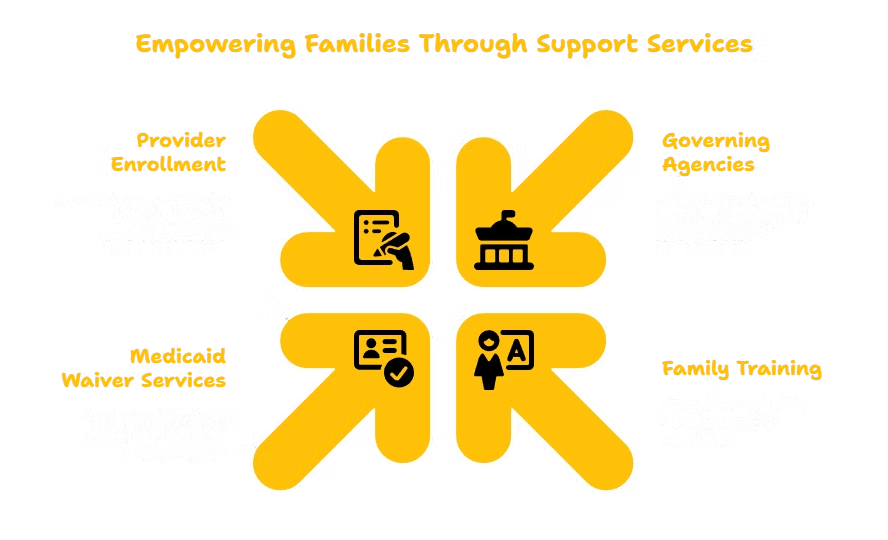
Successful delivery of Family Training & Support Services requires a comprehensive understanding of the tiered regulatory structure governing Florida’s Medicaid waiver programs. The Florida Agency for Persons with Disabilities (APD) acts as the primary gatekeeper for the iBudget Florida Waiver, managing the eligibility, service authorization, and monitoring of providers who serve individuals with intellectual and developmental disabilities.
Beyond the APD, the Florida Agency for Health Care Administration (AHCA) holds responsibility for the fiscal and operational integrity of the Medicaid program. AHCA oversees the enrollment process for providers, handles reimbursement protocols, and ensures that service delivery aligns with federal standards. Furthermore, the Centers for Medicare & Medicaid Services (CMS) provides the overarching federal framework, ensuring that all state-level programs adhere to rigorous person-centered care standards and fiscal accountability requirements.
Core Service Offerings and Caregiver Empowerment
The scope of Family Training & Support Services is intentionally broad to address the multifaceted challenges faced by families of individuals with chronic conditions. Approved providers are expected to deliver a curriculum or coaching model that is directly tethered to the participant’s Individualized Support Plan (ISP), ensuring that every training hour serves a specific therapeutic or developmental objective for the participant.
Providers frequently facilitate the following support mechanisms:
- Skill Acquisition: Instruction on specialized behavior management techniques and practical strategies for managing complex medical or developmental needs.
- Clinical Guidance: Education on the specific disability or condition, including how to implement therapist-recommended interventions within the home environment.
- Daily Living Support: Practical workshops on enhancing the participant’s socialization, communication, and independence in Activities of Daily Living (ADLs).
- Caregiver Resilience: Facilitation of stress management resources, coping strategies, and support groups to reduce caregiver burnout and improve the sustainability of home-based care.
- Resource Navigation: Assisting families in identifying and accessing community-based advocacy systems, social services, and other essential supports.
Establishing Your Agency: Requirements and Provider Approval
To operate as a Medicaid-approved Family Training & Support Services provider, an organization must navigate a structured registration and vetting process. The journey begins with formal business formation, requiring registration with the Florida Division of Corporations (Sunbiz) and the acquisition of a federal Employer Identification Number (EIN) and a Type 2 National Provider Identifier (NPI). These foundational steps establish the agency as a legal entity capable of contracting with state health authorities.
Following the formal setup, the agency must demonstrate its administrative and operational readiness through the APD Qualified Provider Application. This process involves the submission of a robust Policy and Procedure Manual, which serves as the backbone of your agency’s compliance strategy. Essential documentation includes protocols for caregiver intake, service tracking, incident management, HIPAA-compliant data handling, and evidence of comprehensive liability insurance. Agencies are strongly encouraged to attend APD provider orientation sessions to ensure their organizational policies reflect current state mandates.
Human Capital: Staffing Standards and Professional Development
The efficacy of Family Training & Support Services is intrinsically linked to the qualifications and training of your personnel. The Family Training Services Coordinator, often acting as the program manager, should possess a bachelor’s degree in education, social work, psychology, or a related field, alongside demonstrated experience in family-centered systems. This role is responsible for ensuring that training remains aligned with the participant’s ISP and state quality standards.
Family Support Trainers and Coaches, who deliver the direct instruction, must have at least a high school diploma or GED, with a preference for candidates holding certifications in behavioral management or disability support. Regardless of the role, all staff must undergo rigorous onboarding, including:
- Comprehensive background screenings to ensure participant safety.
- Mandatory training on Medicaid documentation, billing compliance, and HIPAA privacy regulations.
- Ongoing professional development in crisis management, emergency preparedness, and the latest evidenced-based practices for developmental disability care.
- Continuous education focused on the evolving needs of caregivers and person-centered planning methodologies.
Frequently Asked Questions
How long does the full provider enrollment process typically take?
The timeline varies by agency readiness, but the full process generally spans 150 to 210 days. This includes 1–2 weeks for business formation, 60–90 days for the APD Qualified Provider application, 30–45 days for staff recruitment and training, and 45–60 days for Medicaid enrollment and billing configuration.
Must all caregiver training take place in the home?
Not necessarily. While the primary objective is to maintain the participant in their home and community, training may occur through various formats, including virtual workshops, office-based group training sessions, or individualized coaching, provided these methods are authorized under the participant’s service plan and meet the needs of the caregiver.
What are the primary reasons for provider application rejection?
Common pitfalls include incomplete Policy and Procedure Manuals, lack of documented staff training curricula, failure to meet specific HIPAA or emergency management standards, and inconsistencies in the documentation of how services will directly benefit the Medicaid participant.
Key Takeaway
Launching a Family Training & Support Services agency in Florida is a mission-critical undertaking that requires meticulous adherence to APD and AHCA regulations. By prioritizing high-quality curricula, robust internal compliance, and a commitment to caregiver-centered support, your agency can play a definitive role in sustaining the home-based care environment for individuals with developmental disabilities. Maintaining clear documentation and staying informed on updates to the iBudget Florida Waiver are the most effective ways to ensure long-term program stability and success.
Last verified: October 2023. Disclaimer: This information is for educational purposes and does not constitute legal or professional advice. Requirements for Medicaid provider enrollment are subject to change. Always refer to the latest guidance from the Florida Agency for Persons with Disabilities (APD) and the Florida Agency for Health Care Administration (AHCA) for current policies and regulations.