FAMILY HABILITATION SERVICES PROVIDER IN ALASKA
By Fatumata Kaba · 2025-07-03 · 5 min read
Family Habilitation Services in Alaska are a critical component of the state’s Home and Community-Based Services (HCBS) Medicaid waiver system, designed to provide long-term, supportive residential care for individuals with intellectual and developmental disabilities (IDD). By facilitating living arrangements within qualified provider homes, this service ensures that individuals receive 24-hour supervision, skill-building assistance, and meaningful community integration in a nurturing, family-centered environment.
What Are Family Habilitation Services and Who Do They Serve?
Family Habilitation Services function as a person-centered alternative to institutional living, allowing individuals with developmental disabilities to thrive in a private, residential setting. These services are specifically tailored for individuals who are unable to live independently or with their biological families, offering a structured environment that prioritizes safety, stability, and emotional well-being. By residing with a trained provider family or extended relatives, individuals gain access to natural supports that mimic the dynamics of a traditional home life while addressing their unique habilitative needs.
The primary objective of these services is to foster independence and maximize the individual’s quality of life. Providers are tasked with delivering more than just basic housing; they are instrumental in daily life skills training—such as cooking, cleaning, and personal hygiene—and must actively encourage the individual’s participation in recreational, social, and community activities. This holistic approach ensures that each participant remains an integrated member of their local community while receiving the professional oversight required by their specific HCBS waiver.
What Are the Governing Agencies and Regulatory Oversight?
Navigating the regulatory landscape of Alaska’s waiver programs requires collaboration with several key entities. The Alaska Department of Health’s Division of Senior and Disabilities Services (SDS) serves as the primary governing body responsible for approving providers, conducting home inspections, and ensuring that all care delivery aligns with strict HCBS standards. They play an active role in monitoring the quality of life within these homes to ensure the environment remains person-centered and safe.
At the administrative level, Alaska Medicaid manages the complexities of provider enrollment and the reimbursement process for these services. Furthermore, all programs must operate under the federal guidelines established by the Centers for Medicare & Medicaid Services (CMS). CMS oversight is designed to ensure that Alaska’s waiver programs maintain compliance with federal mandates regarding community integration and the requirement that individuals receive care in the least-restrictive setting possible.
- Alaska Department of Health – Division of Senior and Disabilities Services (SDS): Responsible for provider approval and program monitoring.
- Alaska Medicaid (Department of Health): Manages financial reimbursement and provider enrollment.
- Centers for Medicare & Medicaid Services (CMS): Provides the federal framework for community integration and HCBS standards.
How Do Providers Meet Licensing and Operational Requirements?
Launching a Family Habilitation program requires rigorous preparation to ensure both administrative and physical readiness. If operating as an agency, the provider must be registered with the Alaska Division of Corporations, Business and Professional Licensing, obtain an EIN from the IRS, and secure a Type 2 NPI. Beyond legal registration, the physical home environment must undergo comprehensive reviews to verify that it meets all necessary safety, sanitation, and local fire code requirements before any placement can occur.
Operational excellence is maintained through a robust set of policies and procedures. Providers must develop a manual that covers admission criteria, daily routine development, medication assistance, and incident reporting. All documentation systems must be capable of tracking progress on habilitative goals and ensuring that the rights and personal choices of the individual are protected at every turn. Furthermore, all adult members of the household must undergo background checks to ensure the safety and security of the participant.
What Is the Step-by-Step SDS Provider Enrollment Process?
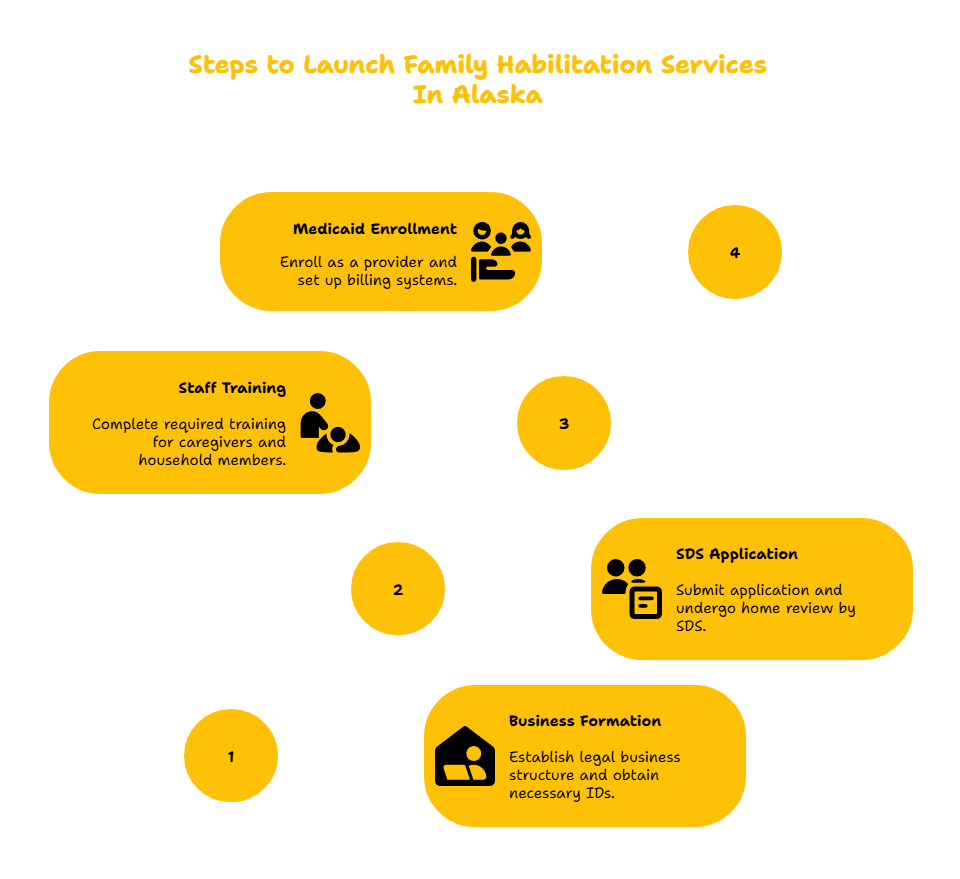
The journey to becoming an approved provider begins with an expression of interest and active participation in SDS orientation sessions. These sessions are vital for understanding the specific expectations regarding residential and habilitative care in Alaska. Once the initial orientation is complete, the applicant must submit a detailed program proposal that describes the home environment, the supervision model, and a strategy for achieving the individual’s specific training goals.
Following the application, SDS conducts a formal home inspection and readiness review. This phase evaluates the suitability of the home, the capability of the caregivers, and the presence of necessary safety protocols. Once SDS grants approval, the provider must enroll in the Alaska Medicaid system through the MMIS portal to enable claims submission and billing. The finalization of the Medicaid provider agreement marks the official transition from an approved home to an active, reimbursable service provider.
- Submit service plans, including emergency protocols and sample daily schedules.
- Ensure all household members have cleared mandatory background checks.
- Complete the Medicaid enrollment process through the Conduent MMIS system.
- Configure billing codes to align with the specific HCBS waiver program.
Staffing and Training Standards for Family Caregivers
The success of the Family Habilitation model rests upon the competence and dedication of the family caregivers. These individuals must possess relevant experience in caregiving or supporting persons with disabilities and must be fully vetted and approved by SDS. For larger agencies, a Program Supervisor is required to provide necessary oversight, ensuring that quality of care remains consistent across multiple homes.
Continuous education is a hallmark of this service model. All caregivers are required to maintain current certifications in CPR and First Aid, while also engaging in annual training regarding ethics, abuse prevention, and person-centered planning. By staying informed about behavioral support protocols and emergency response, caregivers ensure that they are equipped to handle the diverse needs of the individuals they support, ultimately creating a reliable and safe home environment.
Frequently Asked Questions
Which Medicaid Waivers cover Family Habilitation Services in Alaska?
These services are generally authorized under the Intellectual and Developmental Disabilities (IDD) Waiver, the Adults with Physical and Developmental Disabilities (APDD) Waiver in specific instances, and the Children with Complex Medical Conditions (CCMC) Waiver for family-based children’s homes.
How long does the provider approval process typically take?
The timeline varies by applicant, but generally involves 1–2 weeks for business setup, 60–90 days for SDS application and review, 30–45 days for household training, and 45–60 days for Medicaid system enrollment.
What specific documentation is required for the SDS policy manual?
The manual must include policies on home inspection, admission and matching, skill-building plans, medication assistance, emergency and fire safety procedures, incident reporting, grievance procedures, and documentation templates for progress notes.
Key Takeaway
Establishing a Family Habilitation program in Alaska is a significant undertaking that requires strict adherence to SDS regulations, comprehensive staff training, and a firm commitment to person-centered care. By focusing on compliant business formation and rigorous preparation for home inspections, prospective providers can build a sustainable model that significantly improves the quality of life for individuals with developmental disabilities within the community.
Last verified: May 2024. This content is for informational purposes only and does not constitute legal or professional advice. Requirements for Medicaid waiver programs are subject to change. Please consult with the Alaska Department of Health and official state documentation for the most current regulations and policy updates.