ENVIRONMENTAL MODIFICATION SERVICES PROVIDER IN WASHINGTON
By Fatumata Kaba · 2026-04-06 · 5 min read
CREATING SAFE, ACCESSIBLE ENVIRONMENTS THROUGH STRUCTURAL CHANGES THAT PROMOTE INDEPENDENCE AND QUALITY OF LIFE
Environmental Modification (EMOD) services in Washington are specialized structural home adaptations designed to enable individuals with developmental disabilities to live independently and safely within their own communities. By reducing health risks and removing physical barriers, these services provide a vital alternative to institutional care, ensuring participants can remain in their preferred home environment through support provided by Medicaid Home and Community-Based Services (HCBS) waivers.
Administered by the Developmental Disabilities Administration (DDA) and overseen by the Washington State Health Care Authority (HCA), the EMOD program requires providers to meet rigorous licensing, safety, and documentation standards. For contractors and service agencies, becoming an approved provider involves a systematic process of enrollment, compliance with Washington State residential building codes, and strict adherence to Person-Centered Service Plan (PCSP) requirements.
Navigating the Regulatory Landscape: Who Governs EMOD Services?
The provision of environmental modifications is a highly regulated sector of Washington’s Medicaid infrastructure. Understanding the division of labor between state agencies is essential for any provider seeking to maintain good standing and ensure timely reimbursement through the Apple Health system.
The Developmental Disabilities Administration (DDA) acts as the primary point of contact for participant eligibility and the clinical authorization of service needs. They ensure that all modifications align with the participant’s unique functional requirements as documented in their PCSP. Meanwhile, the Health Care Authority (HCA) manages the financial framework, serving as the Medicaid authority that processes claims and mandates compliance with federal and state waiver regulations.
The Department of Social and Health Services (DSHS) rounds out the oversight structure by coordinating the day-to-day delivery of services. Through DSHS case managers, providers receive referrals and verification of necessity, ensuring that each project—from ramp construction to bathroom accessibility—is legally and clinically justified before work commences.
What Constitutes an Eligible Environmental Modification?
Environmental modifications are defined as permanent physical alterations to a primary residence that directly increase a participant’s ability to perform Activities of Daily Living (ADLs) or Instrumental Activities of Daily Living (IADLs). To qualify, a modification must be deemed medically necessary and explicitly listed in the participant’s PCSP to ensure it addresses specific, documented challenges.
Approved projects typically focus on accessibility and safety. Providers must demonstrate that the modification is the most cost-effective solution for the participant's specific needs. Examples of common projects include:
- Wheelchair ramps, widened doorways, and specialized door hardware.
- Roll-in showers, grab bars, and raised or height-adjusted toilets.
- Stairlifts and vertical platform lifts for multi-story homes.
- Kitchen counter and cabinet modifications to allow for seated access.
- Non-slip flooring installations and enhanced environmental lighting.
- Adaptive technology, such as voice-activated home controls or environmental control units.
The Roadmap to Provider Enrollment and Compliance
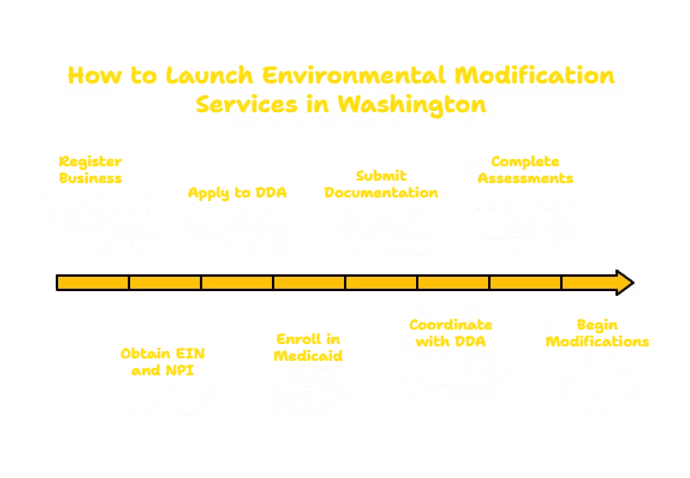
Becoming a qualified EMOD provider is a multi-step process that requires balancing business administration with specialized Medicaid requirements. Before accepting referrals, agencies must ensure their legal and operational infrastructure is fully established, starting with business registration through the Washington Secretary of State and obtaining a Type 2 NPI.
Once the business entity is established, the provider must obtain a valid Washington State contractor’s license in accordance with RCW 18.27. This is a non-negotiable prerequisite, as it ensures the provider possesses the technical capability to perform home modifications safely. Following licensure, the provider must enroll in the ProviderOne system to facilitate electronic billing and reimbursement. Maintaining active general liability and workers’ compensation insurance is also mandatory throughout the duration of the provider agreement.
Documenting Quality and Safety: The Policy and Procedure Manual
A robust Policy and Procedure Manual is the cornerstone of a successful EMOD operation. This document acts as the definitive guide for how the agency approaches project intake, safety compliance, and financial record-keeping. DDA auditors expect providers to demonstrate consistent project workflows that protect the participant’s rights while ensuring high standards of construction.
The manual must detail the entire project lifecycle, starting from the initial site assessment and ending with the final verification of work completion. Documentation is the most critical element of the billing process; without comprehensive records, reimbursement may be delayed or denied. Essential sections to include in the manual are:
- Standardized project proposal templates and approval workflows.
- ADA-compliance and residential safety checklists for each project type.
- Clear informed consent documentation for participants and their guardians.
- Systematic before-and-after photo logs to prove project necessity and quality.
- Standard operating procedures for HIPAA-compliant data storage and communication.
Waiver Programs and Project Authorization
EMOD services are not a one-size-fits-all benefit; they are siloed into specific Medicaid waivers, each with its own budget limits and criteria. The Basic Plus, Core, and Individual and Family Services (IFS) waivers are the primary vehicles for funding these modifications. Furthermore, Community First Choice (CFC) may cover minor adaptations if they are directly linked to supporting a participant's ability to perform ADLs.
Providers must be vigilant in verifying the specific waiver under which a client is enrolled. Because each waiver has specific financial caps and coverage limitations, the provider must ensure that the project scope fits within these budgetary constraints. All work must be pre-approved; initiating modifications without a confirmed authorization from the DDA case manager puts the provider at significant financial risk, as retroactive approvals are generally not permitted.
Frequently Asked Questions
What is the difference between a general contractor and an EMOD provider?
While an EMOD provider must be a licensed general contractor, they must also undergo specific DDA qualification processes. Unlike standard construction, EMOD work requires deep familiarity with Medicaid billing, HIPAA confidentiality, and person-centered service planning, ensuring modifications are tailored to the specific disability-related needs of the participant.
Are there restrictions on what types of homes can be modified?
Yes. Modifications are intended for the participant’s primary residence. If the participant resides in a rental property, the provider must ensure that the landlord has provided written consent for the modifications, as these are typically permanent, physical changes to the structure of the home.
How does a provider ensure they are paid for their services?
Payment is contingent upon obtaining valid service authorization prior to the start of any project. Once the work is verified by the DDA case manager and documented according to the agency’s guidelines, the provider submits a claim through the ProviderOne portal. Consistent, error-free documentation—including invoices and project completion photos—is the key to ensuring timely reimbursement.
Key Takeaway: Success as an EMOD provider in Washington relies on the integration of high-quality construction standards with meticulous administrative compliance. By focusing on the regulatory requirements set by the DDA and HCA, and by maintaining a clear, documented workflow for every project, agencies can build a sustainable practice that significantly improves the quality of life for Washington residents with developmental disabilities.
Last verified: September 2024. This content is provided for informational purposes only and does not constitute legal or professional advice. Always consult the latest DDA and HCA provider manuals and official state documentation for the most current requirements.