ENVIRONMENTAL MODIFICATION SERVICES PROVIDER IN TENNESSEE
By Fatumata Kaba · 2025-10-22 · 5 min read
Environmental Modification Services in Tennessee function as a critical support pillar within the state’s Medicaid landscape, enabling individuals with physical, medical, or developmental needs to maintain independence in their own homes. These services encompass the design, funding, and execution of essential physical adaptations—ranging from structural accessibility improvements to specialized safety equipment—that must be medically necessary and directly aligned with the participant's functional limitations as defined in their Individual Support Plan (ISP).
What Are the Governing Bodies and Regulatory Requirements for Environmental Modifications?
The delivery of Environmental Modification services is governed by a tripartite structure involving federal guidance, state-level administration, and oversight by disability-specific departments. TennCare, Tennessee’s Medicaid agency, acts as the primary authority for authorization and financial reimbursement. It establishes the budgetary frameworks and policy standards that ensure services remain compliant with federal regulations set by the Centers for Medicare & Medicaid Services (CMS).
On an operational level, the Department of Intellectual and Developmental Disabilities (DIDD) plays a vital role in the oversight of the service delivery system. DIDD is responsible for approving provider qualifications, ensuring that every project is congruent with the participant’s documented ISP, and conducting monitoring activities to verify that services meet quality and safety standards. Providers must demonstrate strict adherence to both TennCare and DIDD protocols to maintain their standing within these waiver programs.
How Does the Service Model Support Functional Independence?
The core objective of Environmental Modification is to mitigate barriers that impede a participant’s ability to function safely within their living environment. Projects are reviewed on a case-by-case basis, necessitating a clear nexus between the proposed modification and the individual’s specific disability-related need. The scope of these projects is constrained by program-specific caps and defined service definitions, ensuring resources are directed toward documented health and safety requirements rather than cosmetic or general home improvement needs.
Commonly approved modifications that address these functional needs include:
- Installation of ramps and the widening of doorways to facilitate wheelchair access.
- Bathroom renovations, including the construction of roll-in showers and the installation of ADA-compliant grab bars.
- Adjustments to physical infrastructure, such as lowering countertops or installing accessible sinks for easier reach.
- Safety-oriented flooring installations, such as non-slip surfaces, to prevent falls.
- Mechanical accessibility aids like stair lifts or vertical platform lifts (VPLs) when medically justified.
- Specialized technologies, including smart home accessibility devices or fire alarms equipped with visual or vibration alerts.
- Structural modifications like fencing, provided there is a clear, documented safety justification within the participant’s ISP.
What Steps Are Necessary for Provider Enrollment and Credentialing?
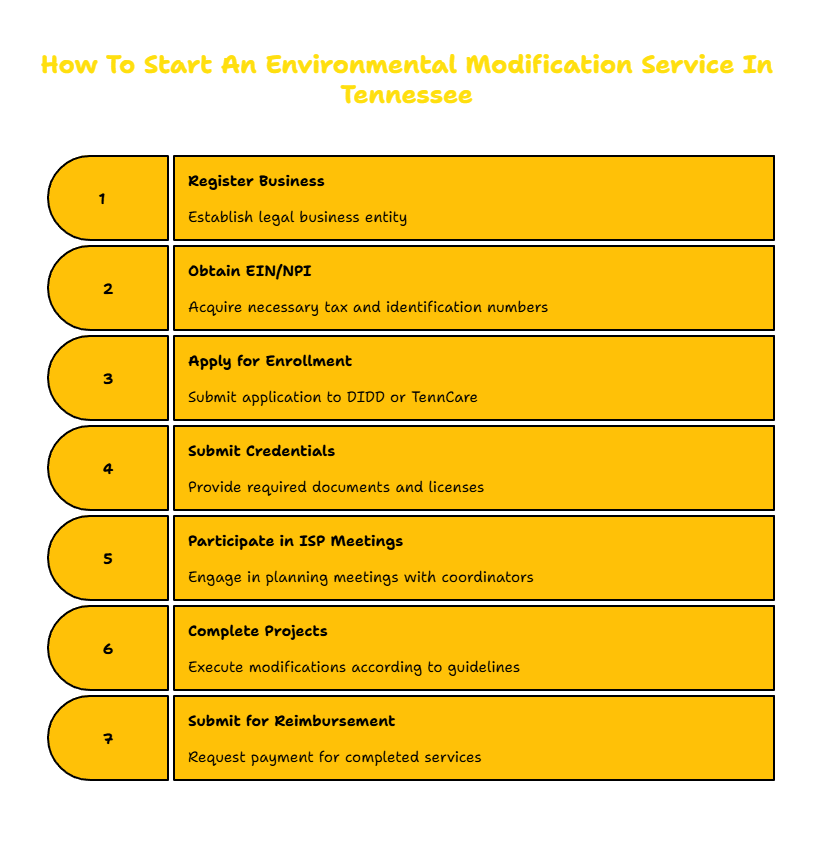
Becoming an approved Environmental Modification provider in Tennessee requires a systematic approach to business formation and regulatory compliance. Organizations must first establish a legal business entity, obtain a federal Employer Identification Number (EIN), and secure a Type 2 National Provider Identifier (NPI). This foundational step is followed by formal enrollment with TennCare and/or DIDD as a Medicaid waiver provider, specifically under the Environmental Modification category.
Beyond basic business registration, prospective providers must satisfy state-specific contracting requirements. This includes maintaining valid contractor licensure in Tennessee—such as a Home Improvement or Residential Contractor license—depending on the complexity and nature of the construction projects. Furthermore, agencies are required to maintain comprehensive general liability and workers’ compensation insurance coverage to protect both the business and the waiver participants during the execution of home modifications.
How Should a Provider Develop Their Operational Documentation?
A robust Environmental Modification Policy & Procedure Manual is a mandatory component of the provider enrollment package. This document serves as the regulatory roadmap for the agency, detailing how the provider will operate within the Medicaid system. Essential sections of this manual must address the scope of allowable projects, specific protocols for pre- and post-installation inspections, and strict adherence to participant rights and safety standards.
In addition to these operational policies, the provider must establish clear documentation workflows. This includes standardized procedures for cost estimating, billing, and reimbursement. Effective communication protocols between the provider, the support coordinator, and the participant must be codified to ensure that all parties are aligned throughout the project lifecycle. These internal controls are vital for maintaining the audit trail required by TennCare and ensuring that all modifications are completed in accordance with the individualized plan of care.
What Are the Core Staffing and Training Expectations?
Successful execution of home modifications relies on a multidisciplinary team approach. At a minimum, agencies require a Project Manager or Coordinator who possesses experience in construction or home modification oversight, as well as a working knowledge of Medicaid documentation requirements. Actual installations must be performed by appropriately licensed contractors or certified trade professionals to ensure safety and code compliance.
Furthermore, providers must ensure their workforce is adequately trained in the nuances of person-centered service delivery. This training curriculum should encompass:
- HIPAA compliance and the protection of sensitive participant health information.
- Person-centered planning principles and the importance of ISP alignment.
- Standards for safety, hazard assessment, and the documentation of project progress.
- Specific TennCare compliance procedures, ensuring all team members understand their role in the waiver program ecosystem.
Frequently Asked Questions
Which Medicaid Waiver programs cover Environmental Modifications in Tennessee?
Environmental Modifications are covered under several key programs, including the ECF CHOICES Waiver, various 1915(c) Waivers for individuals with intellectual or developmental disabilities, the Katie Beckett Program for children with complex medical needs, and EPSDT (Early and Periodic Screening, Diagnostic, and Treatment) services for individuals under the age of 21 when medically necessary.
What is the typical timeline for an agency to launch as a provider?
The timeline varies based on the current status of the entity, but generally involves a 1–2 month period for business registration and credentialing, followed by 2–3 months for TennCare/DIDD enrollment. Staffing, finalization of policy manuals, and administrative preparation typically require an additional 30–60 days before the organization is ready to begin service implementation upon authorization.
Are general home repairs or aesthetic upgrades covered under these waivers?
No. Medicaid waiver funding is strictly reserved for modifications that are medically necessary to support health, safety, or functional independence. General home maintenance, repairs unrelated to the participant’s disability, and aesthetic or cosmetic upgrades do not meet the criteria for reimbursement.
Key Takeaway: Becoming an Environmental Modification provider requires a meticulous balance of contractor expertise and administrative adherence to TennCare and DIDD waiver protocols. Success depends on maintaining valid licensure, developing comprehensive policy documentation, and ensuring that every modification is directly linked to the functional needs articulated in a participant's Individual Support Plan.
Last verified: October 2023. Disclaimer: This information is provided for educational purposes and does not constitute legal or professional advice. Always consult directly with TennCare, DIDD, or qualified legal counsel regarding specific state requirements and program updates.