ENVIRONMENTAL MODIFICATION SERVICES PROVIDER IN MINNESOTA
By Fatumata Kaba · 2025-08-13 · 5 min read
What Are Environmental Modification Services in Minnesota?
Environmental Modification Services are specialized physical adaptations made to an individual's private residence to ensure the home remains a safe, accessible, and supportive environment. These services are essential for participants in Minnesota’s Home and Community-Based Services (HCBS) waiver programs who face functional limitations that impede their ability to perform activities of daily living or maintain community integration.
By providing structural changes, these services enable individuals with disabilities or chronic health conditions to remain in their homes rather than transitioning to institutional settings. Modifications are strictly guided by a participant’s Person-Centered Plan (PCP) or Individual Service Plan (ISP), ensuring that every installation is medically necessary and directly improves the individual's safety, independence, and overall quality of life.
Understanding the Governance of Environmental Modification Services
The delivery of environmental modifications is a highly regulated process involving multiple state and federal entities. The Minnesota Department of Human Services (DHS) serves as the primary administrator, overseeing the Medicaid programs and waiver policies that authorize these services. Their role is to ensure that all providers maintain compliance with state regulations and that modifications align with established waiver criteria.
In addition to the DHS, the Minnesota Department of Health (MDH) may be involved in regulating health and safety standards, particularly when modifications intersect with health-related equipment. Federal oversight is maintained by the Centers for Medicare & Medicaid Services (CMS), which ensures that Minnesota’s waiver programs remain in compliance with national Medicaid statutes and that federal funds are utilized appropriately for authorized home adaptations.
Steps for Providers to Become Authorized to Deliver Services
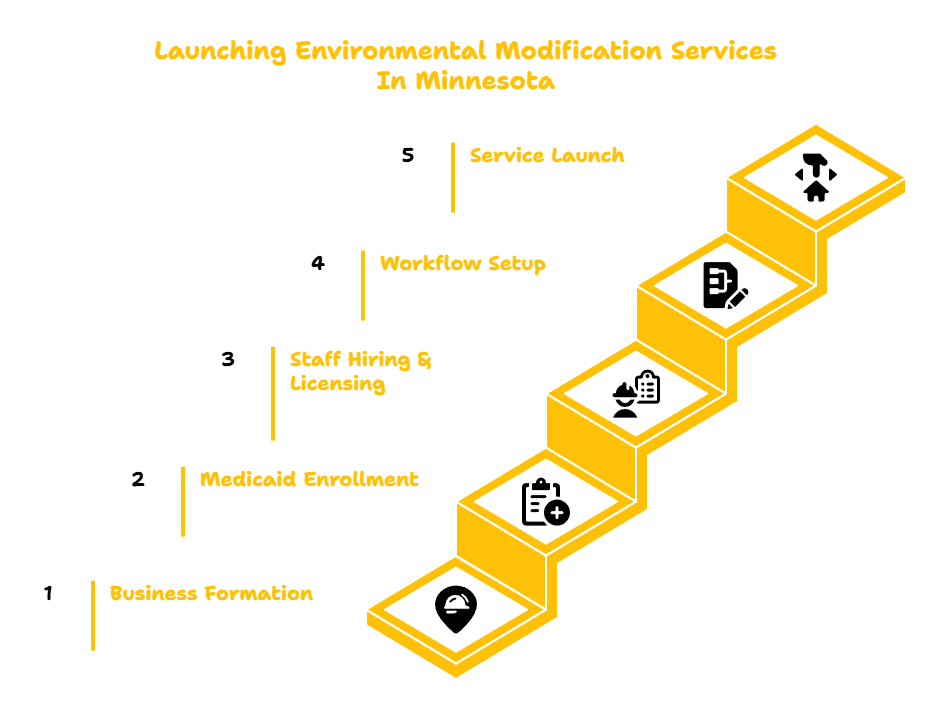
Launching an Environmental Modification service agency requires a structured approach to credentialing and business formation. Prospective providers must first register their business with the Minnesota Secretary of State and secure a federal Employer Identification Number (EIN). Additionally, obtaining a Type 2 National Provider Identifier (NPI) is a mandatory step for billing Medicaid services.
Once the business structure is established, the agency must enroll as a Medicaid provider through the Minnesota Department of Human Services. This process involves a rigorous compliance review where the agency must demonstrate that it meets all state requirements, including building code adherence, accessibility standards, and the maintenance of comprehensive liability insurance. Failure to provide sufficient documentation at this stage can significantly delay the enrollment timeline.
- Register business with the Minnesota Secretary of State.
- Obtain EIN from the IRS and NPI (Type 2).
- Enroll as a Medicaid provider with the Minnesota Department of Human Services (DHS).
- Comply with all local, state, and federal construction, zoning, and accessibility regulations.
- Maintain active, comprehensive liability insurance and meticulous project documentation.
Key Service Delivery and Staffing Requirements
The success of an environmental modification project relies on the expertise of the project team. A designated Environmental Modifications Project Manager must be appointed to oversee the lifecycle of each adaptation, from the initial site assessment to final inspection. This individual is responsible for interpreting the participant's ISP and ensuring that all modifications meet ADA accessibility standards and Minnesota building codes.
Technical work must be performed by licensed contractors who possess the appropriate state-level licensure for the specific trades involved, such as electrical, plumbing, or structural carpentry. Agencies are responsible for performing thorough background checks on all staff and contractors. Furthermore, staff must undergo training in client communication, safety protocols, and the specific documentation required for Medicaid reimbursement, such as project close-out checklists and material verification logs.
Eligible Medicaid Waivers for Home Adaptations
Environmental Modification Services are accessible through several key Minnesota HCBS waiver programs. These include the 1915(c) HCBS Waiver for the Elderly and Disabled, the Community Access for Disability Inclusion (CADI) Waiver, and the Brain Injury (BI) Waiver. Each of these programs is designed to fund specific types of structural and equipment-based home adaptations.
Approved providers are authorized to deliver a range of services including the installation of wheelchair ramps, the widening of doorways, the construction of roll-in showers, and the installation of specialized equipment like stair lifts or lowered kitchen countertops. These modifications must be directly linked to the individual's functional needs as identified during the assessment phase. The following list highlights common service categories:
- Structural home modifications to improve accessibility and safety.
- Equipment installation to support mobility and independence.
- Adaptations to bathroom and kitchen spaces for ergonomic access.
- Installation of emergency alert and communication systems.
Quality Assurance and Regulatory Compliance
Compliance is the cornerstone of maintaining active provider status in Minnesota. Agencies must implement internal quality assurance protocols to ensure that every modification is not only functional but also compliant with the Americans with Disabilities Act (ADA) and local municipal building codes. Regular internal audits of project files help ensure that all modifications remain aligned with the specific authorizations documented in the participant's Person-Centered Plan.
Beyond technical execution, providers must manage ongoing relationships with lead agencies, such as county case managers. These professionals coordinate the authorization process, and the provider's ability to communicate technical requirements clearly—and to obtain the necessary approvals before starting work—is vital to ensuring smooth service delivery and successful claims reimbursement.
Frequently Asked Questions
What is the typical timeline to launch an agency?
The timeline varies by agency, but the process generally includes 1–2 weeks for business formation, 60–90 days for Medicaid provider enrollment, 30–45 days for staffing and licensing, and 2–4 weeks for establishing internal equipment and project workflows.
What documentation must a provider maintain for audits?
Providers must maintain detailed records, including Articles of Incorporation, NPI confirmation, proof of ADA compliance, liability insurance, and a comprehensive policy and procedure manual. This manual must detail assessment protocols, installation and inspection procedures, and client approval forms.
Are specific licenses required for the actual construction work?
Yes. All staff and subcontractors must hold valid contractor’s licenses issued by the state of Minnesota. Providers are responsible for verifying that all technicians are properly licensed, insured, and trained in accessibility standards before performing any work in a participant's home.
Key Takeaway
Establishing an Environmental Modification agency in Minnesota requires a clear commitment to regulatory compliance, rigorous staff credentialing, and a deep understanding of the DHS enrollment process. By meticulously managing the transition from business formation to service delivery, providers can successfully support the health, safety, and independence of individuals within the HCBS waiver community.
Last verified: October 2023. This information is intended for educational purposes and does not constitute legal or professional advice. Always consult the Minnesota Department of Human Services or professional consultants for the most current requirements.