ENVIRONMENTAL MODIFICATION SERVICES PROVIDER IN MAINE
By Fatumata Kaba · 2025-08-11 · 5 min read
CREATING SAFE, ACCESSIBLE LIVING SPACES THAT SUPPORT INDEPENDENCE AND COMMUNITY LIVING GOALS
Environmental Modification Services in Maine involve specialized physical adaptations to a participant’s primary residence or personal vehicle to enhance safety, mobility, and overall functional independence. These essential services are covered under several MaineCare (Medicaid) Home and Community-Based Services (HCBS) waiver programs and require formal prior authorization based on demonstrated medical and functional needs.
What are the Regulatory Framework and Governing Agencies in Maine?
The delivery of Environmental Modification services is governed by a collaboration between state and federal entities to ensure that modifications meet both safety standards and the specific needs of the Medicaid population. The Maine Department of Health and Human Services (DHHS), specifically the Office of MaineCare Services (OMS), acts as the primary agency for the administration of Medicaid funding and the oversight of provider enrollment requirements.
Operational oversight and participant-level management fall under the Maine DHHS Office of Aging and Disability Services (OADS). This office is responsible for determining participant eligibility, conducting functional assessments, and granting the necessary service authorizations for specific modifications. Additionally, because these programs operate under 1915(c) waivers, the Centers for Medicare & Medicaid Services (CMS) provides federal oversight to ensure all services align with national HCBS standards, while the Maine Division of Licensing and Certification ensures that any structural changes adhere to state building codes and safety regulations.
What Types of Modifications Are Approved Under MaineCare Waivers?
Environmental Modifications are defined as permanent or semi-permanent physical adaptations designed to remove barriers to independence. These adaptations must be directly linked to the participant’s identified disability and documented within their Person-Centered Plan of Care. Because these funds are intended to supplement rather than replace the obligations of landlords or other insurance programs, each request undergoes a rigorous review for medical necessity.
- Wheelchair ramps, platform lifts, and automated stair lifts.
- Structural accessibility upgrades including grab bars, handrails, door widening, and non-skid flooring.
- Bathroom modifications such as roll-in showers, roll-under sinks, and raised toilets.
- Kitchen adaptations such as lowered countertops and accessible appliances.
- Medically justified smart-home systems or environmental controls.
- Vehicle modifications, including lifts, ramps, and adaptive driving controls.
- Structural changes specifically required for fire safety or emergency egress.
How Do Providers Navigate the Enrollment Process?
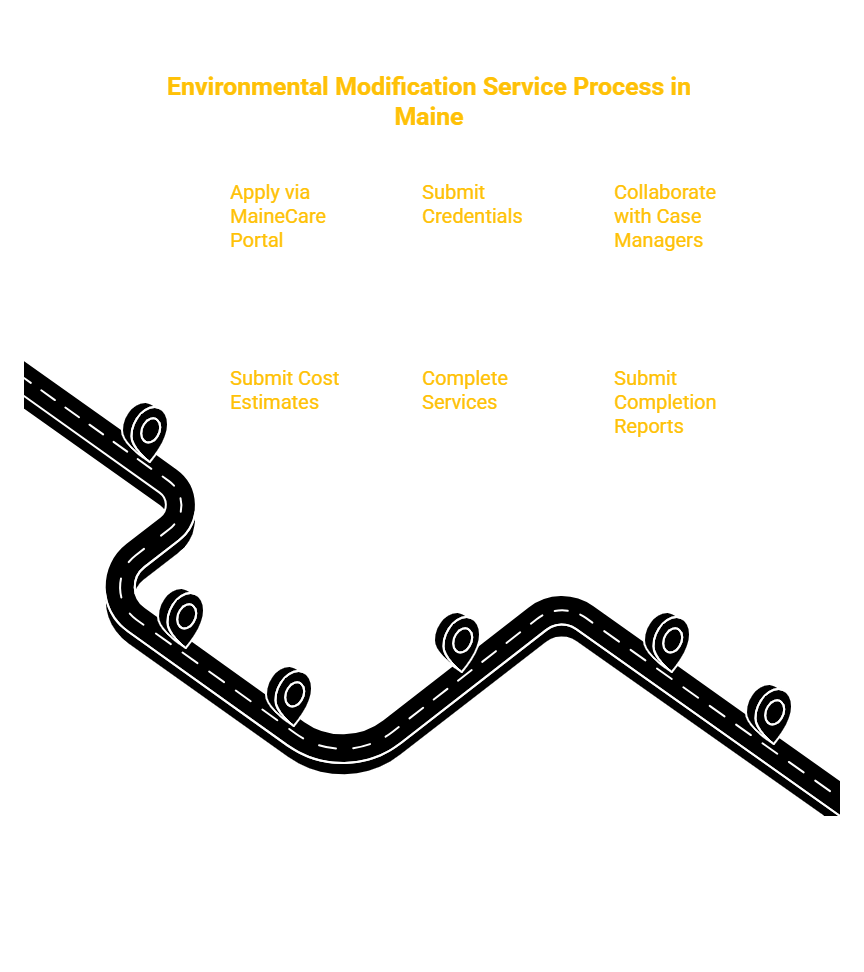
Becoming an approved MaineCare provider is a systematic process that requires strict attention to detail and compliance. The first step involves registering the business with the Maine Secretary of State and obtaining an IRS Employer Identification Number (EIN) and a National Provider Identifier (NPI). Once these foundational steps are complete, providers must navigate the MaineCare Provider Enrollment Portal to officially apply as an Environmental Modification Provider under the appropriate waiver categories.
During the enrollment phase, candidates must be prepared to submit comprehensive documentation that verifies their qualifications, including contractor licenses, proof of general liability insurance, and worker’s compensation coverage. Providers must also demonstrate their competency by submitting samples of project documentation or professional portfolios. Once enrolled, the provider enters a cycle of collaboration with OADS case managers and occupational therapists, who conduct the initial home assessments. Following this, the provider submits detailed cost estimates for formal prior authorization before any work commences.
What Documentation and Staffing Standards Are Required?
Maintaining a high standard of record-keeping is critical for compliance and successful reimbursement. Every provider must maintain an Environmental Modification Policy & Procedure Manual that outlines the entire workflow, from the initial intake and participant consent to the final inspection. Essential records include home evaluation templates, detailed cost estimate sheets, signed vendor quotes, and before-and-after photographic evidence to substantiate the completed work.
Staffing needs vary based on the scale of the operation, but a core team usually includes a licensed Construction Lead or Accessibility Contractor who understands both building codes and ADA-compliant design. A Project Coordinator or Program Supervisor is often tasked with the vital role of managing quality control, ensuring that all billing reflects the authorized scope, and maintaining HIPAA compliance throughout the project duration. Many providers also find it beneficial to partner with qualified Occupational Therapists who can provide professional clinical recommendations for the specific modifications needed to ensure participant safety.
Which MaineCare Waiver Programs Support These Services?
Environmental Modification services are reimbursed through several distinct Medicaid waiver programs, each serving a specific demographic. These include Section 19 (Elderly and Adults with Disabilities Waiver), Section 21 (Comprehensive Waiver for Individuals with Intellectual Disabilities), and Section 29 (Support Waiver). Additionally, Section 20 serves children with complex medical needs, and the Money Follows the Person (MFP) program assists individuals in transitioning from institutional settings back into their own homes.
Providers should be aware that these programs operate on specific reimbursement structures and may include limitations on frequency—for example, some items may only be eligible for reimbursement every five years. It is the responsibility of the provider to verify the specific coverage limits and coding requirements for each waiver program before initiating a service plan. Consistent communication with case managers is the most effective way to ensure that the project scope remains within the bounds of the participant's authorized waiver budget.
Frequently Asked Questions
Are vehicle modifications covered under the same waiver rules as home modifications?
Yes, vehicle accessibility adaptations, such as lifts and adaptive controls, are covered under the environmental modification service category provided they are deemed medically necessary and fall within the guidelines of the participant's specific waiver program.
How long does the provider enrollment process typically take?
The entire timeline, including business registration, MaineCare enrollment, and the preparation of required policy manuals, usually spans approximately 60 to 90 days. It is recommended that providers allocate sufficient time for documentation preparation before attempting to submit their application through the MaineCare portal.
What is the role of an Occupational Therapist in this process?
An Occupational Therapist often acts as an independent consultant or team member who assesses the home environment and the physical limitations of the participant. Their professional recommendation provides the clinical justification required by DHHS to approve complex or high-cost modifications.
Key Takeaway
Successfully operating as an Environmental Modification provider in Maine requires a blend of rigorous administrative compliance, high-quality construction standards, and a deep understanding of MaineCare’s waiver-specific protocols. By maintaining detailed records, adhering to state licensing requirements, and fostering strong professional relationships with OADS case managers, providers can build a sustainable, mission-driven business that effectively supports participant independence.
Last verified: 2024. WCG is a private consulting firm. We are not the Maine Department of Health and Human Services. Information provided is for educational purposes only and does not constitute legal or financial advice. Please consult with state agencies or legal counsel for specific regulatory guidance.