ENVIRONMENTAL MODIFICATION SERVICES PROVIDER IN ALASKA
By Fatumata Kaba · 2025-07-03 · 6 min read
Environmental Modification Services in Alaska are specialized home adaptation services designed to increase accessibility, safety, and independence for individuals enrolled in Home and Community-Based Services (HCBS) Medicaid Waivers. By providing medically necessary physical changes to a primary residence—such as ramp installations, bathroom modifications, and doorway widening—these services allow participants to remain in their homes rather than transitioning to institutional care settings.
To operate as an approved provider, an organization must navigate both the regulatory requirements of the Alaska Department of Health’s Division of Senior and Disabilities Services (SDS) and the financial enrollment protocols of the Alaska Medicaid Management Information System (MMIS). This process ensures that all structural interventions are not only high-quality and compliant with building codes but also align directly with the specific needs identified in an individual’s person-centered plan.
How Do Environmental Modifications Support HCBS Waiver Participants?
Environmental modifications serve as a critical bridge between a participant’s physical capabilities and their living environment. In the context of Alaska’s HCBS waivers, these services are not broad home renovations; they are strictly defined by medical necessity. Every project must be directly linked to a documented disability or chronic condition and must be authorized by a care coordinator as part of the individual’s person-centered plan to ensure it is the most cost-effective solution for maintaining health and safety.
When providing these services, agencies act as both specialized contractors and partners in a client's care team. The modifications delivered must prioritize accessibility standards, such as those established by the Americans with Disabilities Act (ADA), while meeting all local municipal building codes. Common interventions include:
- Installation of wheelchair ramps, grab bars, and handrails for fall prevention.
- Widening of doorways and hallways to accommodate mobility aids.
- Bathroom adaptations, such as roll-in showers, roll-under sinks, and ADA-compliant toilets.
- Floor leveling and the installation of non-slip flooring to mitigate trip hazards.
- Implementation of specialized sensory or visual alert systems for individuals with hearing or vision impairments.
Which Agencies Govern the Delivery of These Services?
Provider agencies are subject to a tiered oversight structure that involves state and federal entities. The primary regulatory body in Alaska is the Department of Health – Division of Senior and Disabilities Services (SDS). SDS is responsible for the approval of environmental modification providers, the clinical review of modification requests to ensure they meet waiver criteria, and the ongoing monitoring of service quality to ensure compliance with state standards.
Complementing the role of SDS, the Alaska Medicaid program manages the fiscal integrity of the waiver programs. This includes the administrative tasks associated with provider enrollment, claims processing, and reimbursement management via the MMIS. At the federal level, the Centers for Medicare & Medicaid Services (CMS) provides the overarching regulatory framework for all HCBS waiver programs, ensuring that Alaska’s operational practices remain in lockstep with federal law regarding home-based, person-centered care.
What Are the Prerequisites for Provider Enrollment?
Establishing an environmental modification business requires a foundation in both business administration and specialized construction trade compliance. Before initiating the formal SDS application, a business must be properly registered with the Alaska Division of Corporations, Business and Professional Licensing. This registration confirms that the entity is authorized to conduct business within the state.
Beyond basic business registration, agencies must demonstrate institutional capacity to handle public health and safety projects. Essential requirements include:
- Obtaining a valid EIN from the IRS and a Type 2 NPI number for billing purposes.
- Holding all relevant Alaska contractor or specialty trade licenses and required bonding.
- Maintaining robust insurance coverage, including general liability, property, and workers’ compensation.
- Demonstrating deep knowledge of ADA compliance and the ability to interpret technical design requirements for accessibility.
- Establishing secure, HIPAA-compliant systems for managing project documentation, cost estimates, and client data.
What Is the Step-by-Step Process for SDS Provider Approval?
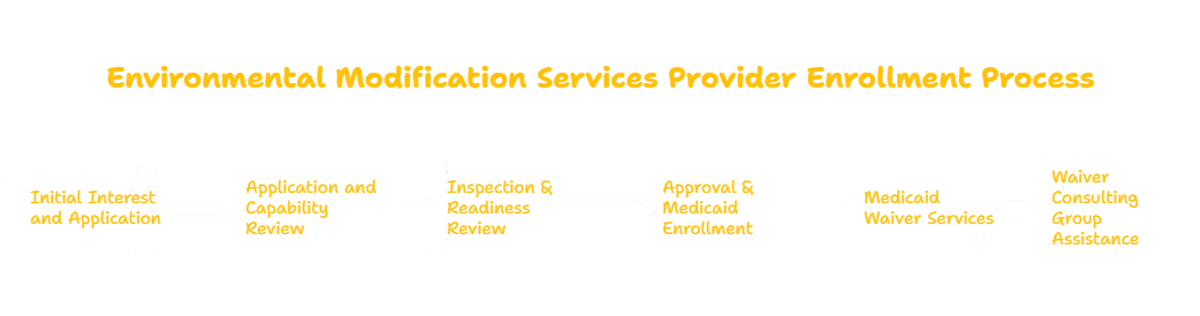
The transition from a business entity to an authorized Medicaid provider involves a rigorous, multi-phase application process. Initially, providers should reach out to the SDS provider enrollment team to obtain the specific application packet. It is highly recommended that potential providers attend orientation sessions to better understand the expectations for documentation, safety protocols, and the nuances of the waiver programs.
Once the application is submitted, the capability review begins. This phase focuses on the organization's technical and operational readiness, including the submission of sample bids, proof of insurance, and detailed project portfolios. SDS may request a site inspection of previously completed work to verify quality. Upon receiving approval from SDS, the agency proceeds to the final phase: enrolling as a Medicaid provider through the Alaska MMIS, selecting the appropriate billing codes, and establishing the technical infrastructure for electronic claims submission.
What Documentation Is Required for Long-Term Compliance?
Maintaining a high standard of recordkeeping is essential for sustained participation in the Medicaid program. A provider’s Policy and Procedure Manual should act as the central reference for all operations. This manual must be comprehensive, covering everything from the initial intake of a client to the final sign-off and warranty follow-up. Ensuring that policies are documented prevents errors during audits and protects the agency from liability.
Agencies should maintain clearly defined internal protocols for the following areas:
- Pre-authorization workflows to ensure projects are approved by SDS before work begins.
- Procurement guidelines for materials and the vetting process for any subcontractors utilized.
- Change order and dispute resolution processes to handle mid-project modifications.
- Comprehensive service documentation that tracks project milestones, final inspections, and client satisfaction metrics.
- Safety and confidentiality protocols regarding staff presence in occupied residences.
Frequently Asked Questions
How long does the entire provider startup process typically take?
The timeline varies based on the completeness of the initial application and the speed of regulatory processing. Generally, the initial business licensing takes 1–3 weeks, followed by a 45–90 day review period for the SDS provider application. Finalizing project workflows and completing the Medicaid MMIS enrollment process can add another 75–105 days, resulting in an overall estimated timeline of several months.
Which specific Medicaid Waivers cover environmental modifications?
Environmental modification services are authorized under several key Alaska Medicaid Waivers, including the Alaskans Living Independently (ALI) Waiver, the Adults with Physical and Developmental Disabilities (APDD) Waiver, the Individuals with Intellectual and Developmental Disabilities (IDD) Waiver, and the Children with Complex Medical Conditions (CCMC) Waiver.
Are there specific staffing requirements for this service?
Yes. Providers must employ or contract with qualified project managers and construction supervisors who hold valid Alaska contractor licenses. All staff and subcontractors performing work in private homes must pass appropriate background checks, complete SDS-required training on documentation and client interaction, and possess the necessary trade certifications to perform work in compliance with local safety and accessibility codes.
Key Takeaway: Successful participation as an environmental modification provider in Alaska’s Medicaid HCBS ecosystem depends on a disciplined, document-heavy approach to compliance and a deep commitment to ADA-compliant construction standards. By aligning administrative operations with the requirements of the Division of Senior and Disabilities Services and the Alaska MMIS, agencies can reliably serve individuals in need while maintaining the necessary standards for federal and state reimbursement.
Last verified: October 2023. This content is for informational purposes only and does not constitute legal or professional licensing advice. Regulations regarding Alaska Medicaid and HCBS waivers are subject to change. Consult directly with the Division of Senior and Disabilities Services (SDS) and relevant state licensing boards for the most current requirements and statutes.