EMERGENCY RESPONSE SYSTEMS (ERS) SERVICES PROVIDER IN CONNECTICUT
By Fatumata Kaba · 2025-07-08 · 5 min read
Emergency Response Systems (ERS) services provide essential 24/7 security for Connecticut residents by offering immediate access to medical or safety assistance through wearable or stationary alert technology. By becoming an authorized provider under the Connecticut Department of Social Services (DSS), businesses can deliver critical monitoring, installation, and incident support to individuals participating in the Connecticut Home Care Program for Elders (CHCPE), the Personal Care Assistance (PCA) Waiver, and various other Home and Community-Based Services (HCBS) programs.
What Are Emergency Response Systems (ERS) and Their Role in HCBS?
Emergency Response Systems (ERS) are defined as specialized electronic devices that enable individuals, particularly seniors and those with disabilities, to secure help in the event of a fall, sudden health crisis, or environmental hazard. These systems serve as a cornerstone of independent living, allowing participants to remain in their homes rather than transitioning to institutional settings. By bridging the gap between an emergency event and professional intervention, ERS services significantly improve health outcomes and provide peace of mind to both the participant and their caregivers.
Approved ERS providers play a multifaceted role in the Medicaid ecosystem. Beyond simply providing the hardware, providers are responsible for the entire service lifecycle, including initial installation, ongoing technical support, system maintenance, and ensuring connectivity through landline or cellular networks. Because these systems are often a mandatory or highly recommended component of a participant's care plan, the reliability of the provider's 24/7 monitoring center is paramount to the safety of the Medicaid population.
- Installation of personal emergency response equipment (PERS)
- 24/7 monitoring and live operator support
- Fall detection-enabled devices (optional, if authorized)
- Cellular or landline-based units depending on the participant’s home setup
- System testing, maintenance, and replacement
- Participant and caregiver training on device use
- Documentation of activations, incidents, and service continuity
Understanding the Governance and Regulatory Landscape
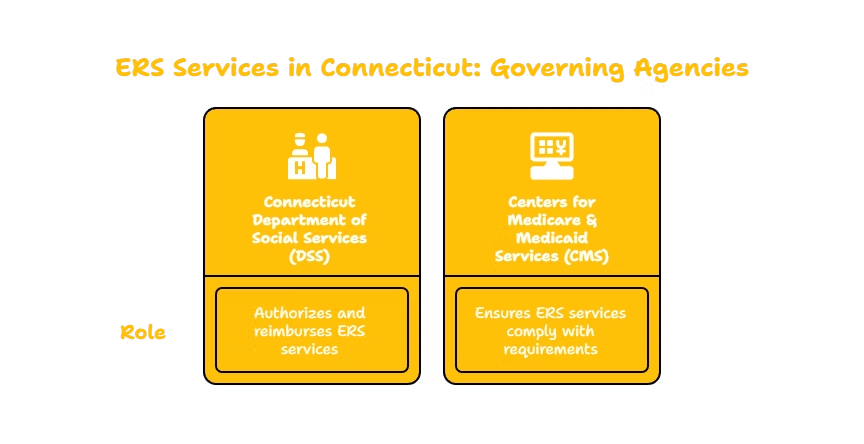
The provision of ERS services in Connecticut is heavily regulated to ensure the highest standards of safety and technical reliability. The primary governing body is the Connecticut Department of Social Services (DSS), which manages the authorization and reimbursement processes for all Medicaid and state-funded waiver programs. Compliance with DSS requirements is not optional; it is the fundamental bridge to receiving payment for services rendered under programs like the CHCPE or the PCA Waiver.
At the federal level, the Centers for Medicare & Medicaid Services (CMS) oversees the broader HCBS framework. CMS sets the requirements that ensure all funded services, including ERS, adhere to federal standards for person-centered care and safety. Providers must operate with the understanding that they are subject to audits and must maintain rigorous standards of HIPAA-compliant data management and incident reporting to satisfy both state and federal oversight agencies.
How to Establish a Qualified ERS Provider Business
Launching an ERS business in Connecticut requires a disciplined approach to both administrative registration and technical infrastructure. The initial phase begins with standard business formation—registering the entity with the Connecticut Secretary of the State and obtaining a federal Employer Identification Number (EIN). Following this, obtaining a National Provider Identifier (NPI) Type 2 is a mandatory step for any organization billing for health-related services in the Medicaid program.
Once the business entity is established, the focus must shift to operational readiness. This involves either building or, more commonly, contracting with an existing 24/7 emergency monitoring center. This center must be capable of handling high-volume emergency calls with professional efficiency. It is vital to ensure that this partner center is equipped to document every interaction in a manner that aligns with HIPAA privacy regulations, as this documentation will form the core of your service logs during future audits.
Navigating the Medicaid Provider Enrollment Process
The transition from a business entity to an active Medicaid provider occurs through the Connecticut Medicaid Provider Enrollment Portal. This is the official gateway where you will submit your business credentials, including your NPI, EIN, and detailed descriptions of the equipment and monitoring services you intend to provide. The accuracy of this submission is critical, as any discrepancies or missing documentation can lead to significant delays in the review process.
Once enrolled, your business will begin the process of coordination with DSS case managers and waiver teams. Referrals for ERS services typically flow through these teams based on the individual care plans of waiver participants. Upon receiving an authorization, your team is responsible for the timely installation and activation of the equipment. Consistent communication with these case managers is essential for ensuring that service delivery meets the specific needs of the participant and the requirements outlined in their care authorization.
Developing Essential Policies, Procedures, and Staffing Standards
A compliant ERS operation relies on a comprehensive policy and procedure manual. This manual acts as your operational blueprint, covering everything from the moment a participant is referred to the eventual recovery of equipment upon service cancellation. Because ERS services involve sensitive medical and location data, your manual must explicitly outline how staff maintain HIPAA compliance, how they perform system troubleshooting, and the specific scripts used by operators during emergency calls.
Staffing requirements are similarly strict. Installation technicians must possess technical competency and have successfully passed thorough background checks, as they will be working inside the homes of vulnerable individuals. Operators must undergo specialized training in emergency protocols, fall prevention education, and customer service. Documentation of this training is a mandatory component of your compliance file, and it must be readily available should DSS request a review of your personnel records.
Frequently Asked Questions
What types of devices can I offer under the Connecticut Medicaid program?
Providers may offer a variety of PERS, including wearable pendants or wrist-based buttons, as well as stationary base units. Some plans authorize fall-detection technology. Always ensure the specific device meets the criteria defined in the participant's authorized care plan and the connectivity requirements of their home.
What is the typical timeline for becoming a fully active provider?
The timeline varies based on your existing infrastructure. Initial business formation generally takes 1–2 weeks, while establishing a monitoring partnership takes 2–4 weeks. The DSS Medicaid enrollment process can take 30–60 days. Following approval, referrals and installations proceed on an ongoing basis.
How do I handle the decommissioning of equipment for a participant?
Your policy and procedure manual must include a specific section on device retrieval. This process should be professional, ensure the privacy of the participant is maintained, and include the proper sanitation and maintenance of the device before it is returned to inventory for future use.
Success as an ERS provider in Connecticut requires a commitment to operational excellence and strict adherence to DSS guidelines. By maintaining precise documentation, ensuring staff are well-trained in emergency response, and fostering clear communication with case managers, providers can build a sustainable practice that makes a tangible difference in the lives of home-bound individuals across the state.
Last verified: October 2023. This content is for informational purposes only and does not constitute legal or professional advice. Always consult with the Connecticut Department of Social Services (DSS) or qualified legal counsel regarding specific compliance requirements for your business.