ELECTRONIC MONITORING SERVICES PROVIDER IN WEST VIRGINIA
By Fatumata Kaba · 2026-04-14 · 5 min read
Electronic Monitoring (EM) services in West Virginia provide a critical infrastructure for Medicaid waiver participants, enabling individuals with intellectual, developmental, or physical disabilities to maintain autonomy in their own homes through remote oversight and advanced safety technology. By leveraging sensors, cameras, and two-way communication systems, provider agencies can ensure participant safety while reducing the reliance on more restrictive or costly 24/7 in-person staffing models.
This service is primarily integrated into the Intellectual/Developmental Disabilities (I/DD) Waiver, with additional capacity for the Traumatic Brain Injury Waiver (TBIW) when medically necessary. For provider agencies, successfully launching these services requires a rigorous commitment to HIPAA compliance, technical reliability, and strict adherence to the regulatory standards set by the West Virginia Department of Health and Human Resources (WVDHHR) and the Bureau for Medical Services (BMS).
How Are Electronic Monitoring Services Governed and Administered?
The regulatory framework for West Virginia’s Electronic Monitoring program is a multi-agency effort designed to prioritize participant safety and programmatic integrity. The WVDHHR oversees the broader waiver programs, ensuring that service delivery aligns with state mandates and protects the rights of individuals receiving care. They act as the primary authority for policy, while the Bureau for Medical Services (BMS) manages the fiscal and clinical implementation of Medicaid reimbursement.
Clinical authorization and the Person-Centered Service Plan (PCSP) process are managed by Acentra Health (formerly Kepro). As the utilization review entity, Acentra Health evaluates whether Electronic Monitoring is the appropriate, cost-effective solution for a participant’s specific needs. Provider agencies must work closely within the PCSP/ISP process to ensure their services are correctly documented and authorized before implementation begins.
- WVDHHR: Administers waiver programs and monitors service quality and participant rights.
- BMS: Regulates Medicaid reimbursement, approves provider applications, and oversees program implementation.
- Acentra Health (formerly Kepro): Conducts participant assessments and approves services like Electronic Monitoring through the PCSP/ISP process.
What Constitutes an Effective Electronic Monitoring Service Model?
An Electronic Monitoring program is defined by its ability to provide real-time oversight that functions as a reliable safety net. The core value of this service lies in its flexibility; it can be tailored to the unique risks of the participant, such as elopement, fall hazards, or challenges with the activities of daily living. Because these services are meant to support independence, the technology must be non-intrusive yet highly responsive.
Essential components typically include a robust 24/7 response infrastructure. Whether the monitoring is performed by an in-house dispatch team or a subcontracted professional center, the agency must ensure that alerts are not only received but acted upon according to a pre-defined escalation protocol. Documentation of these events is mandatory, as is the integration of environmental sensors that monitor for household hazards, such as unattended stoves or unauthorized door access.
- In-home camera monitoring systems (where approved and consented).
- Motion sensors and door alarms for perimeter security.
- Remote two-way communication devices for direct participant contact.
- Fall detection and alert systems designed for rapid response.
- GPS tracking devices for individuals with elopement risks.
What Are the Essential Steps for Provider Enrollment and Compliance?
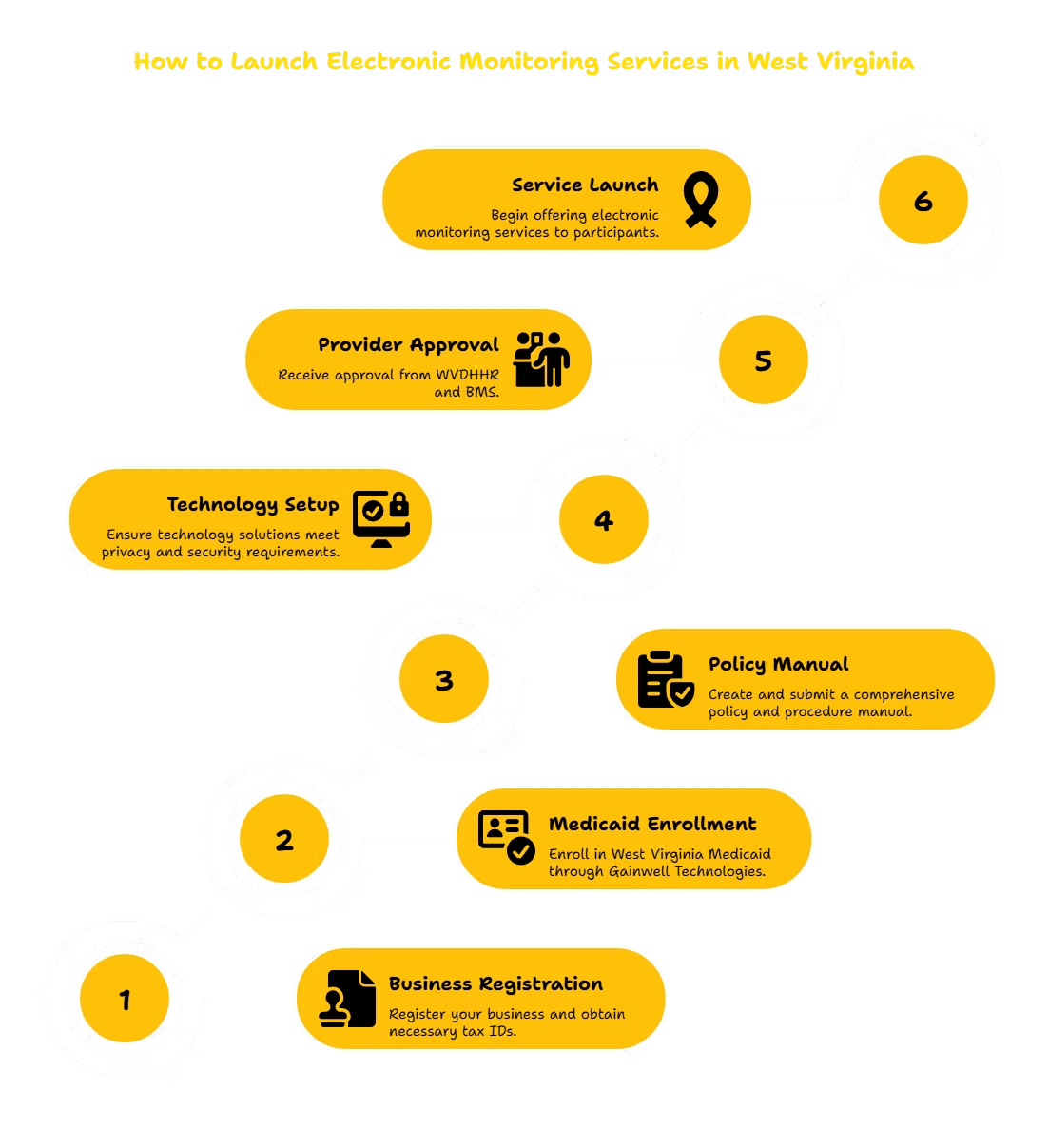
Entering the West Virginia Medicaid market as an Electronic Monitoring provider involves a structured sequence of business and clinical registration steps. Before applying, an agency must secure its legal status, obtain an Employer Identification Number (EIN), and register for a Type 2 National Provider Identifier (NPI). This foundational work ensures that the business entity is recognized by state and federal health authorities.
Following registration, the agency must complete the provider application process through the BMS and enroll via Gainwell Technologies. A crucial element of this process is the development and submission of a comprehensive Policy and Procedure Manual. This document serves as the "blueprint" for the agency, outlining how it will handle equipment installation, maintain data security, and train staff on the intricacies of the I/DD Waiver requirements.
How Should Agencies Manage Staffing and Technical Documentation?
Staffing for an Electronic Monitoring agency is divided into two primary functions: technical support and 24/7 incident response. Installation technicians are responsible for the physical setup of hardware in the participant’s home and must be trained to conduct routine equipment testing and troubleshooting. All field staff must undergo the required West Virginia CARES background checks to ensure they meet the ethical standards required for working with vulnerable populations.
The monitoring center operators, conversely, are the "eyes and ears" of the program. They must be proficient in the agency’s HIPAA-compliant data systems and capable of executing escalation steps the moment an alarm is triggered. Because these staff members handle sensitive health information and emergency situations, their training must include rigorous modules on abuse prevention, emergency response protocols, and the legal mandates regarding client confidentiality.
- Training Requirements: All staff must complete HIPAA, emergency response, and abuse prevention training.
- Operational Oversight: Agencies must conduct annual reviews of system functionality and participant safety protocols.
- Documentation: Each incident must be logged with the time of alert, the nature of the issue, and the specific resolution taken.
Frequently Asked Questions
Which Medicaid waivers currently support Electronic Monitoring in West Virginia?
Electronic Monitoring is primarily covered under the Intellectual/Developmental Disabilities (I/DD) Waiver. It may also be authorized for the Traumatic Brain Injury Waiver (TBIW) on a case-by-case basis. The Aged and Disabled Waiver (ADW) does not typically cover this service unless specifically authorized through an alternative safety or assistive technology benefit.
What is the typical timeline for an agency to launch these services?
The launch process generally spans 30 to 60 days following the initial setup phases. Business registration and Medicaid enrollment typically take 2–4 weeks, followed by another 2–3 weeks for technical infrastructure and manual development. Once these are complete, the agency can begin accepting referrals as participants receive approval through their PCSP.
Must the monitoring response center be in-house?
No, agencies may choose to operate an in-house response center or utilize a subcontracted 24/7 monitoring service. Regardless of the model, the provider agency remains responsible for ensuring the center meets all HIPAA requirements, maintains documented response protocols, and follows the escalation workflows approved in the agency’s Policy and Procedure Manual.
WAIVER CONSULTING GROUP’S START-UP ASSISTANCE SERVICE — WEST VIRGINIA ELECTRONIC MONITORING PROVIDER
WCG helps agencies launch compliant EM programs by providing full-service documentation, technology readiness, and Medicaid billing setup. Our scope includes:
- Medicaid enrollment and I/DD Waiver application support.
- EM Policy & Procedure Manual creation and review.
- Consent forms, incident logs, and notification templates.
- Equipment training protocols and HIPAA compliance tools.
- Backup and escalation workflows for monitoring response centers.
- Billing templates and Medicaid documentation guidance.
The successful implementation of Electronic Monitoring services hinges on the balance between advanced safety technology and the compassionate, person-centered delivery of care. By meticulously following the registration guidelines and maintaining strict compliance with WVDHHR and BMS standards, provider agencies can provide a reliable safety net that fosters independence for West Virginians with disabilities.
Last verified: 2024. This information is provided for educational purposes and should not be considered legal or medical advice. Always refer to the latest West Virginia Bureau for Medical Services provider manuals and state policy updates for current program requirements.