DAY SUPPORT SERVICES PROVIDER IN NORTH CAROLINA
By Fatumata Kaba · 2025-09-15 · 10 min read
North Carolina Day Support Services: A Comprehensive Guide for Providers
Establishing a Day Support Services provider in North Carolina offers a vital pathway to enriching the lives of individuals with disabilities and chronic conditions. These services, authorized under North Carolina Medicaid Home and Community-Based Services (HCBS) Waiver programs, focus on structured daytime activities designed to foster skill development, enhance social interaction, and promote meaningful community engagement. For aspiring providers, understanding the regulatory landscape, operational requirements, and enrollment processes is paramount to successfully launching and sustaining these essential programs.
This comprehensive guide provides an authoritative overview for agencies looking to enter the North Carolina Day Support Services market. We will delve into the governing agencies, the core components of Day Support Services, licensing and provider approval requirements, the intricate enrollment process, essential documentation, staffing mandates, relevant Medicaid waiver programs, and a realistic timeline for launching operations. By navigating these critical areas, providers can confidently establish themselves as valuable contributors to North Carolina's disability support ecosystem.
Understanding the Regulatory Landscape: Governing Agencies in North Carolina
The effective operation of Day Support Services in North Carolina is overseen by a multi-layered framework of state and federal agencies. Each plays a distinct but interconnected role in ensuring the quality, compliance, and accessibility of these crucial HCBS programs.
The North Carolina Department of Health and Human Services (NCDHHS) serves as the primary state agency responsible for administering Medicaid waiver funding. NCDHHS oversees the entire lifecycle of Day Support Services, from provider enrollment and service authorization to the intricate details of reimbursement. Their guidance dictates much of the operational and compliance standards that providers must adhere to.
Complementing NCDHHS is the North Carolina Division of Health Benefits (NC Medicaid), which manages the broader Medicaid waiver services and ensures that providers participate according to Medicaid regulations. This division is instrumental in defining the scope of covered services and the pathways for provider participation within the Medicaid system.
For individuals with developmental disabilities and behavioral health needs, the North Carolina Division of Mental Health, Developmental Disabilities, and Substance Abuse Services (DMH/DD/SAS) provides specialized oversight. This division ensures that day support services are tailored to meet the unique needs of these populations, often involving specific therapeutic and habilitative approaches.
At the federal level, the Centers for Medicare & Medicaid Services (CMS) provides overarching federal oversight. CMS ensures that all Medicaid-funded HCBS, including Day Support Services in North Carolina, meet stringent quality, safety, and person-centered care standards, aligning state programs with national best practices and regulatory mandates.
Core Components of North Carolina Day Support Services
Day Support Services in North Carolina are designed to offer a structured and enriching environment for individuals with disabilities or chronic conditions, empowering them to develop essential life skills and engage more fully with their communities. These programs are not simply custodial care; they are active, person-centered endeavors aimed at fostering independence, self-advocacy, and overall well-being.
The services provided are diverse and tailored to individual needs, often encompassing:
- Skill Development Activities: These sessions focus on enhancing crucial life skills, including communication strategies, social interaction techniques, and problem-solving abilities, empowering participants to navigate daily life more effectively.
- Community Participation: Programs actively organize group outings to local businesses, cultural events, and recreational facilities, as well as foster engagement in community service projects, promoting inclusion and reducing social isolation.
- Personal Development Programs: Emphasis is placed on cultivating self-care routines, strengthening self-advocacy skills, and fostering a sense of personal responsibility, enabling individuals to take greater ownership of their lives.
- Therapeutic Recreational Activities: A wide range of creative and physical activities, such as arts and crafts, music appreciation, and adaptive sports, are offered to promote enjoyment, relaxation, and holistic development.
- Job Readiness Training: For individuals interested in employment, these programs provide essential training to prepare them for volunteer opportunities or supported employment positions, building confidence and practical skills.
- Health and Wellness Activities: Initiatives promoting physical fitness, healthy eating habits, and general well-being are integral, encouraging participants to adopt and maintain healthy lifestyle choices.
- Social Interaction Opportunities: The environment is structured to foster genuine friendships and peer support networks, allowing individuals to build meaningful relationships with others.
- Behavioral Support: Trained staff employ positive reinforcement and evidence-based strategies to address challenging behaviors, creating a safe and supportive atmosphere for all participants.
- Supervision and Safety Monitoring: Ensuring the well-being and safety of all participants is paramount, with continuous supervision and monitoring throughout program hours.
- Documentation: Meticulous record-keeping is essential, including daily activity logs, progress tracking for each individual, and comprehensive documentation of their Individualized Support Plans (ISPs).
Navigating Licensing and Provider Approval Requirements
Becoming an approved Day Support Services provider in North Carolina requires adherence to specific business and operational prerequisites designed to ensure provider legitimacy and service quality. These foundational steps are critical before initiating the Medicaid enrollment process.
The initial phase involves establishing a legal business entity. This typically includes registering the business with the North Carolina Secretary of State. Concurrently, providers must obtain an Employer Identification Number (EIN) from the IRS, which is essential for tax purposes and for enrolling as a Medicaid provider. For specific provider types, a Type 2 National Provider Identifier (NPI) may also be required.
A crucial step is to enroll as a Medicaid Waiver Day Support provider through the state's designated system, the NCTracks Provider Portal. This online portal is the central hub for all Medicaid provider enrollment and management activities in North Carolina. Robust insurance coverage is also mandatory; providers must maintain both general liability and professional liability insurance to protect against potential claims and ensure financial stability.
Furthermore, providers must develop comprehensive policies and procedures that govern all aspects of their Day Support Services. These policies should clearly outline program planning, client safety protocols, activity coordination strategies, and emergency response procedures. Finally, ensuring staff are properly vetted and trained is non-negotiable. This includes completing required background checks for all personnel, conducting health screenings, and verifying that staff have received appropriate training in the specific practices and principles of delivering day support services.
The North Carolina Provider Enrollment Process via NCTracks
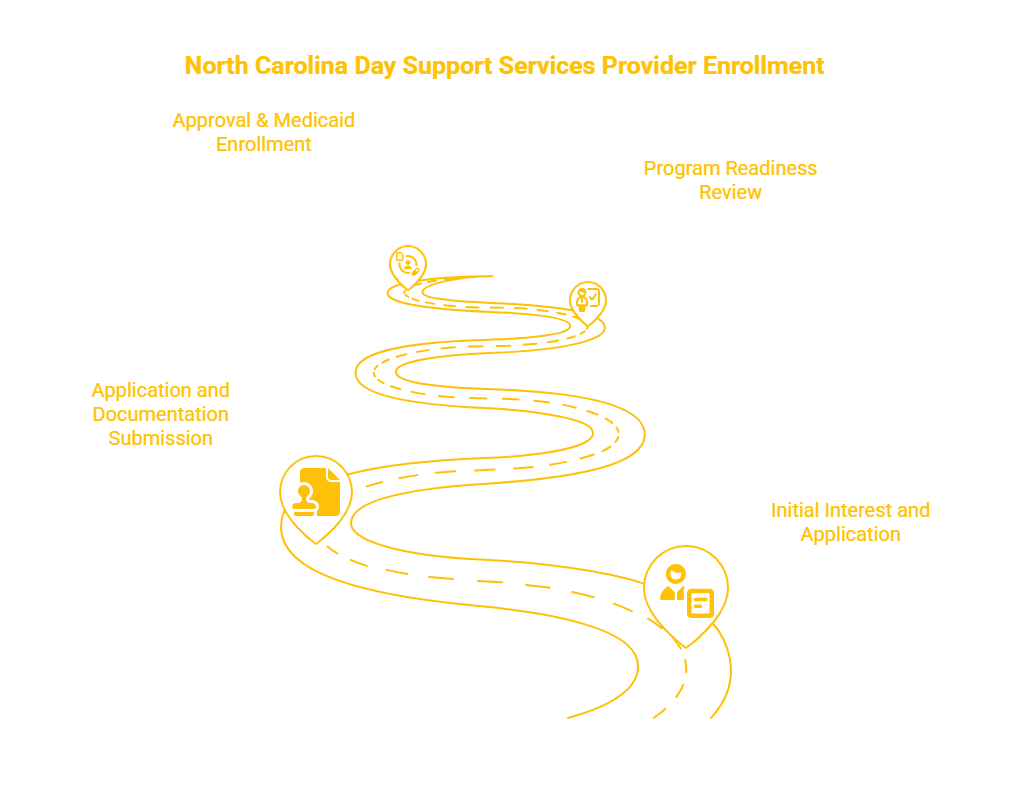
The journey to becoming an authorized Day Support Services provider in North Carolina officially begins with the Medicaid provider enrollment process, primarily managed through the NCTracks system. This multi-stage process is designed to vet potential providers thoroughly and ensure they meet all state and federal requirements.
The initial step involves expressing interest and completing the Provider Enrollment Application within the NCTracks Portal, specifically selecting Day Support Services under the HCBS waivers. This application serves as the gateway to the formal enrollment process and requires careful attention to detail to avoid delays.
Following the initial application, providers must meticulously prepare and submit a comprehensive package of supporting documentation. This typically includes official documents such as Articles of Incorporation or proof of business registration, confirmation of EIN and NPI, certificates of insurance demonstrating adequate liability coverage, detailed Day Support policies and procedures, and documented proof of staff training and background clearances.
Once the application and documentation are submitted, a thorough Program Readiness Review is conducted. This evaluation is performed by relevant state agencies, including NCDHHS and DMH/DD/SAS, to assess the provider's preparedness. They examine the proposed program protocols, the robustness of safety measures, the qualifications of staff, and the overall readiness to deliver compliant and effective services.
Upon successful completion of the review and final approval from the relevant authorities, providers are officially authorized to bill Medicaid for Day Support Services. This authorization is tied to specific billing codes and procedures outlined by NC Medicaid, enabling providers to receive reimbursement for the services they deliver to eligible beneficiaries.
Essential Documentation for Day Support Providers
Comprehensive and accurate documentation is a cornerstone of successful Day Support Services operations in North Carolina. It not only ensures compliance with Medicaid regulations but also serves as the foundation for effective service delivery, quality assurance, and transparent billing practices.
Key documentation includes official business registration details, such as Articles of Incorporation or a valid Business License issued by the North Carolina Secretary of State. Proof of federal tax identification via IRS EIN confirmation and the required National Provider Identifier (NPI) are also essential for enrollment and billing purposes. Furthermore, current certificates of general and professional liability insurance must be maintained and readily available.
A critical component is the meticulously developed Day Support Policy & Procedure Manual. This manual should encompass a wide array of operational guidelines, including:
- Detailed activity planning and daily programming guidelines that align with person-centered approaches.
- Robust protocols for personal care, individualized behavioral support, and overall participant safety.
- Comprehensive records for staff credentialing, background checks, and a schedule for ongoing training and professional development.
- Clear documentation standards for tracking services provided and preparing for Medicaid billing, ensuring accuracy and timeliness.
- Policies ensuring HIPAA compliance, upholding participant rights, and establishing a clear grievance handling process.
- Procedures for ensuring safety, maintaining hygiene, and executing emergency response plans effectively.
- Mechanisms for quality assurance and ongoing compliance monitoring to identify and address areas for improvement.
Staffing Requirements and Qualifications
The effectiveness and safety of Day Support Services in North Carolina are directly linked to the qualifications and training of its staff. The state outlines specific roles and requirements to ensure that individuals receive high-quality, person-centered care.
The Day Program Director typically requires a Bachelor's or Master's degree in a relevant field such as social work, human services, or healthcare administration. Significant experience in program management, including staff supervision and community engagement, is also essential for this leadership role.
Day Support Specialists, who provide direct care and habilitation support, generally need a high school diploma or GED. Crucially, they must possess experience in direct care settings and have successfully passed all required background clearances. These individuals are the frontline providers of daily support and engagement.
Activity Coordinators, responsible for designing and implementing engaging activities, should have experience in areas such as recreational therapy, community programming, or group facilitation, ensuring that daily programming is diverse, stimulating, and meets individual needs and interests.
All staff members, regardless of their specific role, must undergo comprehensive training. This includes training in activity planning, safety protocols, and effective client interaction. Education on HIPAA compliance and participant rights is mandatory. Regular annual competency evaluations and a commitment to ongoing professional development are expected. Specialized training in safety, crisis management, and behavior support techniques, alongside best practices in documentation and record-keeping, ensures a competent and prepared workforce.
North Carolina Medicaid Waiver Programs Offering Day Support
Day Support Services in North Carolina are an integral component of several key Home and Community-Based Services (HCBS) Medicaid waiver programs. These waivers allow eligible individuals to receive services and supports in community settings rather than institutional settings, promoting independence and integration.
The primary waiver programs that authorize Day Support Services include:
- Innovations Waiver: This waiver provides a broad range of services for individuals with intellectual and developmental disabilities.
- Community Alternatives Program for Disabled Adults (CAP/DA): This program serves adults with disabilities who require a level of care typically provided in a nursing facility but wish to live in the community.
- Community Alternatives Program for Children (CAP/C): Similar to CAP/DA, this waiver targets children with significant functional needs who require services beyond what is typically available through standard Medicaid.
- Traumatic Brain Injury (TBI) Waiver: This waiver is specifically designed to support individuals who have sustained a traumatic brain injury, providing services tailored to their unique rehabilitation and support needs.
- Home and Community-Based Services (HCBS) Waiver: This is a foundational waiver that encompasses a variety of services, including Day Support, aimed at promoting community living for individuals with various disabilities.
Understanding which waiver program(s) a potential participant is enrolled in is crucial for providers, as specific service definitions, limitations, and billing requirements may vary slightly between waivers.
Frequently Asked Questions About North Carolina Day Support Services
What is the primary goal of Day Support Services in North Carolina?
The primary goal of Day Support Services in North Carolina is to enhance the independence, personal development, and quality of life for individuals with disabilities or chronic conditions. This is achieved through structured daytime programs that focus on skill-building, socialization, community engagement, and providing a safe and supportive environment.
How does a provider become eligible to offer Day Support Services?
To become eligible, providers must first establish a legal business entity, obtain necessary IRS and NPI identifiers, and secure appropriate insurance. The critical step is enrolling as a Medicaid Waiver Day Support provider through the NCTracks Provider Portal. This involves submitting a detailed application and comprehensive documentation, followed by a program readiness review by state agencies like NCDHHS and DMH/DD/SAS.
What types of staff are typically required for a Day Support Services program?
A typical Day Support Services program requires a qualified Day Program Director with a relevant degree and management experience. Direct care is provided by Day Support Specialists, who generally need a high school diploma and relevant experience, along with background clearance. Activity Coordinators, with experience in recreational or community programming, are also essential to develop and lead engaging activities. All staff must undergo specific training and meet background check requirements.
WCG supports agencies in launching Medicaid-compliant Day Support Services in North Carolina, offering assistance with business registration, Medicaid enrollment, policy manual development, staff credentialing, Medicaid billing setup, and quality assurance systems. Their services are designed to streamline the complex process of becoming a provider and ensure ongoing compliance and operational efficiency.
Our Client Portal offers a wealth of resources that you can explore related to various programs and state requirements.
Last verified and updated: May 2024. This information is intended for guidance purposes only and does not constitute legal advice. Providers are responsible for consulting the latest official regulations and guidelines from NCDHHS, NC Medicaid, and other relevant state and federal agencies.