DAY PROGRAMMING SERVICES PROVIDER IN MINNESOTA
By Fatumata Kaba · 2025-08-13 · 5 min read
Day Programming Services in Minnesota serve as a cornerstone of the state’s Home and Community-Based Services (HCBS) ecosystem, offering structured, inclusive environments that foster independence and community integration for individuals with disabilities. By delivering personalized, goal-oriented activities, these programs enable participants to develop life skills, cultivate social networks, and pursue meaningful engagement within their local communities under the regulatory guidance of the Minnesota Department of Human Services (DHS).
Understanding the Regulatory Landscape of Minnesota Day Programming
The delivery of Day Programming Services in Minnesota operates within a rigorous framework designed to ensure participant safety, service quality, and fiscal accountability. Oversight is shared among federal and state entities to maintain program integrity. The Minnesota Department of Human Services (DHS) serves as the primary authority, managing the administration of HCBS Waiver services and ensuring that providers adhere to state-specific service delivery standards.
In addition to DHS oversight, the Minnesota Department of Health (MDH) plays a critical role in regulating the physical environments where these services occur. This includes enforcing facility requirements, safety standards, and specific staff-to-participant ratios. At the federal level, the Centers for Medicare & Medicaid Services (CMS) provides overarching guidance, ensuring that Minnesota’s waiver programs remain in compliance with national Medicaid mandates and quality of care expectations.
- Minnesota Department of Human Services (DHS): Manages waiver policies and Medicaid provider enrollment.
- Minnesota Department of Health (MDH): Governs facility licensing, safety protocols, and operational standards.
- Centers for Medicare & Medicaid Services (CMS): Sets federal requirements for HCBS compliance and funding.
Core Components and Individualized Service Delivery
Day Programming Services are fundamentally rooted in the principle of person-centered care. Every activity offered by a provider must align with the participant’s Person-Centered Plan (PCP) or Individual Service Plan (ISP). This customization ensures that the programming is not a "one-size-fits-all" model, but rather a flexible service that meets the unique developmental and social needs of each individual enrolled in the program.
The scope of services typically encompasses a broad spectrum of activities aimed at enhancing daily living. Common service elements include comprehensive life skills training, such as financial literacy, culinary instruction, and personal hygiene management. Furthermore, providers are expected to facilitate social and recreational group activities that encourage community integration, as well as educational workshops that support vocational readiness and volunteer participation.
- Life skills training including budgeting, cooking, and personal hygiene.
- Structured social, recreational, and community integration outings.
- Supported employment preparation and exploration of volunteer roles.
- Enrichment workshops focused on health, wellness, and self-advocacy.
Navigating the Provider Enrollment and Licensing Process
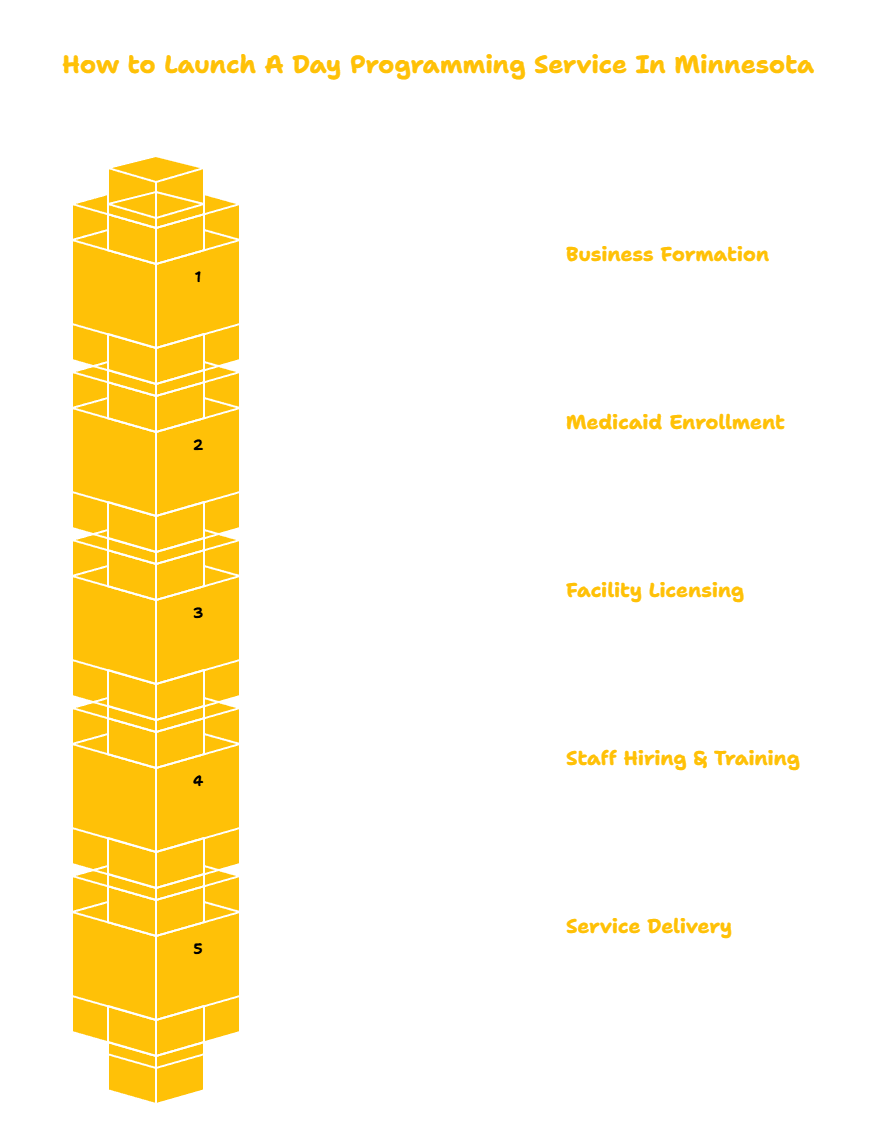
For agencies intending to launch a Day Programming service, the path to becoming an approved Medicaid provider is a multi-step journey that requires strict adherence to administrative prerequisites. Before seeking enrollment, a business must be properly registered with the Minnesota Secretary of State and obtain an Employer Identification Number (EIN) and a Type 2 National Provider Identifier (NPI). This foundational work ensures the business is recognized as a legal entity capable of contracting with the state.
The enrollment process itself involves formalizing the agency’s status as a Medicaid provider. This includes obtaining the necessary licenses—such as a Day Program License or a Comprehensive Home Care License—from the Minnesota Department of Health. Once these regulatory hurdles are cleared, the agency must submit a comprehensive application to the DHS. This process confirms the facility’s readiness, safety, and operational capacity to serve the target population.
Establishing Operational Documentation and Compliance
Success in Day Programming requires more than physical space; it requires a robust, defensible documentation system. Providers are expected to maintain an exhaustive policy and procedure manual that governs everything from daily activity schedules to emergency incident reporting. Because these services are funded through Medicaid, every interaction and activity must be meticulously logged to provide evidence of progress toward goals outlined in the participant's PCP or ISP.
Key documentation requirements include proof of professional liability insurance, staff credentialing records, and client intake assessment templates. These records act as the primary defense during state audits and quality assurance reviews. Maintaining organized and updated files is essential to ensure consistent service delivery and to demonstrate that the agency remains compliant with evolving state health and safety statutes.
- Corporate registration documents and IRS EIN verification.
- Comprehensive policy manual including emergency and health protocols.
- Standardized templates for service notes, activity logs, and incident reports.
- Current staff training and certification records for audit readiness.
Staffing, Training, and Professional Competencies
The quality of Day Programming is directly tied to the competency of the staff. Agencies must employ a qualified Day Program Director to oversee the administrative and clinical operations, ensuring the program meets the developmental needs of its participants. Direct Support Professionals (DSPs) serve as the frontline staff, providing the daily guidance and support necessary for participant growth. Both roles require a commitment to ongoing professional development.
Mandatory training goes beyond basic job functions, focusing heavily on person-centered planning, crisis intervention, and HIPAA compliance. Because staff often interact with vulnerable populations, stringent background checks and TB clearance are non-negotiable prerequisites. By investing in a well-trained, knowledgeable team, providers not only ensure better outcomes for participants but also safeguard the agency against compliance risks.
Frequently Asked Questions
What waivers cover Day Programming Services in Minnesota?
Day Programming Services are available through the 1915(c) HCBS Waiver for the Elderly and Disabled, the Community Access for Disability Inclusion (CADI) Waiver, and the Brain Injury (BI) Waiver.
How long should an agency anticipate for the launch phase?
The launch timeline is variable but typically includes 1–2 weeks for business formation, 60–90 days for Medicaid provider enrollment, 30–60 days for facility licensing, and 30–45 days for staff hiring and training.
What are the primary roles required for a day program?
An agency typically requires a Day Program Director experienced in disability services or program management, and Day Program Instructors or Direct Support Professionals who hold at least a high school diploma, CPR/First Aid certification, and clear background checks.
WAIVER CONSULTING GROUP'S START-UP ASSISTANCE SERVICE — MINNESOTA DAY PROGRAMMING SERVICES PROVIDER
We support agencies and entrepreneurs in launching compliant Day Programming Services across Minnesota under the HCBS Waiver models.
Scope of Work:
- Business registration and licensing assistance
- Medicaid provider enrollment
- Policy & procedure manual for daily programming
- Templates for client activity logs and service notes
- Website, domain, and email setup
- Staff credentialing and training documentation
- Client intake and service planning packet
- Risk management and community partnership strategies
- Referral networking with county case managers and support coordinators
Key takeaway: Launching a Day Programming Service in Minnesota requires a strategic integration of legal business formation, rigorous Medicaid enrollment, and strict adherence to state health and safety standards. Success is predicated on maintaining a person-centered operational model that satisfies the requirements of the DHS, MDH, and CMS while providing high-quality support to waiver participants.
Last verified: October 2023. This content is provided for informational purposes only and does not constitute legal or professional advice. Always consult with the Minnesota Department of Human Services and legal counsel regarding your specific business requirements and state regulations.