DAY PROGRAM SERVICES PROVIDER IN MARYLAND
By Fatumata Kaba · 2025-09-02 · 5 min read
Launching a day program services provider in Maryland requires a strategic approach to aligning business operations with the regulatory framework set forth by the Maryland Department of Health (MDH) and the Developmental Disabilities Administration (DDA). These programs serve as vital hubs for adults with intellectual and developmental disabilities (IDD), focusing on skill development, community integration, and personalized vocational growth through Medicaid waiver funding.
Operating a successful program demands strict adherence to federal Home and Community-Based Services (HCBS) regulations and local oversight protocols. Prospective providers must navigate a multi-layered enrollment process—ranging from state business registration and DDA portal applications to rigorous staff training and documentation requirements—to ensure they meet the standard of care expected by Maryland’s Medicaid system.
What Are the Governing Bodies and Regulatory Requirements?
The Maryland service delivery system is overseen by a network of state and federal agencies designed to ensure participant safety and the quality of supports. The Maryland Department of Health (MDH) serves as the primary regulator, enforcing Medicaid rules for all waiver-funded services. Within this structure, the Developmental Disabilities Administration (DDA) is the lead agency responsible for the oversight, authorization, and monitoring of Day Habilitation, Employment, and Meaningful Day services across the state.
In addition to state agencies, providers must interact with the Office of Long-Term Services and Supports (LTSS Maryland), which manages billing, service tracking, and electronic documentation. At the federal level, the Centers for Medicare & Medicaid Services (CMS) maintains the final authority on HCBS regulations. These requirements mandate that all services emphasize community integration, person-centered planning, and the preservation of individual rights for every participant.
- Maryland Department of Health (MDH): Regulates Medicaid waiver-funded programs.
- Developmental Disabilities Administration (DDA): Authorizes and monitors program operations and service delivery.
- LTSS Maryland: The centralized platform for electronic visit verification, billing, and progress tracking.
- Centers for Medicare & Medicaid Services (CMS): Sets federal standards for community integration and HCBS compliance.
How Do You Design and Structure Meaningful Day Services?
“Meaningful Day” services are defined by their ability to foster independence and social engagement. Programs must be anchored in the participant’s Person-Centered Plan (PCP) and translated into an Individual Plan (IP) that outlines specific, measurable goals. Whether a provider offers center-based or community-based activities, the curriculum must move beyond mere supervision to active skill acquisition.
Providers generally offer a combination of service categories, including Day Habilitation for life-skills training, Community Development Services (CDS) for small-group engagement, and Employment Services, which includes job discovery, job coaching, and career exploration. Success in this sector is measured by the provider's ability to facilitate community presence and personal development activities—such as financial literacy, fitness, or vocational training—that align with each participant’s unique interests and capabilities.
What Is the Process for DDA Provider Enrollment?
The pathway to becoming a DDA-approved provider begins with the formalization of the business entity. Founders must register with the Maryland Department of Assessments and Taxation (SDAT) and secure an Employer Identification Number (EIN) and a Type 2 National Provider Identifier (NPI). Once the business entity is established, the provider must draft a comprehensive service model that details the program’s philosophy, staffing ratios, and safety protocols.
The enrollment application is submitted through the DDA Provider Application Portal. This process involves the submission of detailed documentation, including organizational policies and proof of facility compliance. If the program includes a physical location, the site must pass a DDA facility visit to verify ADA accessibility, fire safety, and health standards. Following approval, the provider coordinates with local Coordination of Community Services (CCS) agencies to receive referrals, at which point the provider can begin delivering authorized services and billing through the state system.
- Register the business with SDAT and secure an EIN/NPI.
- Submit the DDA provider application, including program design and staff credentials.
- Complete a facility site visit to confirm safety and ADA compliance.
- Establish partnerships with CCS agencies to facilitate participant enrollment.
What Are the Staffing and Training Mandates?
The quality of a day program is inherently tied to the competence of its direct support staff. A Program Supervisor or Manager must be appointed to oversee regulatory compliance, daily operations, and the management of staff documentation. Direct Support Professionals (DSPs) are required to hold at least a high school diploma or GED, pass background checks, and maintain current CPR/First Aid certifications.
Mandatory training is a cornerstone of the DDA provider requirements. All personnel must undergo DDA-mandated training, which includes Core Competency certification, person-centered planning, emergency preparedness, and de-escalation techniques. Documentation is equally critical; staff must be trained in Medicaid billing protocols and the accurate recording of service delivery, as the validity of claims is contingent upon consistent and compliant documentation practices.
How Do Medicaid Waiver Funding Streams Differ?
Reimbursement for day programs is accessed through specific DDA-administered waivers. The Community Pathways Waiver offers the most comprehensive suite of services, covering the full spectrum of Meaningful Day activities. The Community Supports Waiver provides a more limited scope, focusing primarily on Day Habilitation and CDS. Additionally, the Family Supports Waiver serves as a resource for transition-aged youth under 21, allowing for service continuity during school breaks or summer programs.
Maintaining access to these funds requires strict adherence to attendance tracking and goal-tracking systems. Because these services are Medicaid-funded, providers must ensure that all daily logs reflect the specific interventions listed in the participant’s IP. Failure to maintain accurate records in the LTSS Maryland system can lead to reimbursement denials, making meticulous administrative oversight a daily necessity for provider success.
Frequently Asked Questions
What is the typical timeline to launch a new day program?
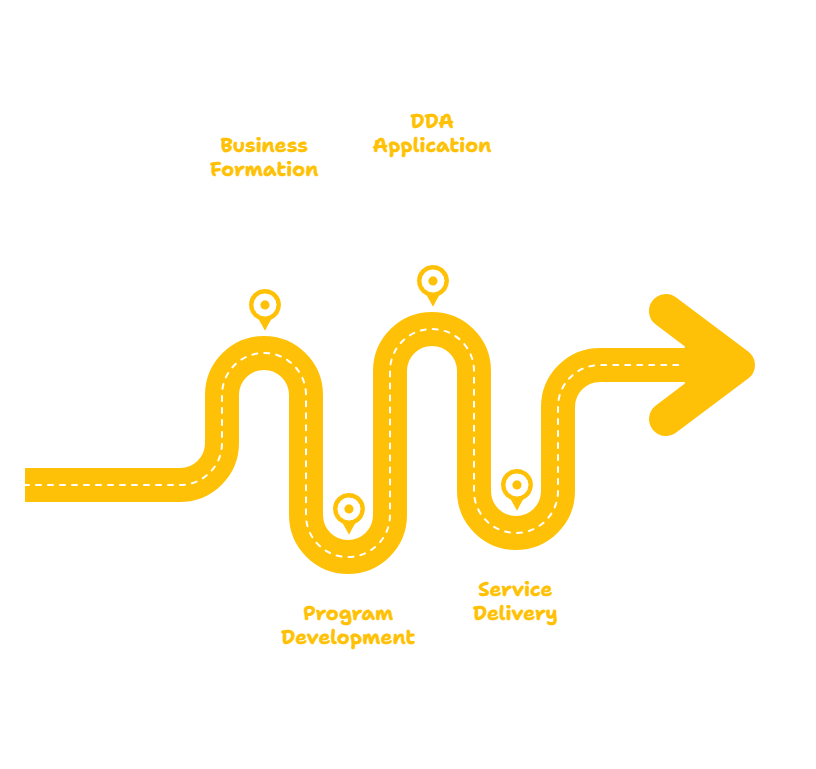
The startup process is broken into four phases: business formation (1–2 weeks), program design and staffing (3–4 weeks), DDA provider application and facility preparation (6–12 weeks), and ongoing operational implementation.
What facility standards must be met for a physical site?
Physical sites must be compliant with the Americans with Disabilities Act (ADA), meet local zoning requirements, and adhere to DDA fire, safety, and health standards. An inspection or facility visit is typically required to verify these conditions prior to full approval.
How do providers handle participant billing?
All billing, service tracking, and documentation must be processed through the LTSS Maryland portal. Providers must maintain daily attendance logs, progress notes aligned with IP goals, and shift documentation to justify every unit of service billed to Medicaid.
Key Takeaway: Establishing a day program in Maryland is a rigorous regulatory undertaking that requires a blend of operational discipline and a commitment to person-centered care. Providers who prioritize strong administrative infrastructure, staff competency, and strict compliance with DDA and Medicaid protocols will be best positioned to provide long-term, high-quality support to adults with disabilities across the state.
Last verified: 2024. The information provided herein is intended for general informational purposes only and does not constitute legal or professional advice. Always refer to the latest official guidance from the Maryland Developmental Disabilities Administration (DDA) and the Centers for Medicare & Medicaid Services (CMS) for specific compliance and policy requirements.