DAY HABILITATION SERVICES PROVIDER IN SOUTH DAKOTA
By Fatumata Kaba · 2025-10-15 · 5 min read
Day Habilitation Services in South Dakota are essential community-based programs that support adults with intellectual and developmental disabilities (IDD) in building critical life skills, fostering independence, and increasing community inclusion. Authorized under the CHOICES Waiver and overseen by the South Dakota Department of Human Services (DHS) Division of Developmental Disabilities (DDD), these services provide a structured, non-residential environment where individuals can work toward personal goals, improve social interactions, and participate in meaningful daily activities.
For prospective provider agencies, establishing a Day Habilitation program requires rigorous adherence to state and federal standards, including facility accessibility, staff competency, and person-centered service delivery models. By aligning business operations with the regulatory framework set forth by the DHS and the Centers for Medicare & Medicaid Services (CMS), providers can effectively deliver high-quality, reimbursable services while contributing to the overall quality of life for South Dakotans with disabilities.
What are the Core Components of Day Habilitation Services?
Day Habilitation is defined by its focus on supporting individuals in developing and maintaining the self-help, socialization, and adaptive skills necessary for successful community living. Services are delivered in a provider-operated setting and prioritize engagement that extends beyond simple supervision, focusing instead on active participation and skill acquisition.
Approved providers deliver a variety of services tailored to the specific Individual Service Plan (ISP) of each participant. These may include:
- Daily Living Skills Training: Practical instruction in cooking, cleaning, personal hygiene, and money management.
- Communication and Social Skill Development: Exercises designed to improve interpersonal interactions and self-advocacy.
- Community Inclusion Activities: Facilitated outings such as volunteerism, shopping, and attendance at local recreational events.
- Health and Wellness Education: Information on nutrition, physical activity, and healthy lifestyle choices.
- Behavioral Support Integration: Implementation of strategies defined within the participant’s behavior support plan.
- Transportation: Coordinating or providing travel to and from the habilitation site.
- Documentation: Comprehensive service tracking, progress monitoring, and coordination with the participant’s broader care team.
How Do Agencies Navigate the Provider Approval Process in South Dakota?
The provider enrollment process is a structured sequence designed to ensure that all agencies meet the safety, administrative, and clinical standards required by the South Dakota Department of Human Services (DHS). Before services can be billed under the CHOICES Waiver, an agency must demonstrate both legal standing and operational readiness.
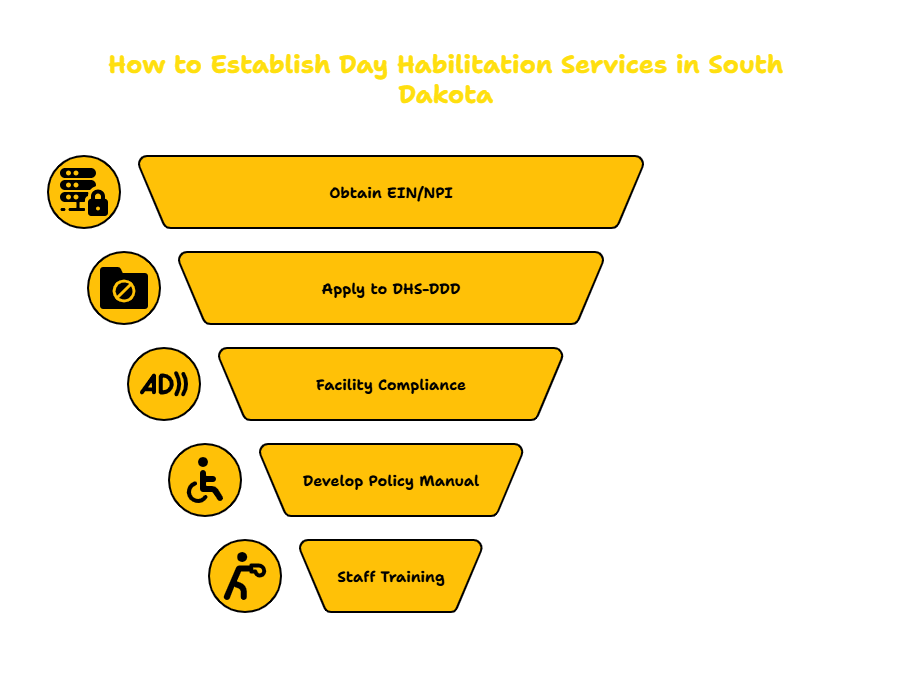
The process begins with the formal registration of the business entity with the South Dakota Secretary of State and the acquisition of a federal EIN and Type 2 NPI. Once the legal framework is established, the provider submits an application to the DHS-DDD. This application includes detailed information regarding the facility, safety protocols, and staff training modules. Following the submission, agencies undergo a readiness review and site inspection, which ensures that the physical location meets all Americans with Disabilities Act (ADA) and state-specific safety codes.
What Documentation and Policies are Mandatory for Compliance?
Success as a Day Habilitation provider hinges on robust documentation and clear, written policy. Regulatory agencies require that every aspect of the program, from daily participant routines to emergency response procedures, be codified in a comprehensive Policy & Procedure Manual. This manual serves as the operational blueprint for the organization and is frequently reviewed during audits.
Key documentation requirements include:
- Legal documentation: Business registration, EIN, NPI, and facility use or ownership agreements.
- Insurance compliance: Proof of general liability, workers’ compensation, and vehicle coverage for transportation.
- Operational Policies: Detailed staffing ratios, daily routine schedules, and participant rights protocols.
- Health and Safety: Emergency preparedness plans, behavioral support procedures, and incident reporting templates.
- Service Delivery Records: Standardized forms for daily progress notes, attendance tracking, and ISP goal measurement.
What are the Staffing and Training Requirements for Direct Support Professionals?
The quality of Day Habilitation services is intrinsically linked to the competency of the Direct Support Professionals (DSPs) and program supervisors. Every staff member must be thoroughly vetted and trained to handle the unique needs of the IDD population. Background checks, along with current certifications in CPR and First Aid, are mandatory prerequisites for anyone working directly with participants.
Beyond baseline safety, staff must receive specific training in HIPAA compliance, participant rights, and abuse prevention. Program coordinators and site supervisors are expected to hold experience in IDD services, focusing on program development and staff management. Ongoing professional development is required, including annual performance evaluations and competency checks to ensure that staff remain updated on best practices in person-centered care and behavioral support integration.
How Long Does the Launch Timeline Take for a New Provider?
Founding a Day Habilitation agency is a multi-phase endeavor that generally spans several months. The initial phase, which includes business formation and facility identification, typically requires one to two months. It is during this time that providers must identify a location that complies with zoning laws and ADA requirements.
The provider enrollment and site readiness phase is the most intensive, taking approximately three to four months. During this window, the agency submits applications to the DHS-DDD and undergoes the necessary site inspections. Following this, one to two months should be dedicated to intensive staff recruitment and training to ensure the team is fully prepared before receiving their first participant referrals. Service delivery officially begins only after provider approval is granted and authorizations for specific participants are received.
Frequently Asked Questions
Which Medicaid programs reimburse for Day Habilitation in South Dakota?
Day Habilitation is primarily reimbursable under the CHOICES Waiver for adults with IDD. Limited use of these services may also occur under the Family Support 360 Waiver for short-term skill-building activities, and state or local DD funds may supplement services depending on regional availability.
What agencies are involved in the oversight of these services?
The primary state agency is the South Dakota Department of Human Services (DHS) Division of Developmental Disabilities (DDD), which manages provider approval and compliance. At the federal level, the Centers for Medicare & Medicaid Services (CMS) regulates the HCBS waiver standards and person-centered planning requirements.
What role does the Policy & Procedure Manual play in audit readiness?
The manual is the primary document auditors review to verify that an agency meets state mandates. It must include clear protocols for staffing, emergency preparedness, participant health, behavioral support, and documentation, ensuring that all staff members have a consistent reference for standard operating procedures.
Key Takeaway
Successfully launching a Day Habilitation program in South Dakota requires meticulous planning, from business formation to the development of a comprehensive Policy & Procedure Manual. By focusing on regulatory alignment, staff training, and high-quality, person-centered service delivery, providers can establish a stable, compliant, and impactful program that supports the independence and growth of adults with intellectual and developmental disabilities.
Last verified: September 2024. This information is provided for educational purposes and does not constitute legal or professional advice. Requirements for Medicaid HCBS programs are subject to change; always verify the latest guidance through the South Dakota Department of Human Services and the Centers for Medicare & Medicaid Services (CMS) official portals.