DAY HABILITATION SERVICES PROVIDER IN RHODE ISLAND
By Fatumata Kaba · 2025-10-09 · 6 min read
Fostering Skill Development, Social Participation, and Community Engagement for Individuals with Disabilities in Supportive Day Settings
Day Habilitation Services in Rhode Island are essential Medicaid-funded supports structured to promote the acquisition, retention, and improvement of self-help, socialization, and adaptive skills for individuals with intellectual and developmental disabilities (IDD). These services are delivered in non-residential, structured settings to increase independence, communication, and meaningful participation in community life through Rhode Island’s Home and Community-Based Services (HCBS) 1115 Waiver, as authorized by the Department of Behavioral Healthcare, Developmental Disabilities & Hospitals (BHDDH).
What Are the Governing Agencies for Day Habilitation in Rhode Island?
The regulatory framework for day habilitation in Rhode Island is tiered to ensure quality, safety, and fiscal accountability. Understanding the role of each governing body is the first step for any prospective provider agency aiming to operate within the state's Medicaid HCBS system.
The Rhode Island Executive Office of Health and Human Services (EOHHS) serves as the primary entity managing Medicaid funding. It oversees the state’s 1115 Waiver and holds the final authority for approving provider enrollment. Meanwhile, the Department of Behavioral Healthcare, Developmental Disabilities & Hospitals (BHDDH) acts as the direct oversight body, responsible for licensing day habilitation providers and monitoring the delivery of person-centered services.
Additional oversight is provided by the Centers for Medicare & Medicaid Services (CMS), which establishes federal regulatory standards for all HCBS-funded services to ensure national compliance. Furthermore, depending on the specific level of care and the nature of the facility, the Rhode Island Department of Health (RIDOH) may regulate the physical premises to ensure safety and health compliance standards are met.
How Do Providers Structure Day Habilitation Services for Participants?
Day habilitation services are designed to support individuals who require structured, community-based assistance to achieve personal goals. Programs must be person-centered, meaning they should be tailored to the unique developmental needs, communication styles, and preferences of every participant enrolled in the program.
Approved providers are expected to deliver a robust curriculum of services that focus on increasing the individual's autonomy. These services often include:
- Life Skills Training: Instruction in cooking, personal hygiene, effective communication, household budgeting, and the safe use of public transportation.
- Pre-Vocational Support: Developing workplace behaviors, focus on task completion, and engagement in job-readiness exercises.
- Community Integration Activities: Facilitating outings, volunteer placements, and participation in local events to enhance social skills.
- Health and Wellness Programming: Integrating basic physical activity, nutrition education, and consistent wellness routines into the daily schedule.
- Peer Interaction: Managing group activities that promote social participation and mitigate the risks of social isolation.
- Service Documentation: Maintaining rigorous records, including Individualized Service Plans (ISPs), daily attendance logs, progress reports, and Medicaid billing documentation.
What Are the Licensing and Provider Approval Requirements?
Establishing a day habilitation program requires a disciplined approach to business formation and regulatory compliance. Before a provider can bill Medicaid, the agency must be fully vetted and authorized by BHDDH to offer developmental disability services.
The prerequisite steps include formalizing the business entity with the Rhode Island Secretary of State and obtaining an Employer Identification Number (EIN) and a Type 2 National Provider Identifier (NPI). If the provider intends to operate a physical facility, they must ensure full compliance with local zoning ordinances and, where applicable, secure safety clearances from the Rhode Island Department of Health. Insurance is also a critical requirement; agencies must maintain comprehensive general liability coverage, workers’ compensation, and vehicle insurance if the agency is responsible for transporting participants.
Central to this process is the development of a comprehensive Day Habilitation Services Policy & Procedure Manual. This document serves as the backbone of the organization, outlining how the agency will adhere to BHDDH standards regarding participant rights, safety protocols, and quality assurance. This manual must be prepared and ready for review as part of the state’s provider approval process.
How Does the Provider Enrollment Process Function?
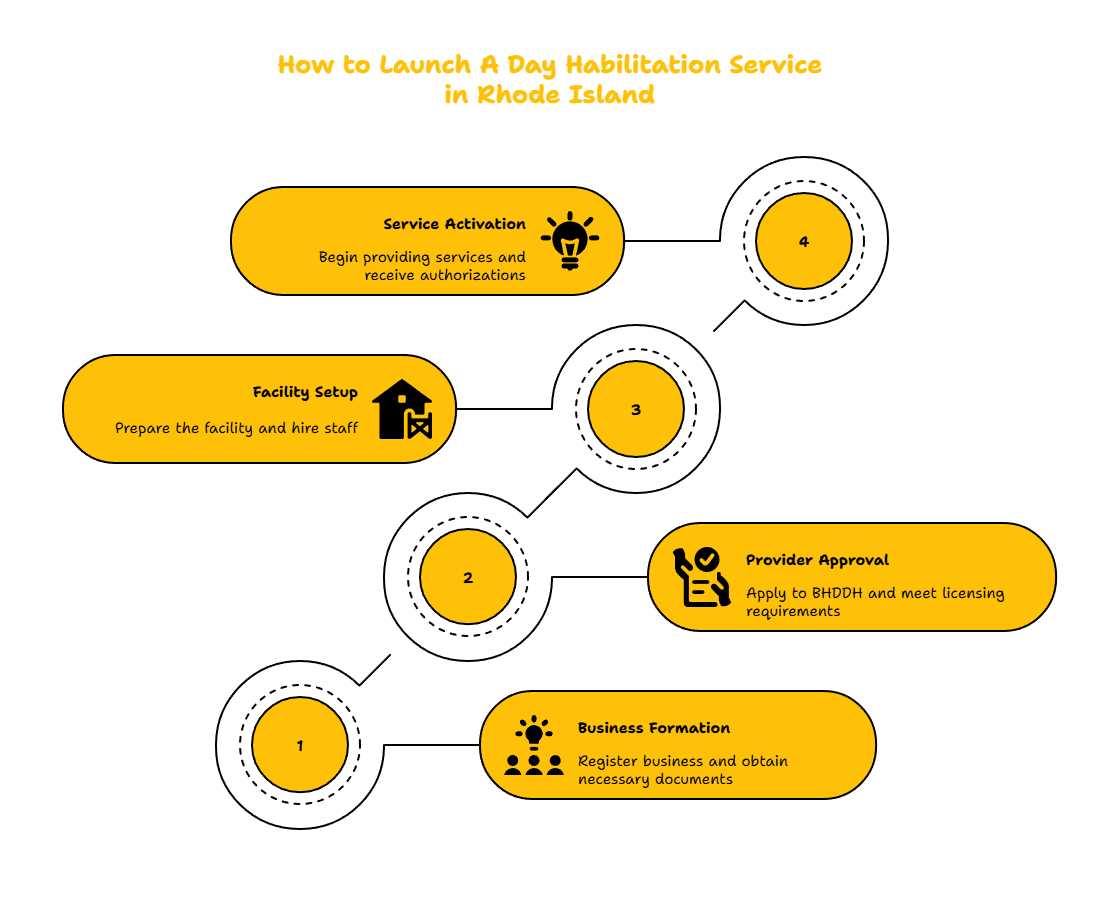
The path to becoming an active Medicaid provider follows a clear sequence of administrative phases. Following the initial business formation—including acquiring the necessary EIN, NPI, and insurance policies—the agency must submit a formal provider application to BHDDH to become an authorized DD services provider.
The submission must include the program’s structural details, such as the intended service model, facility specifications, staffing plans, and the aforementioned policy and procedure manuals. Once BHDDH reviews and approves the agency’s credentials, the provider must enroll in the Rhode Island Medicaid program via the EOHHS provider portal. This step is necessary to secure a Medicaid billing ID and to begin the process of receiving individual service authorizations.
After enrollment, the agency will typically undergo service readiness reviews. These assessments ensure that the provider is prepared to deliver quality care in accordance with state guidelines. Only after these readiness reviews are successfully completed can the agency begin receiving referrals from BHDDH or individuals utilizing self-directed service models.
What Staffing and Training Standards Apply?
High-quality day habilitation relies on a competent and well-trained workforce. Key roles include the Day Habilitation Specialist or Direct Support Professional (DSP), who provides the hands-on daily support required by participants. These staff members must have relevant experience in supporting individuals with IDD, possess valid CPR/First Aid certification, and undergo rigorous background checks.
Beyond the DSPs, a Program Manager or Supervisor is necessary to oversee daily operations, ensure staff compliance, and manage the quality of service delivery. For programs focused on community-based involvement, a Community Integration Coordinator may also be tasked with managing volunteer sites and local partnerships. Regardless of the role, all staff must participate in mandatory training covering:
- Person-centered planning and ISP documentation protocols.
- Education on abuse, neglect, and the role of mandatory reporting.
- HIPAA regulations and participant confidentiality.
- Safety procedures, including transportation safety and behavior management techniques.
- Ongoing professional development hours as required by BHDDH.
Frequently Asked Questions
What waivers fund day habilitation in Rhode Island?
Day Habilitation is primarily funded through the BHDDH Developmental Disability (DD) Waivers, including Community Living Arrangement, Shared Living, and Self-Directed programs. It is also covered under the 1115 Global Waiver (HCBS) for Medicaid-eligible individuals with intellectual and developmental disabilities.
What is the typical timeline to launch a new program?
The launch process is generally divided into phases: 1–2 months for business formation and policy development, 2–3 months for BHDDH approval and Medicaid enrollment, and 30–60 days for facility setup, hiring, and training. Service activation occurs once referrals are received from case managers or BHDDH.
Where can I find official provider resources?
Providers should regularly reference the official websites for the Rhode Island Executive Office of Health and Human Services (eohhs.ri.gov), the BHDDH (bhddh.ri.gov), and the Medicaid Provider Portal (riproviderportal.org) to stay updated on current requirements, policy changes, and enrollment instructions.
Key Takeaway: Successful entry into the Rhode Island Day Habilitation landscape requires meticulous attention to state-specific regulatory frameworks, a commitment to comprehensive policy development, and a steadfast focus on person-centered service delivery. By aligning operations with the standards set by BHDDH and EOHHS, providers can effectively bridge the gap between regulatory compliance and the delivery of high-quality community integration services.
Last verified: October 2023. Disclaimer: This information is for educational purposes only and does not constitute legal or professional advice. Always verify current state regulations and policy requirements directly through the Rhode Island Department of Behavioral Healthcare, Developmental Disabilities & Hospitals (BHDDH) and the Executive Office of Health and Human Services (EOHHS) official portals.