DAY HABILITATION SERVICES PROVIDER IN NEVADA
By Fatumata Kaba · 2025-09-04 · 5 min read
What Are Day Habilitation Services in Nevada?
Day Habilitation Services in Nevada are community-based programs designed to assist individuals with intellectual and developmental disabilities in acquiring, retaining, or improving the self-help, socialization, and adaptive skills necessary to reside successfully in home and community-based settings. These services are authorized under Nevada Medicaid Home and Community-Based Services (HCBS) waivers and are structured to provide meaningful daytime activities that foster independence and personal growth.
By operating in a supportive, structured environment, these programs serve as a cornerstone for community integration. Providers focus on a person-centered approach, ensuring that every activity, from vocational training to therapeutic group exercises, aligns with the participant's unique Individualized Service Plan (ISP). This framework ensures that participants not only receive high-quality care but also gain the confidence and practical skills required for daily living.
Who Regulates Day Habilitation Providers in Nevada?
The oversight of Day Habilitation services is a multi-tiered process involving federal and state authorities. The Centers for Medicare & Medicaid Services (CMS) sets the overarching federal standards, ensuring that all Medicaid-funded programs adhere to strict quality-of-care, health, and participant protection guidelines. These federal standards emphasize the importance of person-centered planning and the prevention of isolation, ensuring that services are truly integrated into the community.
At the state level, the Nevada Department of Health and Human Services (DHHS) acts as the primary authority for administering Medicaid waiver funding and managing the essential administrative tasks of provider enrollment, service authorization, and reimbursement. Working in tandem with the DHHS, the Aging and Disability Services Division (ADSD) is responsible for the operational side of service delivery. The ADSD monitors providers for compliance with state quality standards and ensures that service delivery methods consistently meet the needs of the individuals enrolled in HCBS waiver programs.
What Are the Essential Steps to Become an Approved Provider?
Launching a Day Habilitation agency begins with formal business and administrative establishment. Prospective providers must first register their business entity with the Nevada Secretary of State, obtain a federal Employer Identification Number (EIN), and secure a Type 2 National Provider Identifier (NPI). These foundational steps establish the legal and administrative identity of the agency required for Medicaid billing.
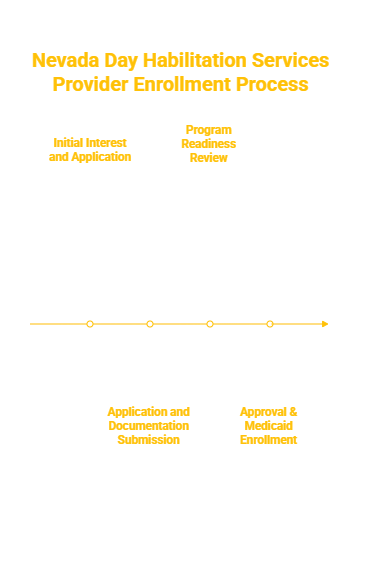
Once the business is legally formed, the provider must navigate the enrollment process via the Nevada Medicaid Provider Enrollment Portal. This involves submitting comprehensive documentation, including professional liability insurance, articles of incorporation, and proof of required licensure through the DHHS or ADSD. Providers should also prepare to undergo a rigorous program readiness review, during which state officials evaluate the proposed activity plans, safety protocols, and staff qualification records to ensure the agency is prepared to serve the Medicaid population safely and effectively.
- Register the business entity with the Nevada Secretary of State.
- Obtain EIN from the IRS and NPI (Type 2).
- Enroll as a Medicaid Waiver Day Habilitation provider via the Nevada Medicaid Provider Enrollment Portal.
- Obtain licensure for day habilitation services through DHHS or ADSD if applicable.
- Maintain general liability and professional liability insurance.
- Develop comprehensive policies for program planning, safety management, and community integration.
- Ensure staff meet background checks, health screenings, and relevant training requirements.
What Documentation Is Required for Compliance and Audit Readiness?
Maintaining accurate and thorough documentation is the backbone of a successful Day Habilitation provider. Regulatory bodies require that agencies demonstrate complete transparency regarding their internal operations and their commitment to client welfare. This includes maintaining an up-to-date Policy & Procedure Manual, which serves as the agency's operational blueprint for everyday challenges and emergency management.
Providers must maintain organized records for all aspects of their business, ranging from financial and billing records to detailed personnel files. In the event of an audit, an agency must be able to produce documentation showing that staff have met credentialing requirements, that background checks were cleared, and that participants have been receiving services in direct alignment with their ISP. High-quality documentation of participant progress and incident reports is critical for sustaining long-term Medicaid certification.
- Articles of Incorporation or Business License (Nevada Secretary of State).
- IRS EIN confirmation and NPI confirmation.
- Day Habilitation License (if applicable).
- Proof of general and professional liability insurance.
- Detailed policy manual covering HIPAA compliance, grievance handling, and quality assurance.
- Records of staff credentialing, annual competency evaluations, and ongoing training.
- Emergency response and crisis intervention protocols.
How Should Agencies Structure Staffing and Training?
Staffing requirements are designed to ensure that participants receive professional, safe, and effective support. The Program Director must typically hold a bachelor’s degree in a human services-related field and possess relevant supervisory experience. This role is responsible for the overall clinical and operational integrity of the program, ensuring that all services adhere to state requirements and the needs of the participants.
Direct Support Professionals (DSPs) and Activity Coordinators form the front line of the agency. These individuals require specific training in habilitation techniques, person-centered planning, and emergency response. Because these staff members interact most closely with participants, the agency must enforce strict background clearance procedures and provide ongoing professional development. Regular competency evaluations help ensure that the team remains proficient in the latest best practices for supporting individuals with intellectual and developmental disabilities.
Frequently Asked Questions
What specific services can be offered in a day habilitation program?
Providers may offer a variety of services, including skill development (hygiene, budgeting, self-care), socialization and community access, vocational readiness, communication skills, personal safety training, therapeutic activities like art or music, and daily living support.
Which Medicaid waivers in Nevada cover these services?
Day Habilitation Services are available under several waivers, including the Home and Community-Based Waiver for Persons with Intellectual and Developmental Disabilities (HCBS-IDD), the Frail Elderly (FE) Waiver, the Traumatic Brain Injury (TBI) Waiver, the Physical Disabilities Waiver, and the Aged and Disabled (AD) Waiver.
How long does the provider enrollment process typically take?
The timeline involves several phases: 1–2 months for business formation, 2–3 months for staff hiring and program development, 60–90 days for Medicaid enrollment and readiness reviews, and 30–45 days for billing setup and service launch.
Support for New Agencies
Waiver Consulting Group (WCG) provides technical assistance for agencies aiming to launch Medicaid-compliant Day Habilitation Services in Nevada. This includes support with business registration, the development of comprehensive policy manuals, staff credentialing frameworks, and the establishment of audit-ready financial and billing systems. WCG assists providers in navigating the complex regulatory landscape, from initial application submission to the development of robust quality assurance systems designed to ensure long-term program sustainability and compliance with state and federal expectations.
Key Takeaway: Establishing a Day Habilitation agency in Nevada requires a rigorous commitment to administrative accuracy, regulatory compliance, and the delivery of high-quality, person-centered services under the oversight of the ADSD and DHHS.
Last verified: October 2023. Disclaimer: This information is for educational purposes only and does not constitute legal or professional consulting advice. Requirements for Medicaid provider enrollment can change frequently. Always consult the official Nevada Medicaid Provider Enrollment Portal and relevant state statutes for the most current regulatory information.