DAY HABILITATION SERVICES PROVIDER IN IOWA
By Fatumata Kaba · 2025-07-22 · 5 min read
Day Habilitation Services in Iowa provide essential, community-based programming designed to support individuals with disabilities in developing critical independent living, communication, and social skills. By operating in structured, non-residential settings, these services allow participants to achieve personal growth, engage in meaningful community activities, and adhere to goals outlined in their Individualized Service Plan (ISP).
As a provider, operating these services requires strict adherence to standards set by the Iowa Department of Health and Human Services (HHS), Iowa Medicaid Enterprise (IME), and federal guidelines established by the Centers for Medicare & Medicaid Services (CMS). This guide outlines the regulatory, operational, and clinical requirements necessary to launch and maintain a successful Day Habilitation program in Iowa.
How Do Governing Agencies Regulate Day Habilitation?
The Iowa regulatory landscape for Day Habilitation involves a multi-tiered oversight structure. At the federal level, the Centers for Medicare & Medicaid Services (CMS) sets the overarching framework, ensuring that all services comply with the HCBS Settings Rule. This rule mandates that services are provided in environments that integrate participants into the broader community rather than isolating them.
On the state level, the Iowa Department of Health and Human Services (HHS) and the Iowa Medicaid Enterprise (IME) serve as the primary authorities. They are responsible for defining provider standards, managing Medicaid enrollment, and ensuring that program requirements meet the needs of waiver participants. Furthermore, Managed Care Organizations (MCOs) play a pivotal, day-to-day role by reviewing individual service authorizations, issuing reimbursements to providers, and verifying that the activities delivered align with the specific HCBS waiver goals of the participant.
What Activities Are Included in Day Habilitation Programming?
Day Habilitation services are intended to foster independence and enhance quality of life through a variety of structured engagements. Providers must ensure that their programming is person-centered and reflects the specific outcomes defined in each participant's Individualized Service Plan (ISP). These services are designed to be delivered in non-residential, community-integrated settings that satisfy federal compliance standards.
Approved providers generally deliver the following types of support:
- Instruction in essential self-care, communication, and independent living skills.
- Social skill-building and structured peer interaction support.
- Facilitation of community participation, such as volunteerism, recreational outings, or cultural experiences.
- Self-advocacy and personal safety training to improve autonomy.
- Pre-vocational development and employment readiness training where appropriate.
- Behavioral and emotional regulation support within a group setting.
- Age-appropriate life skill activities that directly support ISP goals.
What Are the Prerequisites for Licensure and Enrollment?
Entering the Iowa Medicaid market as a Day Habilitation provider requires a systematic approach to business and facility compliance. Before submitting a formal application, agencies must establish a legal business entity, register with the Iowa Secretary of State, and obtain both an EIN from the IRS and an NPI (Type 2). These foundational steps allow a business to function as a legal entity capable of contracting with state programs.
In addition to administrative registration, the provider must secure a physical space that meets ADA requirements and the HCBS Settings Rule. Following the physical setup, the agency must develop comprehensive internal policies. These must cover critical areas such as ISP alignment, group safety protocols, emergency response procedures, and robust behavioral support strategies. All staff members must also undergo thorough background checks and complete mandatory habilitation-specific training before having direct contact with participants.
What Is the Process for Enrollment and Readiness?
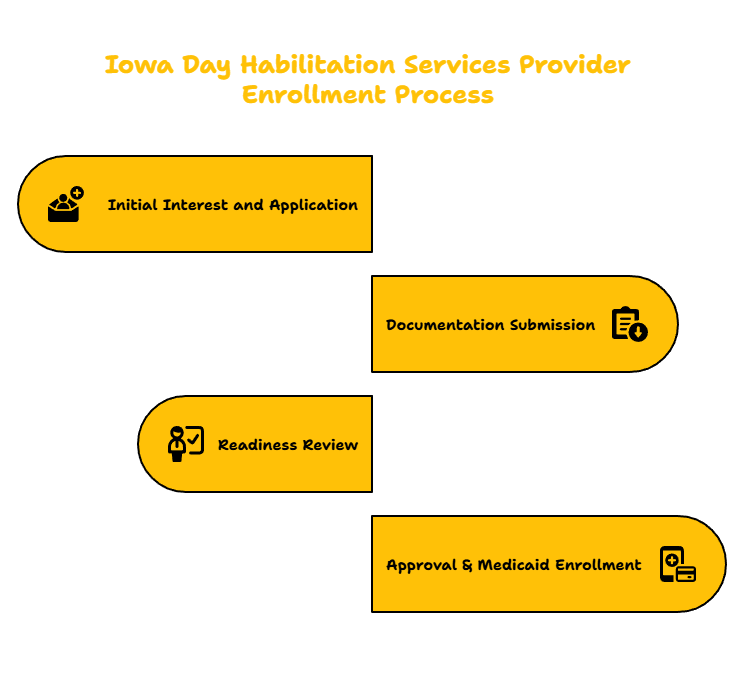
The Iowa Medicaid provider enrollment process is centralized through the Iowa Medicaid Provider Portal (IMPA). Once the business is registered and policies are in place, the applicant submits their credentials and program documentation for review. This documentation must include proof of liability insurance, articles of incorporation, and a detailed description of the proposed service structure.
Following the application, the IME and the relevant MCOs may conduct a readiness review. This process is designed to verify that the provider is prepared to deliver services safely and effectively. The review may include a physical walkthrough of the facility and interviews with key staff members. Only after these rigorous checks are passed will a provider receive the necessary authorization to bill for services, which are typically billed in daily or 15-minute increments depending on the specific program guidelines.
How Must Providers Manage Staffing and Training?
The quality of a Day Habilitation program is largely dependent on its staff. The Program Supervisor must hold a strong background in human services, education, or developmental disability support, coupled with demonstrated supervisory experience and clear background screenings. Direct Support Staff, who interact most frequently with participants, are required to have at least a high school diploma or GED and should ideally possess prior experience in habilitation or group facilitation.
Ongoing staff development is a non-negotiable requirement for compliance. Every staff member must complete initial and recurring training in the following areas:
- Abuse prevention and the protection of participant rights.
- Principles of person-centered planning and the HCBS Settings Rule.
- Community integration strategies and emergency preparedness protocols.
- Annual competency assessments to ensure skills remain aligned with current best practices.
Frequently Asked Questions
Which waivers cover Day Habilitation Services in Iowa?
Day Habilitation services are authorized under the Intellectual Disability (ID) Waiver, the Brain Injury (BI) Waiver, and the Health and Disability (HD) Waiver.
How long is the typical timeline to launch a new program?
The total timeline generally ranges from 6 to 9 months, consisting of phases for business formation, staff hiring, Medicaid enrollment, and final billing setup.
What documentation is required for audit readiness?
Providers must maintain organized records including participant intake assessments, ISP-aligned progress notes, staff training logs, behavioral support records, and verifiable Medicaid billing and attendance logs.
Key Takeaway
Launching a Day Habilitation program in Iowa requires meticulous attention to both state and federal regulatory standards, particularly regarding the HCBS Settings Rule and person-centered documentation. By prioritizing staff training, facility accessibility, and clear, audit-ready operational procedures, providers can effectively support community engagement and skill development for individuals with disabilities while ensuring long-term program sustainability.
Last verified: 2024. This information is provided for general informational purposes only and does not constitute legal or clinical advice. Always consult the latest policy manuals from the Iowa Department of Health and Human Services (HHS) and your respective Managed Care Organizations (MCOs) for the most current regulatory requirements.