DAY HABILITATION SERVICES PROVIDER IN DELAWARE
By Fatumata Kaba · 2025-07-07 · 5 min read
Establishing a Day Habilitation services agency in Delaware offers a vital opportunity to support individuals with intellectual and developmental disabilities (IDD) by providing structured, person-centered daytime activities. These services, funded through the Delaware Lifespan Waiver and overseen by the Division of Developmental Disabilities Services (DDDS), are essential for fostering community inclusion, developing daily living skills, and ensuring participants reach their personal growth milestones.
For entrepreneurs and human service administrators, entering the Delaware market requires a clear understanding of the regulatory landscape and a commitment to high-quality, compliance-driven care. This guide outlines the essential steps, agency requirements, and operational benchmarks necessary to become an approved Medicaid waiver provider in the state.
What Are the Governing Agencies and Regulatory Frameworks?
The delivery of Day Habilitation services in Delaware is strictly regulated to ensure participant safety and the efficacy of Medicaid-funded programming. The Division of Developmental Disabilities Services (DDDS) serves as the primary regulatory body for providers; they are responsible for approving entities, conducting ongoing quality monitoring, and ensuring that all service delivery models align with individual person-centered goals.
Beyond DDDS, providers must coordinate with the Division of Medicaid and Medical Assistance (DMMA), which administers the waiver reimbursement processes. At the federal level, the Centers for Medicare & Medicaid Services (CMS) sets the overarching standards for Home and Community-Based Services (HCBS). Providers must ensure their operations remain non-institutional and fully integrated into the community to maintain compliance with federal mandates.
How Are Day Habilitation Services Structured?
Day Habilitation services are intended for individuals who are not currently employed or who require supplemental support during the day. The primary focus is on providing meaningful, goal-oriented activities that build autonomy. These services are delivered in group or individual settings, emphasizing the acquisition, retention, and improvement of skills necessary for the participant to live successfully in their community.
Approved providers are tasked with delivering services that go beyond mere supervision. Effective programs often include the following components:
- Skill Development: Training in communication, personal hygiene, cooking, safety, and functional money management.
- Community Integration: Facilitating volunteer experiences, recreational outings, and social engagement within the local Delaware area.
- Self-Advocacy: Supporting individuals in setting and tracking their own personal goals.
- Clinical Documentation: Maintaining rigorous records of attendance, progress toward Individual Support Plan (ISP) goals, and overall health outcomes.
What Are the Prerequisites for Licensure and Provider Approval?
Before an agency can begin billing for services, it must navigate a series of foundational administrative requirements. The process begins with establishing the business entity through the Delaware Division of Corporations. Following business registration, the entity must secure an Employer Identification Number (EIN) from the IRS and a Type 2 National Provider Identifier (NPI), which is essential for HIPAA-compliant billing.
Physical facility requirements are equally critical. Any space used for Day Habilitation must be fully accessible and compliant with the Americans with Disabilities Act (ADA). Providers must also secure comprehensive liability and workers’ compensation insurance to protect both the agency and the participants. Finally, the internal infrastructure—such as HIPAA-compliant record-keeping systems and established staff supervision protocols—must be fully operational before the first participant is onboarded.
What Does the Provider Enrollment Process Entail?
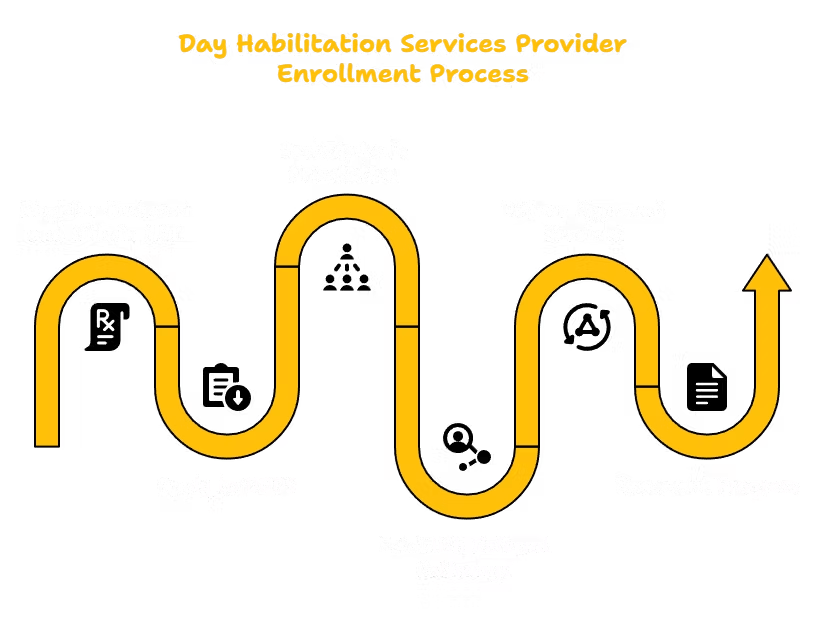
The enrollment process is a sequential journey that requires diligence and attention to detail. The first step involves formal registration and securing necessary identifiers. Once the administrative basics are set, the applicant must apply directly to the DDDS for authorization as a Day Habilitation service provider. This application package should be comprehensive, containing the physical site address, proposed staff rosters, daily activity schedules, and examples of the documentation templates the agency intends to use.
After the initial documentation is submitted, the applicant must participate in mandatory provider orientation. This session ensures that the agency understands the nuances of the Delaware Lifespan Waiver and the specific expectations of the DDDS. Once approved, the agency must actively establish referral pathways. This involves building professional relationships with Support Coordinators and ISP teams, who play a pivotal role in connecting eligible individuals with appropriate service providers.
How Do You Manage Staffing and Compliance Requirements?
Success in Day Habilitation relies heavily on the quality and preparedness of the workforce. Direct Support Professionals (DSPs) are the backbone of the program; they must hold at least a high school diploma or equivalent, possess current CPR/First Aid certification, and pass a comprehensive background check. Their training must cover ADL/IADL support, person-centered service delivery, and de-escalation techniques.
Oversight is provided by the Program Supervisor or Day Services Manager. This individual is responsible for the clinical and administrative health of the program, ensuring that all staff members are adhering to the ISP, reporting incidents, and maintaining HIPAA confidentiality. Consistent, ongoing training is mandatory for all staff to ensure they are updated on abuse prevention, mandated reporting protocols, and emergency safety procedures.
Frequently Asked Questions
What is the typical timeline for launching a Day Habilitation agency?
The launch timeline varies based on organizational readiness, but it generally follows this trajectory: 1–2 weeks for business formation, 2–4 weeks for facility setup and licensing, and 30–60 days for DDDS provider enrollment. Staff hiring and participant onboarding are considered ongoing processes that occur alongside and following formal approval.
What core policies must be included in the provider manual?
A compliant provider manual must include intake procedures, participant rights, a grievance policy, HIPAA compliance measures, and community outing safety protocols. Furthermore, it must detail daily attendance logs, progress note templates, incident reporting procedures, staff onboarding training records, and emergency preparedness plans, such as fire drill logs.
How does the Delaware Lifespan Waiver function for billing?
The Delaware Lifespan Waiver, administered by the DDDS, provides the funding mechanism for Day Habilitation. Approved providers bill for services rendered based on the individual's ISP, either on a daily or part-time basis. Accurate, timely, and compliant documentation is the prerequisite for all Medicaid reimbursement, as it serves as the proof of service delivery for state audits.
Key Takeaway: Becoming a Day Habilitation provider in Delaware is a rigorous process that demands strict adherence to state and federal HCBS guidelines. Agencies that prioritize meticulous documentation, staff competency, and person-centered service planning are best positioned to secure enrollment and provide meaningful support to the IDD community.
Last verified: May 2024. This content is for informational purposes only and does not constitute legal or professional advice. Always refer to the latest official guidance from the Delaware Department of Health and Social Services (DHSS) and the Division of Developmental Disabilities Services (DDDS) for the most current regulatory requirements.