DAY HABILITATION SERVICES PROVIDER IN ALASKA
By Fatumata Kaba · 2025-07-03 · 5 min read
Day Habilitation services in Alaska are essential components of the state's Home and Community-Based Services (HCBS) Medicaid waiver programs, designed to foster independence, community integration, and personal growth for individuals with intellectual and developmental disabilities. By operating in non-residential, community-focused settings, providers help participants develop vital life skills and participate meaningfully in their local environments through person-centered, structured support.
Launching a Day Habilitation program requires navigating a rigorous regulatory framework overseen by the Alaska Department of Health’s Division of Senior and Disabilities Services (SDS) and the Centers for Medicare & Medicaid Services (CMS). This guide provides a comprehensive overview for provider agency founders and administrators seeking to meet these standards and establish a compliant, effective service delivery model in Alaska.
Understanding the Governance and Regulatory Landscape
The regulatory structure for Day Habilitation in Alaska is a multi-tiered system designed to ensure participant safety and quality of care. The Alaska Department of Health – Division of Senior and Disabilities Services (SDS) acts as the primary governing body responsible for approving providers, monitoring program quality, and enforcing strict HCBS requirements to prevent institutionalization and promote community inclusion.
Beyond state-level oversight, Alaska Medicaid—managed under the Department of Health—oversees provider enrollment and the vital reimbursement processes for services rendered. Additionally, the federal Centers for Medicare & Medicaid Services (CMS) sets the overarching guidelines for HCBS compliance. Providers must ensure that every aspect of their service model, from facility location to daily activity planning, aligns with federal mandates regarding community integration and person-centered service delivery.
Designing a Person-Centered Service Model
Day Habilitation services must be uniquely tailored to the individual’s strengths, goals, and personal preferences as defined by their service plan. Rather than utilizing a "one-size-fits-all" approach, providers are expected to facilitate skill acquisition and maintenance in areas like self-help, socialization, and adaptive functioning, enabling participants to live as independently as possible in their home and community environments.
Successful programs integrate participants into the fabric of the community, utilizing volunteer opportunities, civic engagement, and public resources. By focusing on practical life skills such as budgeting, public transportation use, and interpersonal communication, providers help bridge the gap between clinical support and independent living. Services may be delivered in one-on-one sessions or within small, well-managed groups, provided the setting is never segregated or institutional in nature.
- Community participation and volunteer opportunities
- Support with daily living skills (e.g., cooking, budgeting, transportation use)
- Recreational, social, and fitness activities
- Communication and interpersonal skill development
- Self-advocacy, rights education, and decision-making training
- Instruction on using public resources and engaging in civic life
Navigating the SDS Provider Enrollment Process
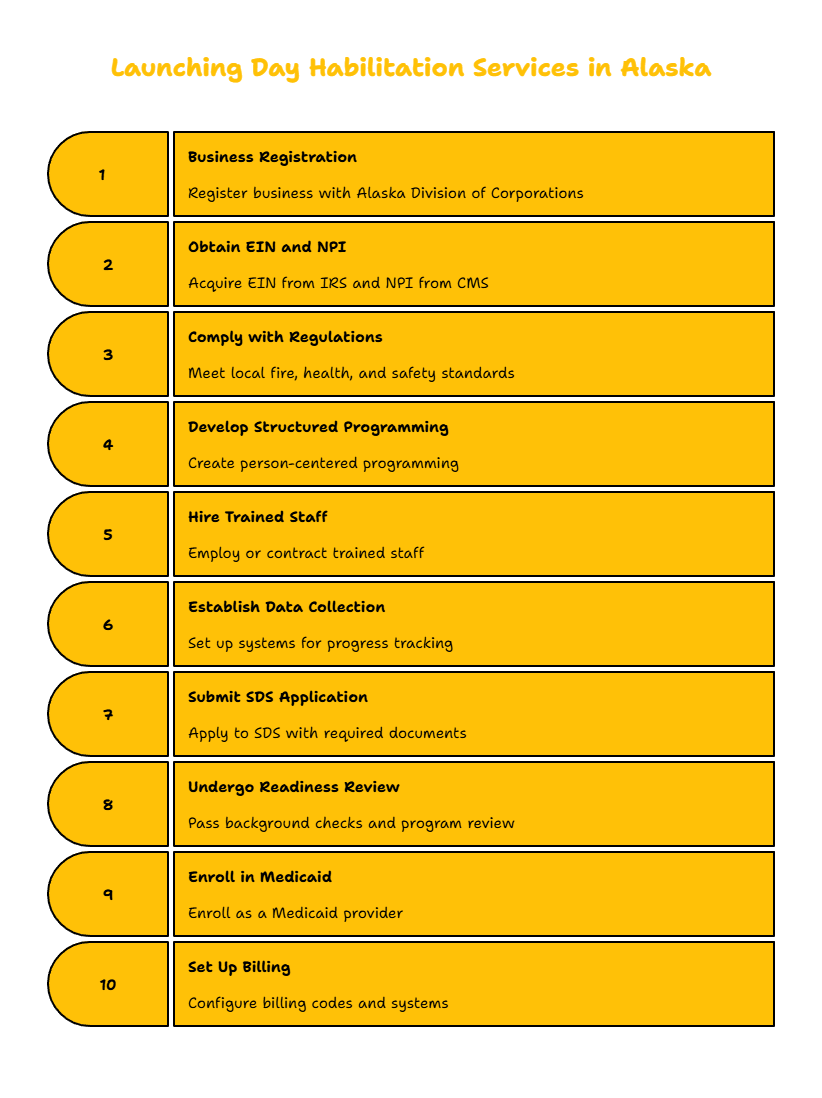
The path to becoming an approved provider begins with establishing the legal foundation of the business, including formal registration with the Alaska Division of Corporations, Business and Professional Licensing. Providers must also secure an IRS Employer Identification Number (EIN) and a Type 2 National Provider Identifier (NPI). Once the business entity is established, the applicant must initiate the SDS provider application process, which typically includes attending mandatory orientation or training sessions.
The application phase is data-intensive, requiring the submission of a robust service delivery model, a comprehensive staffing plan, and detailed policy documentation. Applicants must provide evidence of their readiness, including sample schedules, activity logs, and specific tools used for person-centered planning. Following the document review, a readiness review takes place, where SDS verifies staff credentials, inspects the physical site for safety and accessibility, and evaluates the provider’s internal procedures for incident reporting and data collection.
Building Compliance Through Documentation and Policy
A compliant Policy & Procedure Manual is the backbone of any successful Day Habilitation agency. This manual must explicitly outline every aspect of daily operations, ensuring that the agency can effectively respond to risks, protect participant rights, and maintain accurate progress tracking. Because documentation serves as the primary record for Medicaid billing, it must be meticulous, demonstrating that the services provided match the goals outlined in the participant's individual care plan.
Providers must maintain comprehensive policies regarding health and safety protocols, emergency response, and transportation safety. Furthermore, establishing a transparent grievance process and clear protocols for staff training ensures that all employees are equipped to deliver high-quality, ethical care. Data collection systems must be established early to track outcomes, ensuring that the provider can demonstrate the impact of their services during future audits or quality reviews.
- Participant admission and service planning
- Community engagement, skill-building, and activity procedures
- Behavior support, health and safety protocols
- Incident, injury, and emergency response procedures
- Participant rights, consent, and grievance processes
- Transportation safety and supervision policies
- Daily documentation templates and progress tracking tools
- Staff training, scheduling, and performance monitoring systems
Managing Staffing and Operational Timelines
Staffing a Day Habilitation program requires a balance of skilled leadership and compassionate direct support. The Program Director or Day Habilitation Manager should possess demonstrated experience in developmental disabilities and person-centered planning to oversee the program’s vision. Direct Support Staff, or "Community Coaches," are the frontline of service delivery; they must hold at least a high school diploma or GED and receive specific training in community inclusion, behavior support, and ethics.
The launch timeline is structured to ensure regulatory compliance across all phases. The business formation and program design stage typically spans 1–2 weeks. The most intensive phase, the SDS application and readiness review, requires 60–90 days for completion. Once approved, the agency must account for 30–45 days for hiring and training, followed by 45–60 days to finalize Medicaid enrollment and configure billing systems through the Alaska MMIS.
Frequently Asked Questions
Which Medicaid Waivers cover Day Habilitation services in Alaska?
Day Habilitation is authorized under the Individuals with Intellectual and Developmental Disabilities (IDD) Waiver, the Adults with Physical and Developmental Disabilities (APDD) Waiver, and, as applicable, the Children with Complex Medical Conditions (CCMC) Waiver.
What is the primary role of the SDS during the provider application?
The Division of Senior and Disabilities Services (SDS) reviews the provider’s business documentation, service delivery model, and safety procedures. They conduct a readiness review to ensure the facility meets state standards and that the agency is prepared to implement person-centered, community-based programming.
How does a provider ensure their services meet CMS community integration requirements?
Providers must ensure services are delivered in non-residential, integrated settings where participants have opportunities to interact with the broader community. All activities must be based on the individual's preferences and strengths, strictly avoiding any environment that resembles a segregated or institutional setting.
Key Takeaway: Establishing a Day Habilitation program in Alaska requires a rigorous commitment to person-centered documentation, strict adherence to SDS regulatory standards, and a focus on meaningful community integration. By meticulously preparing your operational policies and aligning your service delivery with the specific requirements of Alaska’s IDD and APDD waivers, you can create a sustainable agency that fosters genuine independence for participants.
Last verified: October 2023. This content is provided for informational purposes only and does not constitute legal or professional consulting advice. Regulations governing Medicaid HCBS programs are subject to change; providers should consult directly with the Alaska Division of Senior and Disabilities Services for the most current requirements.