DAY FACILITY SERVICES PROVIDER IN WEST VIRGINIA
By Fatumata Kaba · 2026-04-14 · 6 min read
HOW TO BECOME A DAY FACILITY SERVICES PROVIDER IN WEST VIRGINIA
Day Facility Services in West Virginia are structured, community-based programs designed to provide skill-building, socialization, and therapeutic support to individuals with intellectual or developmental disabilities. By operating as an approved provider under the I/DD Waiver and other specialized programs, agencies can play a pivotal role in fostering participant independence while offering essential daytime relief for family caregivers.
Launching a successful day program requires strict adherence to regulatory standards mandated by the West Virginia Department of Health and Human Resources (WVDHHR) and the Bureau for Medical Services (BMS). Providers must navigate a rigorous credentialing process, maintain comprehensive operational policies, and ensure all services are aligned with the person-centered goals outlined in each participant's Individualized Service Plan (ISP).
Navigating the Regulatory Landscape and Oversight Agencies
The operational framework for Day Facility Services is governed by a network of state agencies that ensure safety, quality of care, and fiscal accountability. Prospective providers must coordinate with these entities to maintain their authorization to provide services within the Medicaid framework. Understanding the distinct role of each agency is the first step toward building a sustainable service model.
The West Virginia Department of Health and Human Resources (WVDHHR) acts as the primary regulatory body, managing waiver operations and establishing the standards for care. Working in tandem, the Bureau for Medical Services (BMS) manages the financial components of the program, including Medicaid funding, billing protocols, and the official credentialing of providers. These agencies ensure that all services remain compliant with both state and federal requirements.
Operational oversight is further divided among specialized entities. Acentra Health (formerly Kepro) serves as the gatekeeper for service delivery, responsible for authorizing Day Facility Services based on the Individualized Service Plan (ISP) and ensuring that the care plan meets the individual’s unique needs. Additionally, the Office of Health Facility Licensure & Certification (OHFLAC) is responsible for the licensing of any physical facility where services are rendered to vulnerable adults, ensuring compliance with building, fire, and safety codes.
Essential Components of Day Facility Programming
Day Facility Services are centered on providing structured, meaningful engagement for individuals with developmental, intellectual, or behavioral challenges. A well-designed program goes beyond basic supervision, focusing instead on active habilitation and social development. Providers must ensure that every activity is documented and directly linked to the goals established in the participant's ISP.
Effective programming is characterized by a person-centered approach that prioritizes the autonomy and growth of the participant. Programs must be versatile enough to support a range of needs, from high-level skill acquisition to basic hygiene and behavioral support. When designing a daily schedule, providers should focus on a balance of structured training, recreation, and community integration to ensure a holistic experience.
- Training in activities of daily living (ADLs) to promote personal independence.
- Socialization opportunities, recreational activities, and peer engagement.
- Community outings and structured mobility training.
- Pre-vocational activities and job readiness preparation.
- Development of essential communication and interpersonal skills.
- Supervised meals, hygiene assistance, and consistent medication reminders.
- Tailored behavioral supports and redirection as defined by the participant's ISP.
The Path to Provider Enrollment and Facility Approval
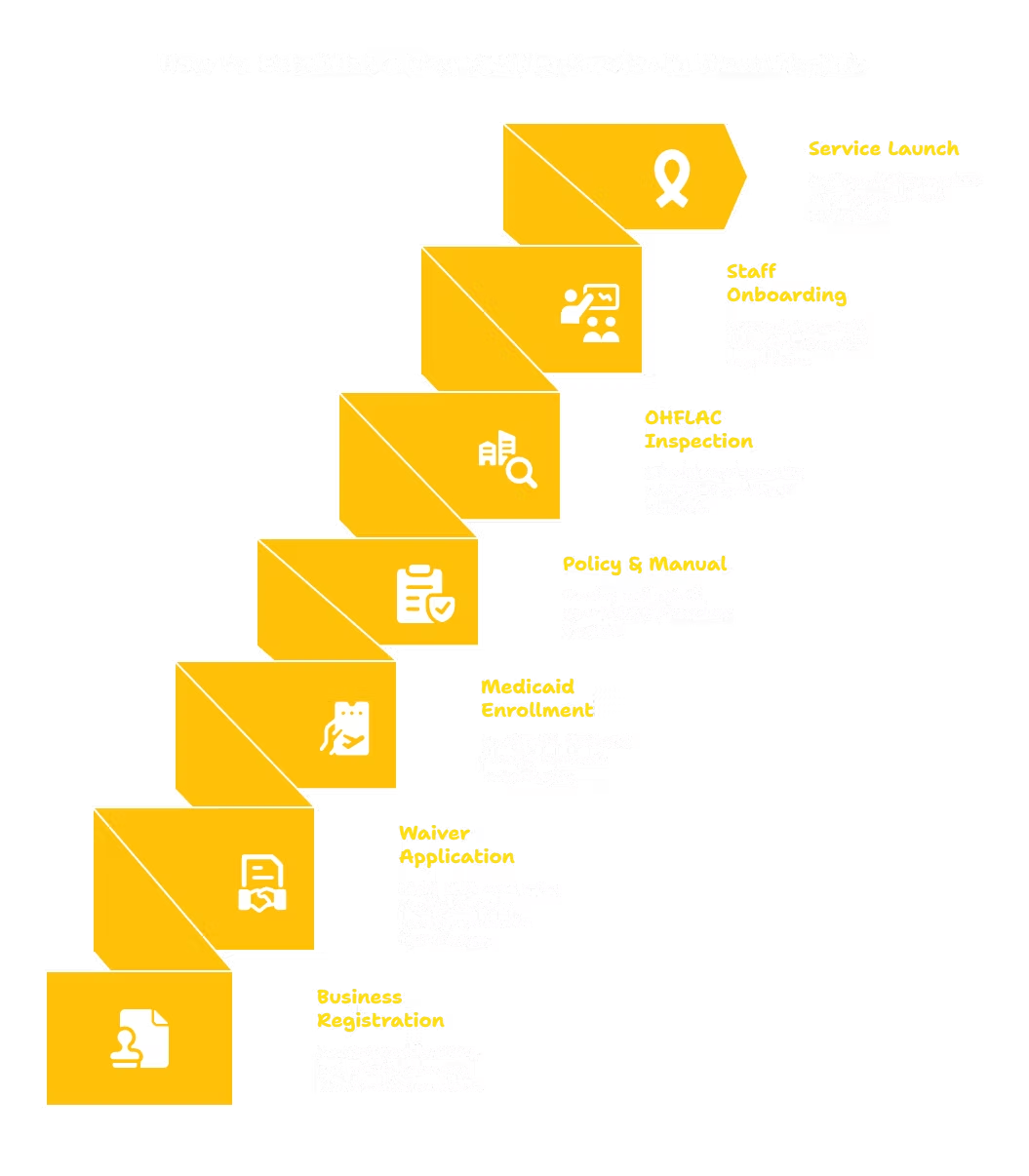
The journey to becoming an approved provider is a multi-phase process that begins with formal business registration and ends with the active receipt of referrals. Before a facility can begin operations, it must satisfy a sequence of requirements that prove both administrative readiness and physical compliance. Providers must be meticulous in their documentation and follow the established enrollment sequence to avoid delays in their Medicaid authorization.
Initial steps involve establishing a legal business entity with the West Virginia Secretary of State, obtaining a Federal Employer Identification Number (EIN), and acquiring a Type 2 National Provider Identifier (NPI). Once these foundational business requirements are met, the provider must register with the state’s Medicaid system through Gainwell Technologies and formally apply for provider status under the I/DD Waiver.
Following the administrative enrollment, physical facility preparation takes precedence. If the program will be hosted in a brick-and-mortar location, the provider must meet all relevant building, fire safety, and accessibility codes, and complete the inspection process with OHFLAC. The final stage involves hiring qualified staff and establishing the internal systems necessary for clinical documentation, billing, and incident reporting before receiving the first authorized ISP referrals.
Maintaining Compliance: Policies, Procedures, and Documentation
The backbone of any successful Day Facility Service provider is a comprehensive Policy and Procedure Manual. This document serves as the roadmap for daily operations and is a primary focus during state audits and site visits. A high-quality manual must be dynamic, incorporating everything from daily activity logs and staff training schedules to emergency protocols and behavioral intervention strategies.
Beyond the internal manual, providers must maintain rigorous documentation for every participant interaction. Because Medicaid reimbursement is strictly tied to service delivery, progress notes must accurately reflect the implementation of ISP goals. Failure to document services according to waiver guidelines is a leading cause of audit findings, making precise record-keeping an essential administrative discipline for all staff members.
- Daily program schedules, activity plans, and participant attendance records.
- Staffing ratios, supervision standards, and shift-to-shift communication protocols.
- Detailed intake, orientation, and longitudinal goal-tracking systems.
- Clear policies on medication management and standardized incident reporting.
- Established protocols for behavioral support, de-escalation, and emergency evacuation.
- Staff training logs, credentialing verification, and ongoing supervision records.
Staffing Requirements and Professional Training
Staffing a day program requires individuals who are not only qualified but also committed to the principles of advocacy and person-centered care. All Direct Support Professionals (DSPs) must meet minimum age and background check requirements, specifically passing the WV CARES background check to ensure participant safety. Beyond initial vetting, the quality of service is maintained through consistent, mandatory training cycles.
Supervisory staff, including Day Program Managers, play a vital role in monitoring the daily performance of the team and the progress of participants. Depending on the specific needs of the population served, the facility may also require the integration of licensed professionals, such as nurses or behavior specialists, to support individuals with complex medical or behavioral requirements.
- DSP Eligibility: Must be at least 18 years old, cleared through WV CARES, and CPR/First Aid certified.
- Core Training: All staff must receive annual training in abuse prevention, participant rights, and HIPAA compliance.
- Clinical Safety: Ongoing training in behavioral safety, emergency response, and compliance with documentation and progress note standards.
Frequently Asked Questions
What waivers currently cover Day Facility Services in West Virginia?
The primary vehicle for funding is the I/DD Waiver, which supports Day Habilitation or Day Program Services. Depending on the participant's profile and specific goals, limited structured daytime services may also be authorized under the Children with Serious Emotional Disorder Waiver (CSEDW) or the Traumatic Brain Injury Waiver (TBIW) on a case-by-case basis.
How long should a new agency expect the launch process to take?
The timeline varies based on organizational readiness, but typical phases include 2–4 weeks for business registration, 1–2 months for Medicaid enrollment and manual submission, and 30–60 days for OHFLAC licensure and staff onboarding. Services may only commence after full provider approval and the receipt of individual ISP service authorizations.
What role does Acentra Health play in the delivery of services?
Acentra Health (formerly Kepro) is responsible for authorizing the specific services that a participant will receive. They ensure that the requested Day Facility Services are medically necessary and consistent with the participant's individual needs as outlined in their service plan.
Key Takeaway
Successful operation of a Day Facility Service in West Virginia relies on the seamless integration of strict regulatory compliance, detailed administrative documentation, and a commitment to person-centered care. Providers who prioritize the development of robust internal systems, staff training, and clear communication with state agencies like the WVDHHR and BMS will be best positioned to provide high-quality support to individuals with disabilities while maintaining long-term program sustainability.
Last verified August 2024. This information is provided for general informational purposes and does not constitute legal or professional advice. Always refer to the most recent state guidance and official documentation from WVDHHR, BMS, and OHFLAC for the latest policy updates and regulatory requirements.