CRISIS SERVICES PROVIDER IN WEST VIRGINIA
By Fatumata Kaba · 2026-04-14 · 5 min read
Crisis Services in West Virginia are specialized interventions designed to stabilize individuals experiencing acute behavioral, emotional, or medical distress in community settings. By providing immediate, short-term support, these programs aim to divert individuals from emergency rooms, psychiatric hospitals, or law enforcement involvement, ensuring that care is delivered in the least restrictive environment possible.
For healthcare organizations and service providers, establishing a crisis response program requires strict adherence to the regulatory frameworks set by the West Virginia Department of Health and Human Resources (WVDHHR). Successful operation depends on seamless integration with Medicaid waiver programs—such as the Intellectual/Developmental Disabilities (I/DD) Waiver and the Children with Serious Emotional Disorder Waiver (CSEDW)—and maintaining compliance with clinical, billing, and safety protocols overseen by the Bureau for Medical Services (BMS) and the Bureau for Behavioral Health (BBH).
What Are the Core Functions of a Crisis Services Provider?
A crisis services provider acts as a critical safety net, offering mobile, telephonic, or site-based support. The primary goal is to de-escalate acute situations before they reach a level of severity that necessitates institutionalization. This requires a rapid-response capability that is both clinically sound and fully aligned with an individual’s existing Person-Centered Service Plan (PCSP) or Behavior Support Plan (BSP).
Beyond immediate de-escalation, providers are expected to facilitate a "warm handoff" to long-term behavioral health supports. This continuity of care ensures that once the immediate crisis is stabilized, the individual remains linked to the necessary resources to prevent future incidents. Services are wide-ranging and must be tailored to the specific needs of the population served, often requiring a combination of clinical expertise and community-based support structures.
- Mobile Crisis Response: Dispatching qualified professionals to the individual’s home or community location.
- Behavioral De-escalation: Implementing safety planning and evidence-based techniques to reduce agitation.
- Medical Stabilization: Providing observation and coordination for individuals with co-occurring medical needs.
- Short-Term Crisis Residential: Managing access to specialized facilities for those who cannot be safely supported in their current environment.
- Crisis Hotlines: Providing 24/7 telephonic support to resolve issues before they escalate to an on-site emergency.
How Are Governing Agencies Involved in Crisis Oversight?
The regulatory landscape for crisis services in West Virginia is a multi-agency effort. The WVDHHR sets the overarching infrastructure, but specific functions are delegated to ensure compliance and quality control. Providers must navigate these relationships to ensure their service delivery models meet state expectations.
The Bureau for Medical Services (BMS) is the primary contact for Medicaid coverage and reimbursement, ensuring that all billing practices align with federal and state regulations. Meanwhile, the Bureau for Behavioral Health (BBH) directs the design of crisis programs, focusing on the clinical integrity and integration of behavioral health services. Furthermore, Acentra Health (formerly Kepro) plays a vital role by reviewing and approving services within an individual’s PCSP or Individualized Service Plan (ISP), acting as the gatekeeper for service authorization.
What Are the Essential Steps for Provider Enrollment?
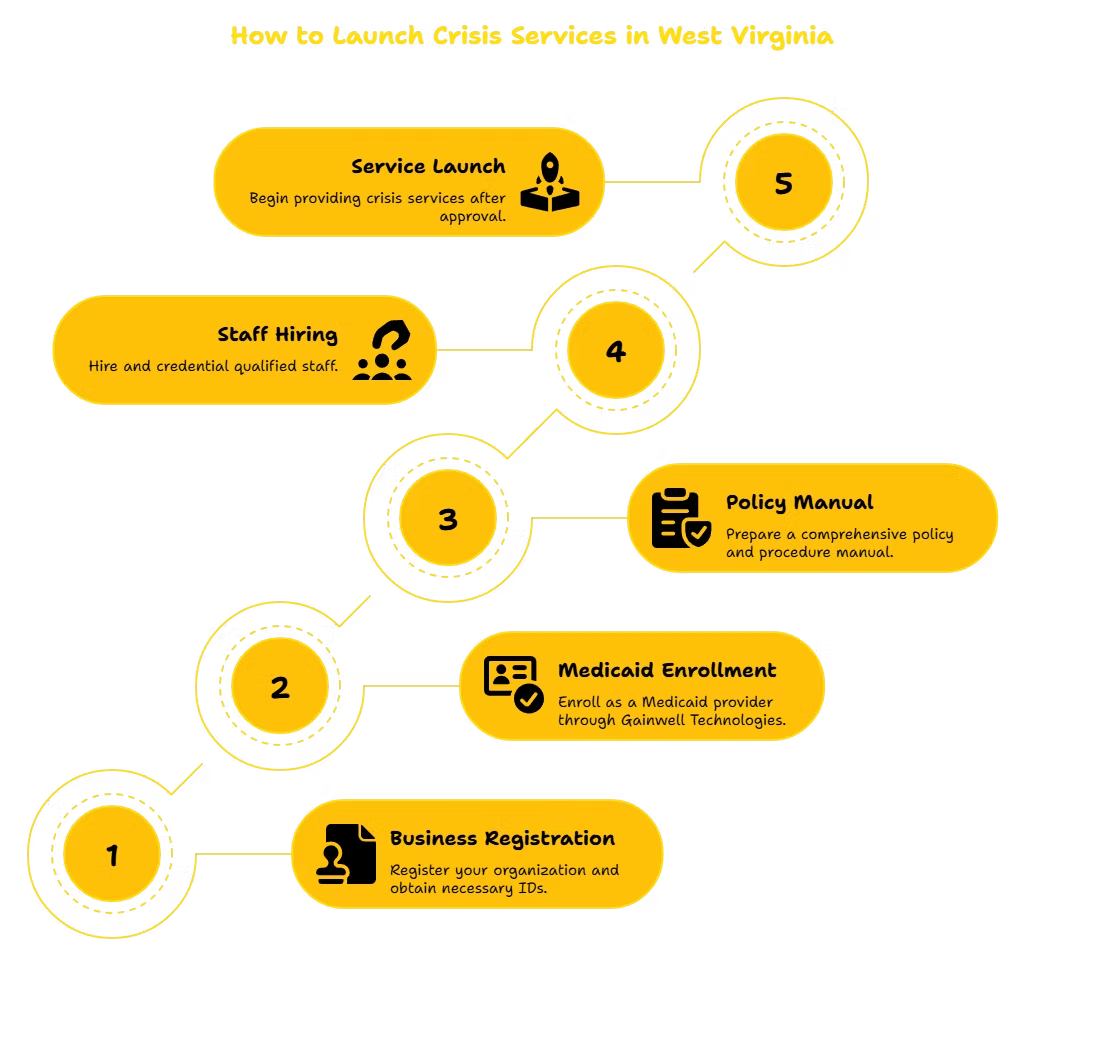
Launching a crisis services agency is a structured process that begins with formalizing the business entity. Before any clinical services can be rendered, the organization must be registered with the West Virginia Secretary of State and possess a valid Federal Employer Identification Number (EIN) and Type 2 National Provider Identifier (NPI). This foundational work ensures that the business is recognized by both state and federal authorities.
Once registered, the provider must undergo the Medicaid enrollment process through Gainwell Technologies. This includes submitting comprehensive documentation, such as the organization’s Policy & Procedure Manual, which must detail how the agency will handle clinical risks, emergency debriefing, and HIPAA compliance. If the agency plans to offer residential crisis beds, additional licensure through the Office of Health Facility Licensure & Certification (OHFLAC) is required before operations can commence.
- Register the business and secure an EIN and Type 2 NPI.
- Formally apply to the WVDHHR as a designated crisis services provider.
- Complete the Medicaid provider enrollment process via Gainwell Technologies.
- Develop and submit a comprehensive Policy & Procedure Manual for regulatory review.
- Credential and hire qualified clinical staff to meet state standards.
What Are the Staffing and Training Mandates?
Staffing requirements are rigorous, reflecting the high-stakes nature of crisis work. Clinical roles, such as Crisis Intervention Specialists, generally require active licensure as an LPC, LICSW, BCBA, or RN. These professionals are responsible for conducting risk assessments and overseeing the clinical interventions implemented during a crisis. Direct care staff, while not always requiring clinical licensure, must undergo thorough background checks through WV CARES and receive specialized training in emergency response and person-centered care.
All staff members must complete mandatory training programs that cover HIPAA and confidentiality, abuse prevention, and recognized de-escalation models like CPI or MANDT. Because the nature of crisis work is unpredictable, agencies must also ensure 24/7 on-call coverage and provide ongoing supervision to all staff. Documentation, such as incident reports and behavioral tracking logs, must be maintained to demonstrate compliance during state audits.
Frequently Asked Questions
Which Medicaid programs specifically cover crisis services in West Virginia?
Crisis services are primarily authorized under the I/DD Waiver and the CSEDW, provided these services are explicitly listed in the participant’s PCSP or ISP. Additionally, Behavioral Health State Plan services may apply for non-waiver specific needs, and the Traumatic Brain Injury Waiver (TBIW) may provide coverage for eligible participants when clinical documentation justifies the intervention.
What documentation is required to remain compliant with state standards?
Providers must maintain a robust Policy & Procedure Manual that outlines 24/7 response protocols, clinical risk assessment methods, incident debriefing procedures, and communication timelines for emergencies. All documentation, including billing records and individual service notes, must be kept in accordance with HIPAA regulations and made available for review by WVDHHR and Acentra Health.
What is the typical timeline to launch a crisis program?
The total timeline varies based on the readiness of the organization but generally spans 3 to 6 months. This includes 2–4 weeks for business registration, 1–2 months for Medicaid enrollment and manual development, and 30–45 days for hiring and credentialing. Services can only begin following final provider approval and the formal authorization of services within individual service plans.
WAIVER CONSULTING GROUP’S START-UP ASSISTANCE SERVICE — WEST VIRGINIA CRISIS SERVICES PROVIDER
Waiver Consulting Group (WCG) provides comprehensive support for behavioral health and disability service providers aiming to launch crisis response programs. Our services cover the full development lifecycle, from waiver application and Medicaid enrollment guidance to the creation of audit-ready Policy & Procedure Manuals and staff training schedules. We assist providers in establishing the infrastructure necessary for compliance with WV waiver standards, including incident reporting templates, HIPAA-compliant documentation protocols, and effective billing workflows.
Key Takeaway: Establishing a crisis services provider in West Virginia requires a combination of clinical expertise, administrative rigor, and strict adherence to the governing policies of WVDHHR, BMS, and BBH. By prioritizing a well-documented, 24/7 response framework and ensuring all staff are trained in evidence-based de-escalation, organizations can successfully deliver essential stabilization services that meet Medicaid requirements and improve participant outcomes.
Last verified: May 2024. This information is provided for educational purposes only and does not constitute legal or professional advice. Always verify requirements directly with the West Virginia Department of Health and Human Resources (WVDHHR) or the Bureau for Medical Services (BMS) before beginning the provider enrollment process.