CRISIS INTERVENTION SERVICES PROVIDER IN NORTH CAROLINA
By Fatumata Kaba · 2025-09-15 · 6 min read
Crisis Intervention Services in North Carolina are specialized, high-impact interventions designed to assist individuals facing acute mental health or behavioral emergencies. By providing immediate stabilization and preventing unnecessary hospitalization, these services serve as a vital component of the North Carolina Medicaid Home and Community-Based Services (HCBS) waiver system, ensuring that vulnerable populations receive timely support in their own communities.
Establishing a provider agency for these services requires rigorous adherence to clinical standards, regulatory compliance, and administrative infrastructure. This guide outlines the essential requirements for organizations seeking to become approved Medicaid providers in North Carolina, focusing on the regulatory frameworks managed by the North Carolina Department of Health and Human Services (NCDHHS) and its associated divisions.
Which Agencies Govern Crisis Intervention Services in North Carolina?
The regulatory environment for North Carolina HCBS providers is multi-layered, ensuring that services remain person-centered, safe, and financially accountable. The primary authority rests with the NCDHHS, which administers Medicaid waiver funding and oversees the critical nexus between provider enrollment and service reimbursement. Working in tandem, the North Carolina Division of Health Benefits (NC Medicaid) manages the specific administrative functions of the Medicaid program, including provider participation agreements.
Clinical oversight is provided by the North Carolina Division of Mental Health, Developmental Disabilities, and Substance Abuse Services (DMH/DD/SAS), which sets the standards for crisis management and behavioral health interventions. Furthermore, at the federal level, the Centers for Medicare & Medicaid Services (CMS) provides the overarching mandate for quality and safety, ensuring that all state-level programs align with federal requirements for Medicaid-funded HCBS. Providers must maintain familiarity with the directives of all four agencies to remain in good standing.
What Are the Core Components of Crisis Intervention Services?
At its core, the mission of Crisis Intervention Services is to de-escalate acute stressors and provide a bridge to long-term mental health stability. Providers must be equipped to deliver a mobile response, meaning staff can reach the individual in their home or community setting when a crisis occurs. This mobility is essential to the HCBS model, as it minimizes the disruption of the individual’s daily life and prevents the trauma often associated with institutionalization.
Approved service delivery models typically encompass a wide range of supportive interventions, ranging from immediate safety assessments to ongoing family education. Because these services operate during periods of high instability, documentation is not merely an administrative requirement but a clinical necessity for tracking the efficacy of the intervention and ensuring the safety of all involved parties.
- Mobile Crisis Response: Providing on-site support during behavioral or mental health emergencies.
- Crisis Assessment: Evaluating the immediate needs and risk factors involved in the crisis.
- De-escalation Techniques: Utilizing calming strategies to reduce agitation or aggression.
- Safety Planning: Developing short-term safety measures to stabilize the situation.
- Supportive Counseling: Offering emotional support and coping strategies during the crisis.
- Linkage to Ongoing Support: Connecting individuals with follow-up mental health services or community resources.
- Crisis Stabilization: Temporary support in a safe environment to prevent hospitalization.
- Family Support and Education: Guiding family members on managing crisis situations effectively.
- 24/7 Crisis Hotline: Providing immediate telephonic assistance and guidance.
- Documentation: Maintaining accurate records of crisis incidents, interventions, and outcomes.
How Can New Providers Meet Licensing and Enrollment Requirements?
The road to provider status begins with establishing a robust business foundation. Before interacting with the NCTracks Provider Portal, an agency must be properly registered with the North Carolina Secretary of State and possess a valid Employer Identification Number (EIN) and a Type 2 National Provider Identifier (NPI). These are the prerequisites that verify the legitimacy of the business entity.
Once the legal framework is established, the focus shifts to internal policies and financial security. Providers must secure comprehensive general and professional liability insurance to protect against the inherent risks of crisis management. Furthermore, the agency must develop a comprehensive Policy and Procedure Manual. This document is a cornerstone of the application process, as it must clearly articulate how the agency handles crisis response, maintains HIPAA compliance, protects participant rights, and manages incident reporting.
What Is the Procedure for Medicaid Provider Enrollment?
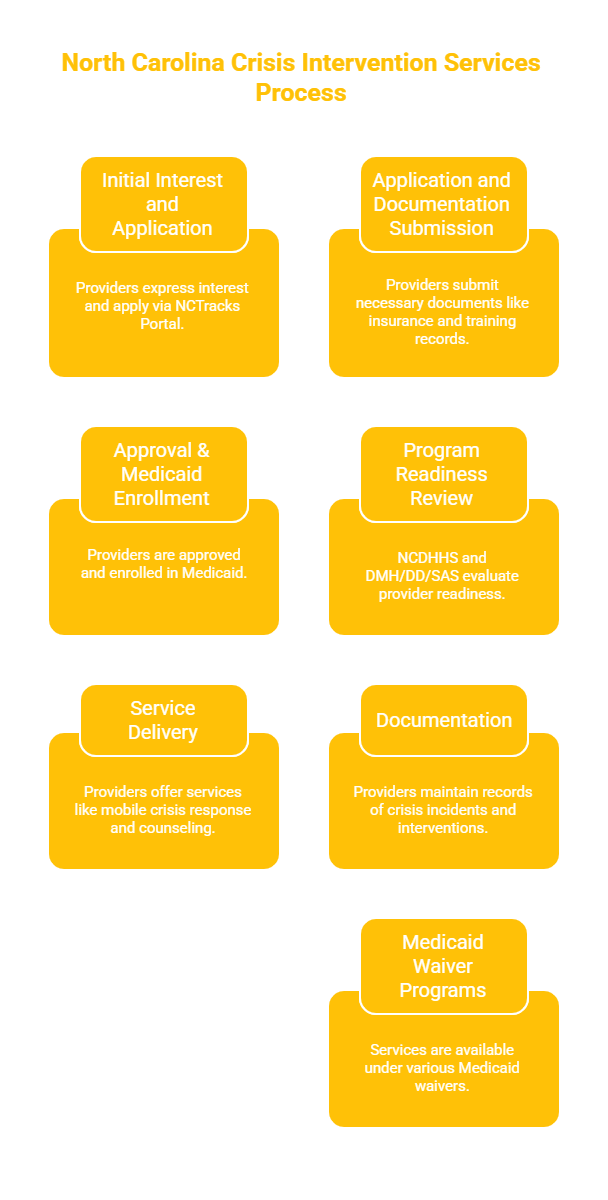
The enrollment process is structured to ensure that only qualified, ready-to-operate agencies receive state authorization. The process begins with an application through the NCTracks portal, where the agency officially signals its intent to provide services under specific HCBS waivers. During this phase, accuracy in documentation is paramount, as any discrepancy between the application and the actual operational capability can lead to delays or denials.
Following the initial submission, the program undergoes a readiness review conducted by NCDHHS and DMH/DD/SAS. This review evaluates the provider’s preparedness, ranging from staff training logs to the actual safety protocols that will be utilized during a mobile crisis response. Once the review is successful and Medicaid enrollment is finalized, the provider receives authorization to utilize specific billing codes for the services rendered under the Innovations, CAP/DA, CAP/C, or TBI waivers.
How Do Staffing and Training Standards Impact Operations?
Because of the high-acuity nature of the work, staffing requirements are stringent. The Crisis Program Director must hold a Master’s degree in a relevant field and maintain an active professional license, such as an LCSW, LMHC, or LPC. This leadership role is vital for supervising clinical practice and ensuring that crisis counselors meet the high standards expected by the state.
Beyond formal education, every staff member must undergo a rigorous training regimen. This includes specialized instruction in mental health first aid, HIPAA compliance, and physical or verbal de-escalation techniques. Agencies are responsible for maintaining up-to-date documentation on every employee, demonstrating that they have completed background checks and annual competency evaluations. The state expects evidence of ongoing professional development to ensure that staff members are prepared for the evolving challenges of crisis intervention.
Frequently Asked Questions
Are Crisis Intervention Services available to all Medicaid recipients in North Carolina?
These services are specifically authorized under HCBS waiver programs such as the Innovations Waiver, CAP/DA, CAP/C, and the TBI Waiver. Eligibility is dependent on the individual’s enrollment in one of these specific waiver programs, rather than standard Medicaid coverage alone.
What is the typical timeframe to launch a new agency?
The timeline varies based on the state of readiness, but generally, business formation and compliance preparation take 1–2 months, staff hiring takes 2–3 months, the Medicaid enrollment and readiness review phase takes 60–90 days, and final billing setup takes another 30–45 days. Proper planning is essential for a smooth launch.
What documentation is most important for the Medicaid readiness review?
The most critical documents include your Crisis Intervention Policy & Procedure Manual, proof of professional liability insurance, staff credentialing records, and documentation of HIPAA compliance protocols. These documents prove to NCDHHS that your agency is equipped to handle the high-risk nature of crisis intervention safely and legally.
Key Takeaway
Launching a Crisis Intervention Services agency in North Carolina is an intensive process that requires a synthesis of clinical expertise and administrative precision. Success relies on meticulously following the guidelines set forth by NCDHHS, maintaining rigorous staffing and training records, and ensuring that all operational protocols are ready for the state’s readiness review. By adhering to these standards, providers play an essential role in stabilizing individuals and upholding the integrity of North Carolina’s HCBS system.
Last verified: 2024. Waiver Consulting Group is a professional consultancy specializing in the development and operational launch of Medicaid-compliant waiver agencies. We assist organizations with business registration, NCDHHS provider enrollment, policy manual development, staff credentialing, and ongoing quality assurance systems. For more information on navigating the complexities of North Carolina Medicaid regulations and launching your crisis intervention program, please visit our online resources.