CRISIS INTERVENTION SERVICES PROVIDER IN NEBRASKA
By Fatumata Kaba · 2025-08-08 · 5 min read
Understanding the Role of a Crisis Intervention Services Provider in Nebraska
Crisis Intervention Services in Nebraska serve as a vital safety net for individuals navigating behavioral, emotional, or situational emergencies. By providing rapid, supportive, and person-centered responses, these services are designed to stabilize acute distress, ensure immediate safety, and facilitate seamless transitions into long-term care and community support networks. These services are officially authorized under the Nebraska Medicaid Home and Community-Based Services (HCBS) waiver programs.
For healthcare agencies, entering this field requires a deep commitment to regulatory compliance and compassionate care delivery. By operating under the guidelines set forth by the Nebraska Department of Health and Human Services (DHHS), providers become essential partners in the state's efforts to reduce emergency room reliance and keep participants safely in their homes and communities. This guide outlines the operational, clinical, and administrative requirements necessary to establish and maintain a high-quality Crisis Intervention program.
Navigating the Regulatory Landscape and Governing Agencies
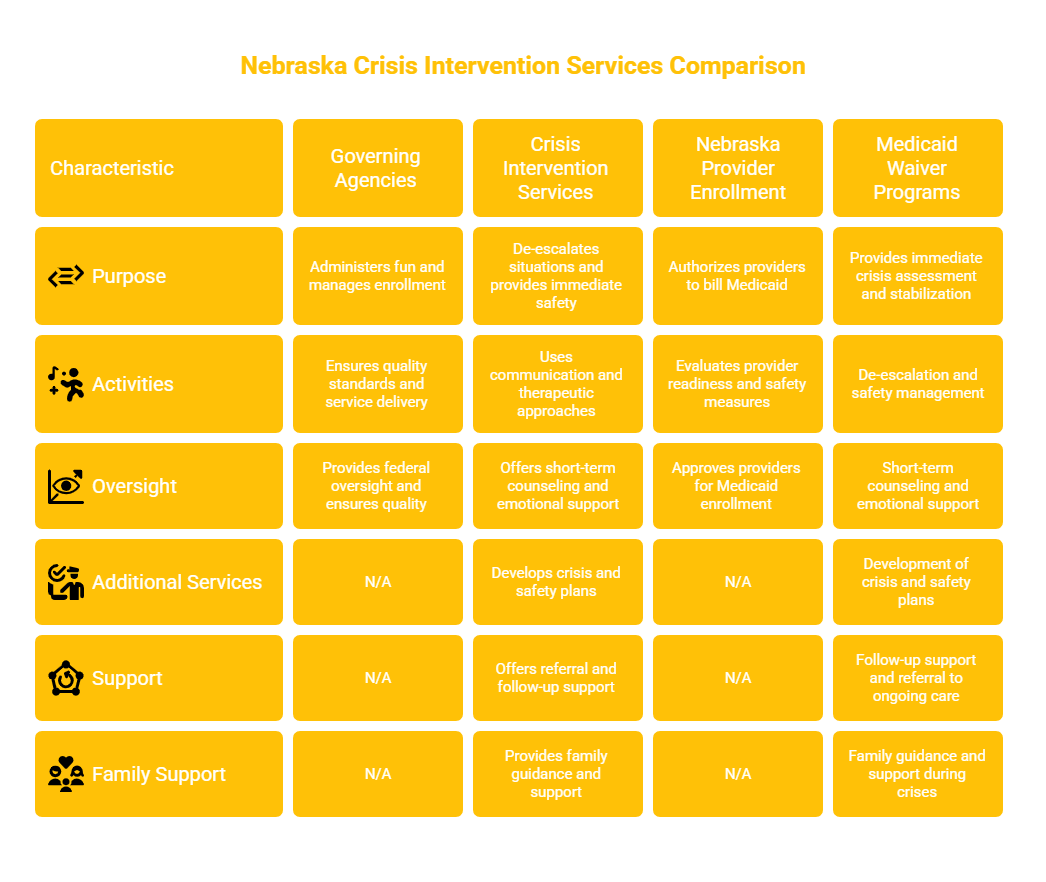
The provision of Crisis Intervention Services is governed by a multi-tiered regulatory framework. At the state level, the Nebraska Department of Health and Human Services (DHHS) serves as the primary authority, managing the administration of Medicaid waiver funding, provider enrollment, and service authorization. The Nebraska Medicaid and Long-Term Care (MLTC) Division works in tandem with DHHS to ensure that all delivered services meet state quality standards, participant protection requirements, and strict compliance metrics.
On a federal level, the Centers for Medicare & Medicaid Services (CMS) provides the oversight necessary to maintain the integrity of the HCBS waiver programs. Their role is to ensure that every Medicaid-funded intervention adheres to person-centered planning principles and national safety standards. Understanding the interplay between these agencies is critical for any provider seeking to maintain good standing and ensure consistent reimbursement for services rendered.
Establishing Core Crisis Intervention Service Components
Successful crisis intervention is defined by the ability to offer immediate stabilization while adhering to the individual's existing Individualized Service Plan (ISP). Providers are expected to deliver a specialized array of services that move beyond basic support to address complex behavioral and emotional triggers. These interventions must be documented meticulously to reflect the specific clinical approach taken during an incident.
Approved providers generally deliver the following essential services to participants in need:
- Crisis Assessment: Conducting a rapid evaluation of the situation, including identifying immediate risk factors and participant needs.
- De-Escalation Techniques: Utilizing evidence-based communication and therapeutic approaches to reduce agitation and emotional distress.
- Crisis Counseling: Offering immediate emotional support and short-term counseling to help the individual regain composure.
- Safety Planning: Collaborating with the participant to create or refine a plan to maintain safety during and after the crisis event.
- Emergency Stabilization: Managing acute symptoms or risky behaviors that threaten the stability of the participant's living environment.
- Referral and Follow-Up: Proactively connecting the individual to long-term therapy, psychiatric care, or other community resources.
- Family Support: Providing guidance to family members regarding coping strategies and the implementation of established safety protocols.
Requirements for Licensure and Provider Enrollment
Before an agency can begin serving participants, it must successfully navigate a rigorous enrollment process through the Nebraska Medicaid Provider Enrollment Portal. The foundation of this process involves establishing a formal business entity, obtaining an EIN from the IRS, and securing a Type 2 NPI. Furthermore, any agency providing clinical interventions must hold the appropriate behavioral health licensure from DHHS.
Operational readiness is a key factor during the enrollment review. Prospective providers must develop robust internal policies that govern every aspect of service delivery, from initial incident response to post-crisis reporting. Agencies must demonstrate that they have comprehensive general and professional liability insurance and that their staff members meet the stringent background, health screening, and specialized training requirements mandated by the state.
Staffing Standards and Clinical Competencies
The effectiveness of a Crisis Intervention program rests on the qualifications and training of its personnel. The Program Director must typically be a Master’s-level professional, such as a licensed mental health practitioner (LMHP) or a licensed clinical social worker (LCSW), bringing significant supervisory and clinical experience to the role. This leadership ensures that the agency remains clinically sound and compliant with state standards.
Direct service staff, including Crisis Intervention Specialists and additional LMHPs, must possess the appropriate educational background in human services or psychology. Beyond formal degrees, all staff are required to undergo comprehensive training. This includes, but is not limited to, trauma-informed care, mental health first aid, de-escalation tactics, and HIPAA compliance. Annual competency evaluations are mandatory to ensure that the team remains capable of responding to evolving participant needs.
Frequently Asked Questions
What specific Nebraska Medicaid waivers cover Crisis Intervention Services?
Crisis Intervention Services are currently authorized under several Nebraska Medicaid waivers, including the Aged and Disabled (AD) Waiver, the Traumatic Brain Injury (TBI) Waiver, the Developmental Disabilities (DD) Waiver, the Children with Disabilities Waiver, and the general Home and Community-Based Services (HCBS) Waiver.
What is the typical timeline for launching a new program?
The journey from business formation to service launch usually takes 6 to 9 months in total. This includes 1–2 months for business formation, 2–3 months for staffing and internal development, 60–90 days for Medicaid enrollment and readiness reviews, and a final 30–45 days for system setup and service implementation.
How does a provider ensure they are audit-ready for the state?
Audit readiness is maintained by keeping thorough documentation of all crisis events, including the initial assessment, the interventions applied, and the subsequent follow-up care. Providers should also maintain updated staff credentialing files, clear policy manuals, and accurate billing logs that map directly to the services outlined in each participant’s ISP.
Key Takeaway
Establishing a Crisis Intervention Services program in Nebraska is a rigorous process that demands high standards of clinical oversight, administrative organization, and regulatory compliance. By aligning agency policies with DHHS guidelines and ensuring staff are adequately trained in crisis stabilization and de-escalation, providers can successfully fulfill their role as critical components of the Medicaid HCBS framework, ultimately fostering greater stability and safety for vulnerable populations across the state.
WCG supports agencies in launching Medicaid-compliant Crisis Intervention Services in Nebraska, offering: Business registration, Medicaid enrollment, and behavioral health licensing support; Policy manual development for crisis response, safety planning, and de-escalation; Staff credentialing, training program templates, and risk management guidance; Medicaid billing setup and audit-prepared financial management; Branding, website development, and community outreach strategies; Quality assurance systems for crisis response and safety monitoring; and Collaboration with mental health professionals and community safety networks.
Last verified: October 2023. Disclaimer: This article is for informational purposes only and does not constitute legal or professional advice. Requirements for Medicaid providers are subject to change; always consult the Nebraska Department of Health and Human Services (DHHS) and official state policy manuals for the most current information.