CRISIS INTERVENTION SERVICES PROVIDER IN INDIANA
By Watchen Roberts · 2025-07-21 · 5 min read
Crisis Intervention Services in Indiana provide essential, short-term support for individuals navigating behavioral health emergencies, psychiatric crises, or severe emotional distress. By delivering immediate, trauma-informed stabilization, these services aim to resolve crises in the least restrictive environment, preventing unnecessary hospitalizations or long-term institutionalization while linking participants to ongoing community-based care.
Navigating the Regulatory Landscape: Governing Agencies and Oversight
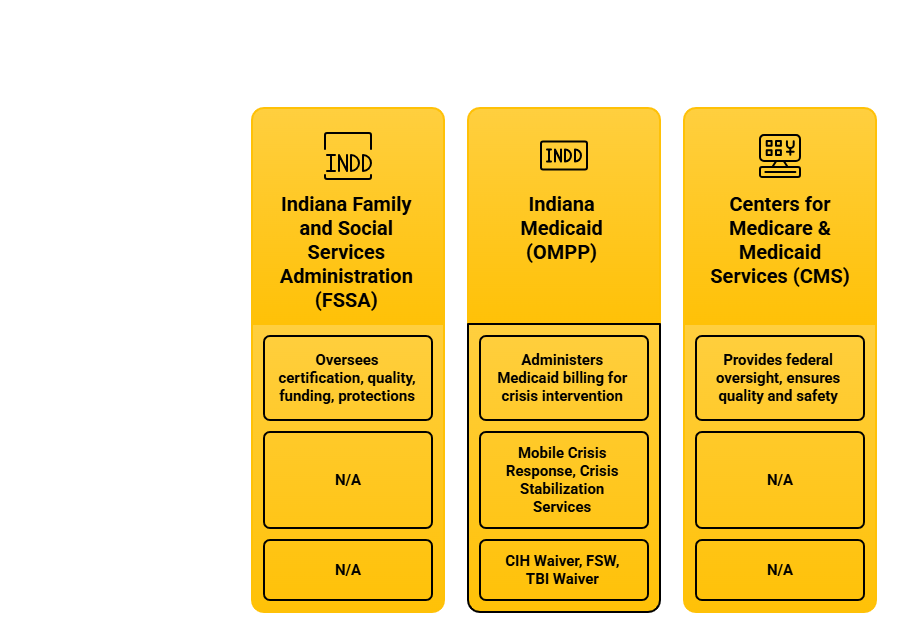
The delivery of Crisis Intervention Services in Indiana is strictly regulated to ensure high standards of safety, quality, and clinical efficacy. Providers must navigate a hierarchical oversight structure that spans state and federal jurisdictions. At the state level, the Indiana Family and Social Services Administration (FSSA), specifically the Division of Mental Health and Addiction (DMHA), acts as the primary authority. The DMHA is responsible for provider certification, ensuring that clinical interventions meet state-mandated quality benchmarks, and overseeing the operational integrity of crisis services.
Complementing the DMHA is the Indiana Office of Medicaid Policy and Planning (OMPP), which manages the complex administrative requirements for Medicaid billing. Because these services are often funded through a blend of State Plan and Home and Community-Based Services (HCBS) waiver resources, compliance with OMPP regulations is mandatory for financial sustainability. Finally, at the federal level, the Centers for Medicare & Medicaid Services (CMS) provides overarching guidance. CMS mandates that all Medicaid-funded interventions remain participant-centered and adhere to strict HCBS quality requirements, ensuring that participants receive dignified care during their most vulnerable moments.
Core Service Components and Clinical Delivery
Effective Crisis Intervention Services are characterized by their ability to provide rapid response and stabilization. Approved providers are expected to maintain a robust infrastructure that includes 24/7 crisis response capabilities, such as mobile crisis units, dedicated crisis telephone lines, or walk-in crisis centers. These platforms allow for immediate de-escalation, behavioral stabilization, and comprehensive risk assessment, ensuring that individuals receive help at the point of need rather than waiting for an appointment or emergency room intake.
Beyond the initial response, the service model focuses on continuity of care. Providers are responsible for safety planning, ongoing emotional support, and the coordination of referrals to long-term psychiatric care or residential crisis services. Documentation is a critical component of this process; every intervention must be captured in a formal Crisis Intervention Plan that remains integrated with the participant’s broader Individualized Service Plan (ISP) or Transition Plan. This holistic approach ensures that the crisis episode is not treated in isolation but as part of a participant’s long-term wellness journey.
- 24/7 crisis response through mobile crisis units, telephone crisis lines, or walk-in crisis centers
- Risk assessment, de-escalation, and behavioral stabilization techniques
- Safety planning, crisis counseling, and emotional support services
- Referral and linkage to ongoing treatment, residential crisis services, or psychiatric care
- Post-crisis follow-up services to monitor participant stability
Establishing Your Agency: Licensing, Certification, and Enrollment
Launching a Crisis Intervention agency requires a methodical approach to business formation and regulatory compliance. Before billing Medicaid, an entity must be properly registered with the Indiana Secretary of State and secure a federal EIN and a Type 2 NPI. The transition from a business entity to a recognized healthcare provider involves obtaining DMHA certification, which validates that the organization is prepared to handle mobile crisis response, stabilization units, or behavioral health center operations.
Once certification is secured, the organization must undergo the Indiana Medicaid Provider Enrollment process. This involves submitting detailed clinical documentation, proof of comprehensive insurance coverage, and evidence of organizational readiness. The DMHA conducts a thorough review of the provider’s staffing qualifications, emergency response protocols, and ability to protect participant rights. Only after these prerequisites are satisfied can the provider begin billing for crisis risk assessments, intervention sessions, and stabilization supports.
Building a Competent Clinical Team
The quality of crisis services rests on the expertise and training of the staff involved. A program must be led by a qualified Crisis Services Clinical Director or Supervisor who holds advanced licensure as an LCSW, LMHC, PhD/PsyD, or MD/DO. This clinical oversight is vital for managing high-acuity situations and ensuring that all interventions meet professional standards. Supporting the director, Crisis Intervention Specialists must hold relevant bachelor’s or master’s degrees and receive intensive training in trauma-informed care, suicide prevention, and de-escalation.
Furthermore, many models incorporate Peer Recovery Specialists who utilize their own lived experience to provide support and build trust with participants. Regardless of the specific role, every staff member must undergo rigorous background screenings and maintain up-to-date training in critical incident management and HIPAA compliance. Annual competency evaluations are required to ensure that staff remain adept in current crisis intervention best practices, reinforcing the program's commitment to participant safety.
Frequently Asked Questions
What is the typical timeframe for launching a crisis services agency?
The timeline generally spans several months, typically requiring 2–4 months for initial business formation and DMHA certification, followed by an additional 2–4 months for staffing and internal program development. Medicaid enrollment adds another 60–90 days, with final service launch and community integration requiring 30–45 days.
Which Medicaid programs reimburse for these services?
Reimbursement is available through the Indiana Medicaid State Plan for Behavioral Health Services and specific HCBS waivers, including the Community Integration and Habilitation (CIH) Waiver, the Family Supports Waiver (FSW), and the Traumatic Brain Injury (TBI) Waiver.
What documentation is required for the Medicaid application?
Applicants must provide business registration documents (Articles of Incorporation), EIN/NPI confirmation, DMHA certification, proof of professional and general liability insurance, and a comprehensive Policy and Procedure Manual covering clinical protocols, participant rights, HIPAA compliance, and staff credentialing records.
Strategic Implementation and Growth
Developing a successful crisis service provider requires more than just meeting administrative hurdles; it necessitates the creation of strong community partnerships. Coordination with local hospitals, law enforcement, and outpatient clinics is essential for a seamless referral system. Agencies should focus on establishing high-quality internal policies that ensure audit-readiness and superior clinical outcomes. By focusing on robust quality assurance and consistent service delivery, providers can establish themselves as reliable pillars of the Indiana behavioral health landscape.
Key Takeaway: Establishing a Crisis Intervention Services provider in Indiana is a complex, multi-phased process that requires strict adherence to DMHA certification standards, Medicaid billing regulations, and the assembly of a highly qualified, trauma-informed clinical team to ensure the highest standard of care for individuals in crisis.
Last verified: [Insert Date]. Disclaimer: This information is provided for educational purposes only and does not constitute legal or professional consulting advice. Requirements for Indiana Medicaid and DMHA certification are subject to change. Always refer to the official Indiana Family and Social Services Administration and CMS websites for the most current regulations and policy updates.