CRISIS INTERVENTION SERVICES PROVIDER IN DELAWARE
By Fatumata Kaba · 2025-07-07 · 5 min read
PROVIDING IMMEDIATE, SHORT-TERM SUPPORT TO STABILIZE INDIVIDUALS IN BEHAVIORAL OR EMOTIONAL DISTRESS
Crisis Intervention Services in Delaware provide essential, time-limited support designed to stabilize individuals experiencing acute emotional, behavioral, or psychiatric distress. By offering rapid, 24/7 access to professional care, these services function as a critical safety net that helps prevent unnecessary emergency room visits, psychiatric hospitalization, or institutional placement for eligible Delaware residents.
What Are the Governing Agencies for Crisis Intervention in Delaware?
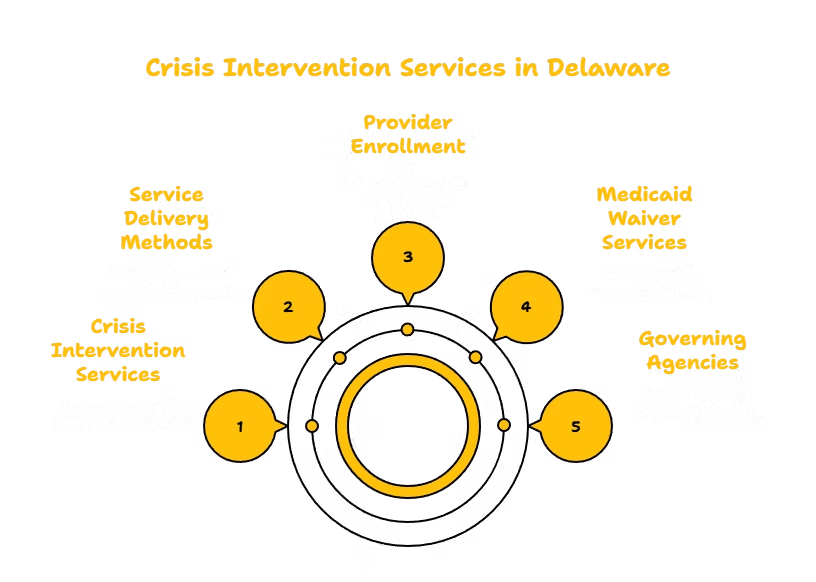
The landscape for crisis services in Delaware is overseen by a collaborative network of state and federal entities. The Department of Health and Social Services (DHSS) acts as the primary umbrella, with the Division of Substance Abuse and Mental Health (DSAMH) serving as the key regulatory body. DSAMH manages the behavioral health crisis framework and oversees the reimbursement pathways for Medicaid-eligible interventions, ensuring that providers meet the rigorous quality standards required for psychiatric and emotional crisis stabilization.
The Division of Medicaid and Medical Assistance (DMMA) is the central authority responsible for authorizing Medicaid billing. For specialized populations, particularly individuals with intellectual or developmental disabilities, the Division of Developmental Disabilities Services (DDDS) coordinates crisis services under the Lifespan Waiver. Simultaneously, the Centers for Medicare & Medicaid Services (CMS) provides federal oversight, ensuring that all community-based responses adhere to person-centered, HCBS-compliant standards that prioritize the autonomy and safety of the individual.
What Does the Crisis Intervention Service Model Entail?
Crisis Intervention Services are defined by their immediacy, accessibility, and focus on de-escalation. Because crises do not adhere to business hours, approved providers must maintain 24/7 availability to respond to calls or community-based events. The service model is designed to stabilize the environment, manage the acute behavioral symptoms, and bridge the gap between the crisis event and long-term wraparound care.
The scope of service includes a diverse range of responses tailored to the specific needs of the individual, whether through mobile, in-home, or telephonic modalities. Core provider responsibilities include:
- Mobile response teams capable of providing in-home behavioral de-escalation.
- Development of time-limited crisis stabilization plans and short-term behavioral support strategies.
- Telephonic or virtual crisis counseling to conduct immediate safety checks.
- Active coordination with emergency services, local law enforcement, and regional psychiatric facilities.
- Referral management to connect individuals with long-term behavioral health or disability-specific supports.
- Comprehensive documentation of the intervention, resolution strategies employed, and clinical outcomes.
How Do Agencies Meet Licensing and Provider Enrollment Requirements?
Launching a crisis intervention practice requires a structured approach to business formation and regulatory compliance. Before delivering services, an agency must be legally established within the state of Delaware and registered with the Division of Corporations. Providers are required to obtain a federal Employer Identification Number (EIN) and a Type 2 National Provider Identifier (NPI) to distinguish the business entity within healthcare systems.
The enrollment process is highly structured and demands significant attention to detail regarding clinical credentials. Prospective providers must apply for status as a Medicaid behavioral health provider through the Delaware Medical Assistance Portal (DMAP). For agencies intending to serve individuals through the DDDS, a specific Lifespan Waiver Crisis Provider Application must be completed. This process necessitates proof of liability, malpractice, and general business insurance to ensure the protection of both the agency and the individuals served.
What Documentation Is Necessary for Regulatory Compliance?
Maintaining a high standard of documentation is a prerequisite for both initial approval and ongoing participation in Medicaid-funded programs. An agency must maintain a centralized, HIPAA-compliant system that tracks all interactions and clinical outcomes. This system must be backed by a robust policy and procedure manual that serves as the blueprint for agency operations.
Required documentation for audit-readiness and operational integrity includes:
- Official articles of incorporation, business registration, and IRS EIN documentation.
- NPI confirmation and comprehensive staff credentialing files, including active Delaware licenses and background check records.
- Crisis response protocols detailing the triage system, safety planning, and emergency medical coordination.
- Standardized HIPAA and privacy forms, client consent documents, and incident reporting templates.
- Documented staff training logs covering trauma-informed care, de-escalation techniques, and mandatory abuse reporting.
- On-call schedules and logs evidencing 24/7 mobile response availability.
What Are the Staffing and Training Expectations for Providers?
The quality of Crisis Intervention Services rests heavily on the expertise and preparedness of the clinical staff. Roles typically include a lead Crisis Clinician, who must hold an active Delaware license such as an LPC, LCSW, LMFT, or Psychologist. These professionals are responsible for directing clinical interventions, managing high-risk scenarios, and providing trauma-informed guidance to the client during a crisis.
Agencies may also utilize Crisis Technicians or support aides who work under the direct supervision of licensed clinicians. Regardless of the role, all staff members must complete mandatory training programs that emphasize the safety and dignity of the individual. Key areas of focus include de-escalation, suicide prevention, HIPAA confidentiality standards, and the legal obligations of mandated reporting. Consistent, ongoing training is essential to maintain the high standards required for delivering mobile, community-based crisis support.
Frequently Asked Questions
What is the typical timeline to launch a crisis intervention service in Delaware?
The launch timeline varies based on the agency's existing infrastructure. Business formation generally takes 1–2 weeks, while Medicaid enrollment and staff credentialing can take between 30 and 60 days. Developing policy manuals and establishing referral networks typically requires an additional 2–4 weeks.
Can an agency serve both general Medicaid populations and DDDS Lifespan Waiver participants?
Yes, providers may serve multiple populations, but they must adhere to the specific requirements for each program. This often involves distinct enrollment processes through both the DMAP portal for general behavioral health and the specific application process for the DDDS Lifespan Waiver.
Are providers required to offer mobile services, or is telephonic support sufficient?
Crisis Intervention Services are designed to meet the intensity of the individual's need. While telephonic support is a core component, many service models require the capability to deploy mobile, in-home, or community-based response teams to ensure effective stabilization when remote interventions are insufficient.
Key Takeaways for Provider Agencies
Success in the Delaware crisis intervention sector requires a commitment to 24/7 operational readiness, rigorous adherence to state-mandated documentation standards, and the integration of licensed clinical oversight. By aligning business formation with the specific requirements of the DMAP, DSAMH, and the DDDS Lifespan Waiver, providers can establish sustainable, high-impact services that ensure individuals in Delaware receive timely, compassionate stabilization during their most vulnerable moments.
Last verified: 2024. This content is for informational purposes only and does not constitute legal or professional advice. Requirements for Medicaid and HCBS waiver participation are subject to change by state and federal authorities. Please consult with the Delaware Department of Health and Social Services for the most current regulatory guidance.