COMPANION CARE SERVICES PROVIDER IN MINNESOTA
By Fatumata Kaba · 2025-07-27 · 5 min read
Understanding Companion Care Services in Minnesota
Companion Care Services in Minnesota represent a critical component of the state’s Home and Community-Based Services (HCBS) framework, focusing on non-medical support for elderly residents and individuals living with disabilities. These services are specifically designed to mitigate the risks associated with social isolation while providing the assistance necessary to maintain an individual's independence within their own home or community setting.
By offering companionship and assistance with routine daily activities, these programs ensure that vulnerable populations can remain integrated in their communities rather than transitioning to institutional care. As a provider, your role is to deliver high-quality, person-centered support that aligns with the specific goals outlined in a participant’s Individual Service Plan (ISP) or Person-Centered Plan (PCP).
Regulatory Oversight and Program Administration
Navigating the regulatory landscape in Minnesota requires a clear understanding of the roles played by both state and federal entities. The Minnesota Department of Human Services (DHS) acts as the primary administrator for Medicaid programs, overseeing the HCBS waivers that authorize and fund companion care. Their directives ensure that services are delivered in compliance with federal standards set forth by the Centers for Medicare & Medicaid Services (CMS).
In addition to human services oversight, the Minnesota Department of Health (MDH) holds responsibility for the licensing and regulation of care agencies. Depending on the specific business model and service delivery approach, an agency must adhere to MDH standards to ensure participant safety and operational compliance. Maintaining a strong relationship with these regulatory bodies and staying current on state-issued bulletins is essential for long-term operational success.
- Minnesota Department of Human Services (DHS): Administers Medicaid programs, including companion care services under HCBS Waivers.
- Minnesota Department of Health (MDH): Licenses and regulates companion care agencies.
- Centers for Medicare & Medicaid Services (CMS): Provides federal oversight and ensures waiver compliance.
Core Components of Companion Care Delivery
Companion care is distinctly non-medical, meaning it focuses on emotional support, social engagement, and assistance with tasks of daily living that do not require clinical intervention. Providers should structure their service delivery to be flexible, ensuring that each participant receives support tailored to their unique circumstances as defined by their care plan.
Service delivery typically encompasses a variety of interactions aimed at improving the participant's quality of life. This may include helping with meal preparation, assisting with light household chores, or providing necessary supervision to ensure a safe home environment. Furthermore, companion care workers often facilitate community participation by accompanying clients to appointments or social outings, which is vital for those who may lack the mobility or confidence to navigate these environments alone.
- Social interaction and conversation to reduce isolation.
- Accompaniment to appointments, community events, and social gatherings.
- Assistance with light household tasks such as laundry or tidying.
- Meal preparation and assistance with eating.
- Support for hobbies, recreational activities, and personal interests.
- Safety supervision and routine companionship.
Provider Enrollment and Licensing Requirements
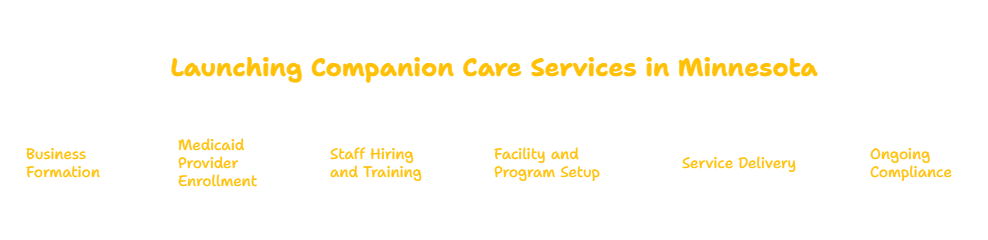
Establishing a Companion Care agency in Minnesota begins with formal business registration and the acquisition of necessary federal identifiers. Once the business is registered with the Minnesota Secretary of State, operators must obtain a Federal Employer Identification Number (EIN) from the IRS and a Type 2 National Provider Identifier (NPI) to function within the healthcare system. These foundational steps allow an organization to move toward formal Medicaid enrollment.
The enrollment process involves a rigorous verification of the agency’s capacity to serve the population. This includes demonstrating proof of liability insurance and securing the appropriate Companion Care Services License through the MDH. Following the initial pre-application contact with the DHS, applicants must submit comprehensive documentation, including detailed service descriptions and operating policies. Successful completion of these steps concludes with the assignment of a Medicaid provider number, officially authorizing the agency to bill for services provided under the HCBS waivers.
Managing Staffing and Operational Compliance
The quality of care provided is directly linked to the competency and training of your staff. A Companion Care Program Manager is typically required to oversee daily operations, requiring a background in social services, caregiving, or community support. This individual is responsible for ensuring that all staff members—often referred to as Companion Care Workers—meet the state’s requirements for high school-level education, background checks, and tuberculosis (TB) clearance.
Operational success relies on rigorous documentation practices. An agency must maintain a comprehensive policy and procedure manual that dictates how services are delivered and how risks are managed. This documentation should cover client intake procedures, detailed interaction logs, and ongoing satisfaction tracking. Regular staff training sessions on communication, empathy, and emergency response protocols are not merely best practices; they are essential requirements for maintaining your standing as an approved Medicaid provider.
- Required policies include: Client intake and service planning protocols.
- Safety and supervision guidelines for high-risk situations.
- Daily activity logs and interaction records.
- Documentation of services and client satisfaction logs.
- Staff training and ongoing supervision records.
Frequently Asked Questions
Which Minnesota Medicaid waivers cover companion care?
Companion Care Services are primarily accessed through the 1915(c) HCBS Waiver for the Elderly and Disabled, the Community Access for Disability Inclusion (CADI) Waiver, and the Brain Injury (BI) Waiver.
What is the typical timeline for launching a companion care agency?
The total duration is generally split into phases: business formation (1–2 weeks), Medicaid provider enrollment (60–90 days), staff hiring and training (30–45 days), and facility setup (2–4 weeks).
Are companion care workers required to have specific medical certifications?
No, companion care is non-medical. Workers must have a high school diploma or equivalent, complete required training in communication, safety, and emergency response, and pass background checks, but they do not need clinical medical licenses.
Key Takeaway
Successfully operating a companion care agency in Minnesota requires strict adherence to DHS and MDH regulatory standards, consistent documentation of services provided under approved waivers, and a commitment to high-quality, person-centered care. By focusing on the foundational requirements of Medicaid enrollment and maintaining robust staff training protocols, providers can ensure they remain compliant while effectively meeting the social and supportive needs of Minnesota's elderly and disabled populations.
Last verified: October 2023. Disclaimer: This information is for educational purposes only and does not constitute legal or professional advice. Requirements for Medicaid waivers and provider licensing are subject to change by the Minnesota Department of Human Services and the Minnesota Department of Health. Always verify the most current regulations directly with the appropriate state agency before making business decisions.