COMMUNITY TRANSITION SERVICES PROVIDER IN NORTH CAROLINA
By Fatumata Kaba · 2025-09-15 · 5 min read
FACILITATING SMOOTH TRANSITIONS FROM INSTITUTIONAL CARE TO COMMUNITY-BASED LIVING
Community Transition Services (CTS) in North Carolina serve as a vital mechanism for assisting Medicaid beneficiaries in moving from restrictive institutional settings, such as nursing homes and long-term care facilities, into sustainable community-based living arrangements. By providing comprehensive support—ranging from housing acquisition and household setup to ongoing skill building and resource coordination—these providers play a critical role in promoting participant autonomy and integration.
As authorized under the North Carolina Medicaid Home and Community-Based Services (HCBS) waiver programs, CTS providers must navigate a rigorous regulatory environment to ensure compliance with federal and state standards. This guide outlines the essential requirements for establishing a provider agency, adhering to governing standards, and navigating the enrollment process through the North Carolina Department of Health and Human Services (NCDHHS).
Which Regulatory Agencies Govern Community Transition Services in North Carolina?
The provision of Community Transition Services is governed by a multi-tiered regulatory framework designed to ensure participant safety and fiscal accountability. The North Carolina Department of Health and Human Services (NCDHHS) serves as the primary administrative authority, overseeing Medicaid waiver funding, provider enrollment, and reimbursement protocols. Coordination between state and federal entities ensures that services align with the person-centered care standards established by the Centers for Medicare & Medicaid Services (CMS).
Specific divisions within the state provide specialized oversight based on the needs of the populations served. The North Carolina Division of Health Benefits (NC Medicaid) is responsible for the management of the waiver programs and the oversight of provider participation. Additionally, the North Carolina Division of Mental Health, Developmental Disabilities, and Substance Abuse Services (DMH/DD/SAS) provides targeted oversight for transitions involving individuals with developmental disabilities and mental health needs, ensuring that support strategies are clinically appropriate and effective.
What Scope of Services Must an Approved Provider Deliver?
Community Transition Services are designed to remove barriers to independence, allowing individuals to successfully re-enter the community. Approved providers are responsible for a comprehensive array of logistical and support functions. These services are intended to be highly personalized, reflecting the unique living requirements and support needs of each participant. The scope of service generally includes, but is not limited to, the following core areas:
- Housing Assistance: Researching and securing affordable, accessible, and safe housing options.
- Household Setup: Procuring essential items including furniture, bedding, and kitchenware.
- Utility Connection: Facilitating the setup of essential services such as electricity, water, and internet.
- Personal Care Support: Arranging for necessary in-home care services prior to and during the transition.
- Skill Building: Providing training in independent living skills, including home maintenance and effective budgeting.
- Service Coordination: Linking the individual to ongoing local resources, healthcare providers, and community-based programs.
- Transportation Planning: Coordinating reliable transit solutions for medical and social engagement.
- Financial Management: Assisting with the technical aspects of rent payment, utility budgeting, and expense tracking.
- Documentation: Maintaining rigorous records of transition plans, service implementation, and outcomes.
How Do Agencies Meet Licensing and Provider Approval Requirements?
Launching a CTS provider agency requires a structured approach to business formation and regulatory compliance. Prospective providers must first establish a formal business entity registered with the North Carolina Secretary of State and obtain an Employer Identification Number (EIN) from the IRS. Furthermore, a Type 2 National Provider Identifier (NPI) is required for billing purposes. Professional and general liability insurance must be maintained at all times to protect both the agency and the individuals served.
Beyond basic business requirements, providers must demonstrate operational readiness. This involves drafting internal policies that address transition planning, community integration, participant rights, and safety management. Staffing infrastructure is also a critical component of the approval process; all employees must undergo thorough background checks, health screenings, and comprehensive training in transition support practices to ensure the agency meets the high standards required by NCDHHS and NC Medicaid.
What Is the Sequence for the North Carolina Provider Enrollment Process?
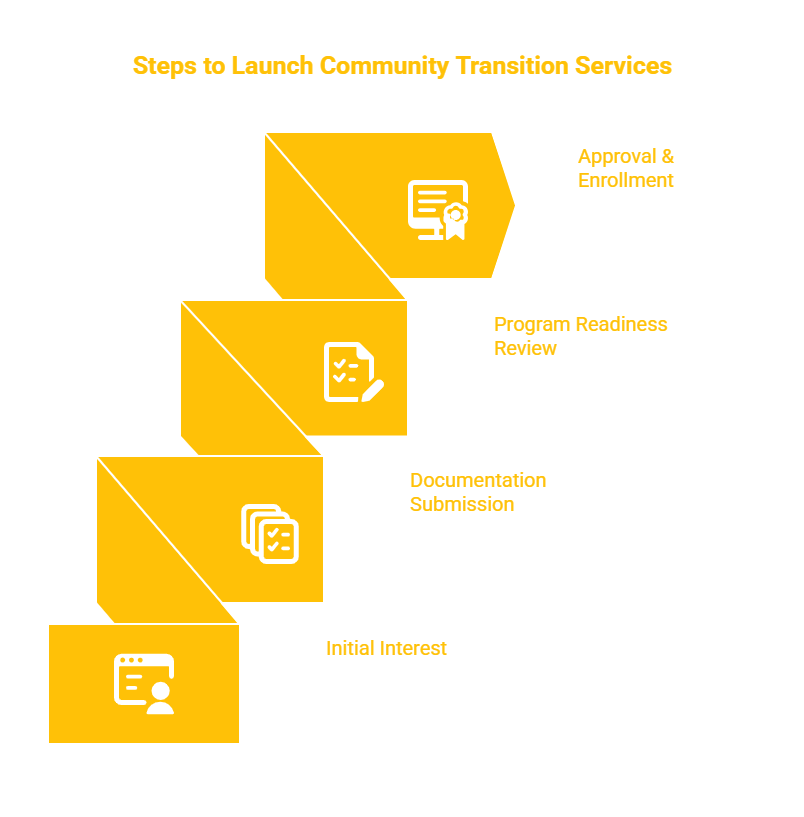
The enrollment process is handled through the NCTracks Provider Portal, which serves as the centralized hub for Medicaid provider participation. The process typically begins with an initial application for the specific HCBS waiver programs in which the provider intends to participate. Agencies must ensure that all documentation—including Articles of Incorporation, proof of NPI/EIN, insurance certificates, and detailed policy manuals—is complete and accurate before submission.
Once the application is submitted, a program readiness review is conducted by NCDHHS and the relevant divisions, such as DMH/DD/SAS. During this phase, officials evaluate the provider's ability to maintain safety standards, provide adequate staffing, and execute transition protocols effectively. Upon successful review and approval, the agency is formally authorized to bill Medicaid for services rendered using the designated billing codes assigned to the various HCBS waiver programs.
Which Medicaid Waivers Cover Community Transition Services?
Community Transition Services are integrated into several specific Medicaid waivers. Understanding the nuances of these programs is essential, as the eligibility criteria and documentation requirements may vary slightly between them. The primary programs include the Innovations Waiver, the Community Alternatives Program for Disabled Adults (CAP/DA), and the Community Alternatives Program for Children (CAP/C). Furthermore, services are available under the Traumatic Brain Injury (TBI) Waiver and the broader Home and Community-Based Services (HCBS) waiver framework.
Each of these programs operates under the authority of NC Medicaid and is subject to the federal oversight of CMS. Providers must be aware of the specific requirements of each waiver they choose to serve. Successful operation involves maintaining a deep understanding of these programs to ensure that every participant receives services that are authorized, billed correctly, and fully compliant with state-mandated clinical and administrative guidelines.
Frequently Asked Questions
What qualifications must the Community Transition Program Director possess?
The Program Director typically requires a Bachelor’s or Master’s degree in social work, human services, or healthcare administration. Candidates should also demonstrate professional experience in transitional care and community integration.
What is the standard timeline to transition from business formation to service launch?
The process generally spans 5 to 9 months. This includes 1–2 months for business formation, 2–3 months for staffing and development, 60–90 days for the NCTracks enrollment and readiness review, and 30–45 days for final billing setup.
Where can agencies find the necessary contact information for oversight agencies?
All administrative inquiries should be directed to the NCDHHS, with specific technical enrollment questions routed through the NCTracks Provider Portal. Additional support is available via the NC Division of Health Benefits and the Division of Mental Health, Developmental Disabilities, and Substance Abuse Services websites.
Key Takeaway
Establishing a successful Community Transition Services provider in North Carolina requires meticulous attention to administrative detail, a strong commitment to person-centered care, and strict adherence to the regulatory requirements mandated by NCDHHS and NC Medicaid. By aligning business operations with the guidelines set forth by the state and federal authorities, agencies can ensure long-term sustainability while making a meaningful impact on the lives of individuals transitioning to independent community living.
Last verified: October 2023. This information is provided for educational purposes only and does not constitute legal or financial advice. Providers should consult with NCDHHS and official state resources for the most current regulatory requirements and enrollment documentation.