COMMUNITY SUPPORT SERVICES PROVIDER IN MAINE
By Fatumata Kaba · 2025-08-12 · 5 min read
Community Support Services in Maine provide essential, person-centered assistance to individuals with intellectual disabilities or autism, enabling them to live more independently while actively participating in their local communities. By operating under MaineCare’s Home and Community-Based Services (HCBS) Waivers—specifically Sections 21 and 29—these services focus on developing life skills, fostering social connections, and facilitating meaningful daily routines for participants in home, day program, or community-based settings.
What Are the Governing Agencies and Regulatory Frameworks?
The delivery of Community Support Services in Maine is overseen by a collaborative network of state and federal agencies dedicated to ensuring that care meets strict quality and safety standards. At the state level, the Department of Health and Human Services (DHHS) provides overarching governance for disability services and community-based programs, ensuring that all initiatives align with state policy objectives.
The Office of Aging and Disability Services (OADS) serves as the primary administrator for the Section 21 and 29 Waivers, defining the specific service standards that providers must meet. Complementing this, the Office of MaineCare Services (OMS) manages the financial infrastructure, overseeing the provider enrollment process and Medicaid billing systems. Finally, the federal Centers for Medicare & Medicaid Services (CMS) sets the regulatory floor, ensuring that all services adhere to federal HCBS regulations and person-centered care mandates.
How Do Community Support Services Impact Client Development?
Community Support Services are designed to move beyond simple supervision, focusing instead on active engagement and the development of autonomy. These services assist individuals in developing and maintaining essential daily living skills, navigating public environments, and accessing community resources that enhance their quality of life. By focusing on individualized goals, these services help participants bridge the gap between basic support and true community integration.
Whether delivered in one-on-one settings or small groups, these services must always be strictly aligned with the participant's Person-Centered Plan (PCP). Direct Support Professionals (DSPs) act as the primary catalysts for this growth, facilitating activities that build personal relationships, encourage self-advocacy, and foster employment readiness. Providers must ensure that every service activity is purposefully documented to demonstrate progress toward the unique outcomes defined in the client's care plan.
- Development and maintenance of daily living skills.
- Facilitation of social, recreational, and leisure activities.
- Support for community access and employment readiness.
- Assistance with transportation, communication, and self-advocacy.
- Cultivation of personal relationships and consistent, meaningful routines.
What Are the Requirements for Provider Approval?
Entering the Maine market as a Community Support Services provider requires a structured approach to business registration and regulatory compliance. Prospective providers must first register their business entity with the Maine Secretary of State and obtain an Employer Identification Number (EIN) and a Type 2 National Provider Identifier (NPI). This foundational step is essential before engaging with the state’s healthcare procurement systems.
Once the business is legally established, providers must apply for enrollment as a MaineCare provider under Section 21 and/or Section 29. This process involves submitting comprehensive program descriptions, staff credentialing frameworks, and detailed policy documentation to OADS. While site-based services may require specific facility licensure, many community-based models do not require a separate license, though all must adhere strictly to established regulations regarding documentation, billing, and the protection of individual rights.
What Does the MaineCare Enrollment Process Entail?
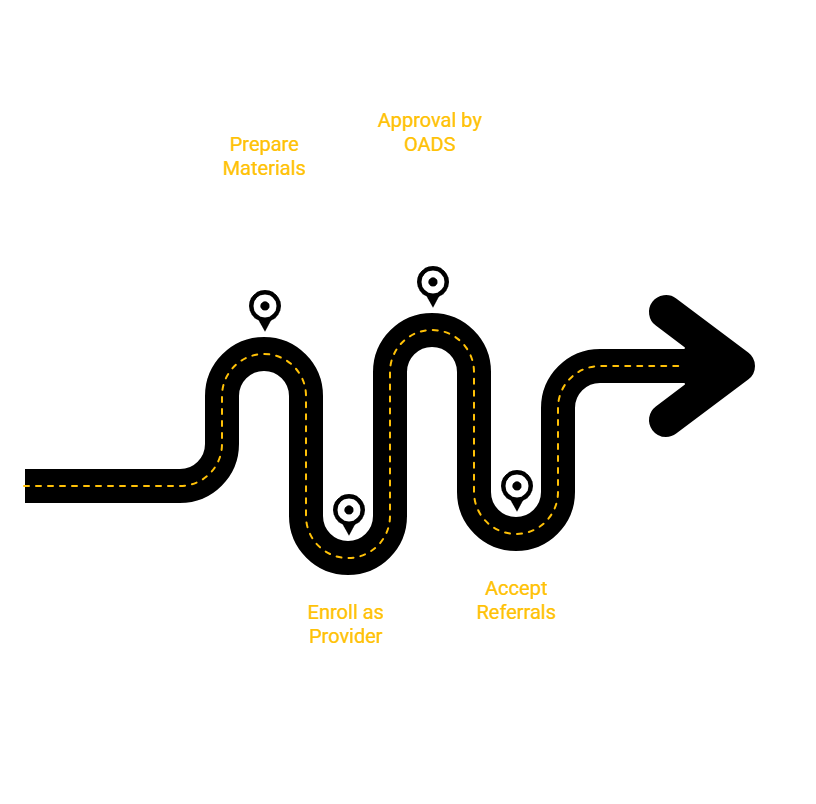
The journey from business formation to service delivery follows a specific sequence of state-monitored steps. The first phase involves preparing all necessary program materials, including a formal description of services, a defined mission statement, community engagement goals, and a transparent structure for staff supervision and training. These materials serve as the backbone of your application to OADS.
After preparing the documentation, providers must navigate the Health PAS Online portal to enroll as a MaineCare provider, specifically selecting the Community Support service category. Upon submission, OADS reviews the service design, staff qualifications, and organizational policies to ensure the program meets the needs of the intended population. Once approval is granted, the provider can begin accepting referrals from case managers and service coordinators, ensuring all delivery remains consistent with approved Person-Centered Plans.
- Registering business entity and obtaining NPI/EIN.
- Developing service design, mission, and staff supervision plans.
- Applying through the Health PAS Online portal.
- Securing OADS approval of policy materials and credentials.
- Connecting with case managers to receive client referrals.
What Are the Essential Staffing and Training Mandates?
The quality of Community Support Services is largely dependent on the competence and training of the workforce. Direct Support Professionals (DSPs) must meet minimum requirements, including being at least 18 years old, holding a high school diploma or GED, and passing thorough background checks. Furthermore, all DSPs must complete official DSP certification or training within six months of their date of hire to ensure they possess the necessary skills to support individuals with disabilities effectively.
For those in supervisory roles, such as a Community Support Coordinator, a bachelor’s degree or equivalent experience is typically expected. Regardless of role, all staff members must undergo rigorous initial and ongoing training. This includes Person-Centered Thinking (PCT) and Planning, medication administration (if applicable), First Aid/CPR, client rights, abuse prevention, mandated reporting, and HIPAA compliance. Maintaining meticulous records of these training sessions is a critical component of audit readiness.
Frequently Asked Questions
What is the difference between Section 21 and Section 29 waivers?
Section 21 is the Comprehensive Waiver designed for adults with intellectual disabilities or autism who require more intensive, long-term supports. Section 29 is the Support Waiver, which is designed to provide targeted, more flexible support for individuals with intellectual disabilities or autism who may require fewer hours of service compared to the comprehensive program.
Is a facility license required to provide these services?
No separate facility license is required if the services are delivered strictly in the community or the participant's home. However, if you intend to offer services in a specialized, site-based setting, you must meet the specific licensing requirements mandated by the state for such locations.
How long does the typical launch process take?
The launch timeline varies based on organizational readiness, but the average progression includes 1–2 weeks for business formation, 2–4 weeks for policy and hiring, 4–8 weeks for MaineCare enrollment and OADS approval, and 1–3 weeks for final staff training and onboarding.
Key Takeaways for Prospective Providers
Launching a Community Support Services program in Maine requires a precise balance of regulatory adherence, staff development, and person-centered service design. Success hinges on a clear understanding of the roles played by OADS and OMS, the rigorous documentation standards required for billing, and the mandate to ensure that every participant receives services that truly empower their integration into the community. By investing in robust policy manuals, qualified staffing pipelines, and consistent quality assurance processes, providers can build sustainable, impactful organizations that effectively serve Maine’s disability community.
Last verified: 2024. The information provided in this article is for educational purposes only and does not constitute legal or professional advice. Requirements for Medicaid waivers and state-specific regulations are subject to change; please consult directly with the Maine Department of Health and Human Services (DHHS) and the Office of Aging and Disability Services (OADS) for the most current guidance, regulatory updates, and official application materials.