COMMUNITY LIVING AND SUPPORT SERVICES PROVIDER IN DELAWARE
By Fatumata Kaba · 2025-07-07 · 6 min read
Understanding Community Living and Support Services in Delaware
Community Living and Support (CLS) services are essential HCBS interventions designed to foster independence, community integration, and quality of life for individuals with intellectual and developmental disabilities (IDD) in Delaware. By providing person-centered, hands-on assistance within an individual’s own home or shared living environment, these services ensure that participants can maintain their autonomy while receiving the necessary support to meet their unique daily needs.
These services operate under the authority of the Delaware Lifespan Waiver, which is meticulously managed by the Division of Developmental Disabilities Services (DDDS). For provider agencies, entering this space requires a commitment to federal and state compliance, person-centered care models, and rigorous documentation standards that align with the participant’s Individual Service Plan (ISP). Navigating this regulatory landscape is the first step toward delivering impactful care that fulfills both state mandates and the personal goals of the individuals served.
Navigating the Regulatory Oversight Landscape
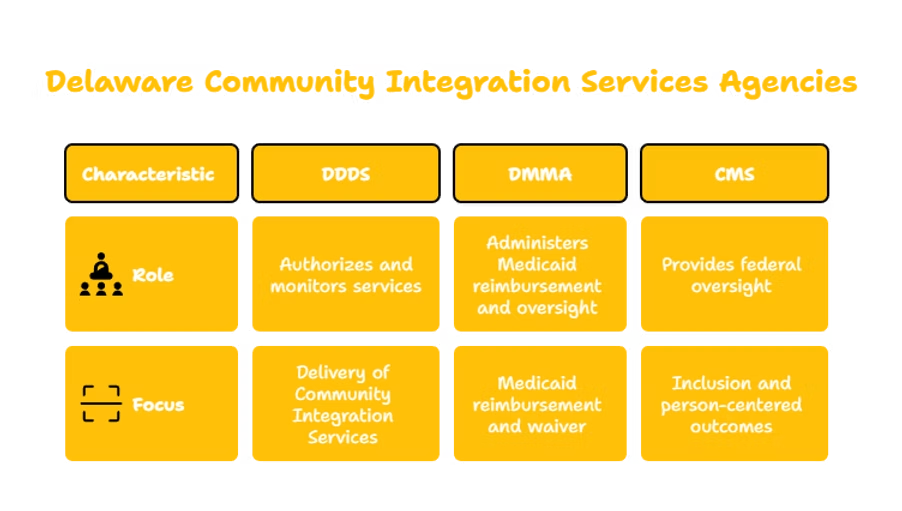
Delaware’s system of care for IDD services relies on a multi-layered approach to governance involving federal, state, and divisional oversight. Understanding the hierarchy of these agencies is critical for any provider attempting to maintain compliance and secure reimbursement. The primary regulatory body, the Delaware Division of Developmental Disabilities Services (DDDS), acts as the gatekeeper for the Lifespan Waiver, responsible for the initial approval and ongoing monitoring of all CLS providers.
Simultaneously, the Delaware Division of Medicaid and Medical Assistance (DMMA) oversees the financial architecture of the program. DMMA ensures that all billing practices meet the rigorous standards of the Medicaid program, ensuring that providers remain eligible for reimbursement. Finally, at the federal level, the Centers for Medicare & Medicaid Services (CMS) establishes the overarching standards for HCBS waivers, ensuring that states uphold the quality of care, participant safety, and community integration requirements expected of federally funded programs.
Establishing Your CLS Provider Agency
The journey toward becoming a recognized provider of CLS services begins with formal business entity establishment and federal registration. Providers must first register their business with the Delaware Division of Corporations to establish a legal corporate identity. Following state registration, obtaining a federal Employer Identification Number (EIN) from the IRS is necessary for tax and employment reporting. Furthermore, securing a Type 2 National Provider Identifier (NPI) is a mandatory step, as it serves as the unique identifier for your agency within the healthcare ecosystem.
Once the legal foundation is laid, agencies must focus on operational infrastructure, including the acquisition of necessary liability and workers’ compensation insurance. Building a HIPAA-compliant data management system is non-negotiable, as you will be handling sensitive medical and personal information daily. Agencies should also formalize their internal policies regarding staff supervision, background checks, and emergency management to ensure that every aspect of the organization is prepared to meet the high threshold required by DDDS for waiver enrollment.
The Provider Enrollment and Approval Workflow
The enrollment process is a structured, sequential path that ensures only qualified agencies enter the Medicaid network. The process begins with business formation and NPI procurement, followed by a formal application to the DDDS. This application is comprehensive; it requires a detailed submission that includes your agency’s organizational chart, a clear description of the CLS services you intend to provide, and evidence of staff qualifications and operational policies. This documentation serves as the roadmap for your agency’s compliance profile.
After your submission to DDDS, your agency may proceed to enroll in the Delaware Medicaid Provider (DMAP) portal to manage reimbursement claims. Success in this phase relies heavily on your ability to coordinate effectively with DDDS staff, case managers, and the various residential support teams already involved in a participant's care. Following approval, your agency enters the service delivery phase, where you will receive referrals and begin implementing support based on the unique needs outlined in each participant’s ISP.
- Register your legal business entity with the Delaware Division of Corporations.
- Obtain your EIN from the IRS and a Type 2 NPI.
- Submit your comprehensive provider application to the DDDS for Lifespan Waiver approval.
- Register with the DMAP portal to facilitate billing and reimbursement.
- Establish active communication with DDDS case managers to begin accepting participant referrals.
Core Staffing and Training Requirements
The quality of CLS services is fundamentally tied to the caliber of your staff, particularly Direct Support Professionals (DSPs). A qualified DSP must possess, at a minimum, a high school diploma or GED, alongside a clear background check and valid CPR/First Aid certification. Beyond these baseline requirements, successful providers prioritize staff who demonstrate a genuine capacity for person-centered care and hold experience in supporting individuals with disabilities. Ongoing training is a regulatory necessity, with curricula focused on safety, documentation accuracy, and HIPAA compliance.
In addition to front-line staff, a Program Supervisor is essential for maintaining operational integrity. This individual is responsible for the oversight of service quality, ensuring that all staff members are adhering to the ISP, and managing the documentation compliance that is so critical during state audits. Regular training in areas such as abuse prevention, mandated reporting, and emergency preparedness must be documented for every employee, as these records form the backbone of your agency's audit-readiness strategy.
Essential Documentation and Audit Readiness
In the world of Medicaid-funded services, documentation is equivalent to service delivery. If a task was performed but not recorded, it did not happen in the eyes of an auditor. Providers must maintain a robust Policy and Procedure Manual that covers every facet of the operation, from intake protocols and consent forms to daily activity logs and incident reporting. These policies must be living documents that staff understand and follow consistently.
Your record-keeping systems should be designed to support the specific goals defined in each participant's ISP. This includes medication tracking procedures for non-clinical reminders, detailed daily logs of community participation, and progress notes that demonstrate the effectiveness of your interventions. By keeping these documents organized and accessible, you not only ensure compliance with DDDS and DMMA regulations but also provide a higher standard of care for the individuals you serve.
Frequently Asked Questions
What is the primary role of a CLS provider under the Lifespan Waiver?
The primary role is to provide hands-on, person-centered support that enables individuals with IDD to live independently in their homes and communities. This includes assistance with ADLs, IADLs, social skill-building, and transportation, all guided by the participant's ISP.
How long does the provider enrollment process typically take?
The process involves multiple phases. Business formation generally takes 1–2 weeks, while the DDDS provider application and Medicaid enrollment phases typically each take 30–60 days, depending on documentation completeness and agency responsiveness.
Are there specific insurance requirements for CLS agencies?
Yes, providers are required to carry general liability and workers’ compensation insurance to protect the agency, its staff, and the individuals receiving services. It is recommended to maintain these policies at levels that meet or exceed state-mandated requirements for human services providers.
Key Takeaway
Successfully launching and operating a Community Living and Support services agency in Delaware requires a blend of rigorous administrative preparation, strict adherence to state and federal documentation standards, and a dedication to person-centered care. By focusing on compliant staffing practices, meticulous record-keeping, and proactive communication with the DDDS, providers can build a sustainable model that improves the lives of individuals with developmental disabilities while meeting all contractual obligations of the Lifespan Waiver.
Last verified: October 2023. Disclaimer: This information is for educational purposes and does not constitute legal or financial advice. Regulations for Medicaid waiver programs are subject to change. Consult with the Delaware Division of Developmental Disabilities Services (DDDS) and the Delaware Division of Medicaid and Medical Assistance (DMMA) for current policy updates and specific legal requirements for your agency.