COMMUNITY INTEGRATION SERVICES PROVIDER IN WISCONSIN
By Fatumata Kaba · 2026-04-14 · 5 min read
Community Integration Services in Wisconsin are specialized supports designed to empower individuals with disabilities, mental health conditions, or aging-related challenges to engage fully in their local communities. By facilitating participation in social, recreational, and civic activities, these services play a vital role in reducing isolation, fostering independence, and upholding the rights of participants to live and thrive in integrated settings. As a cornerstone of the state’s Medicaid Home and Community-Based Services (HCBS) framework, these services are essential for any provider seeking to make a measurable impact on the quality of life for Wisconsin residents.
Understanding the Regulatory Landscape and Agency Roles
Navigating the Wisconsin human services landscape requires a clear understanding of the roles played by various state entities. The Wisconsin Department of Health Services (DHS) serves as the primary authority, establishing the overarching Medicaid policies, service definitions, and quality oversight standards that all community-based providers must follow. Providers must operate within these guidelines to ensure continued eligibility and compliance with federal and state mandates.
Operational interaction typically happens through several key channels. ForwardHealth is the fiscal and administrative hub; it manages all provider enrollment, claims processing, and the reimbursement mechanics for the state’s waiver programs. Simultaneously, direct services are authorized by IRIS Consultant Agencies or Managed Care Organizations (MCOs), which hold the responsibility for approving individual service plans, monitoring participant outcomes, and authorizing specific community integration supports. Additionally, Aging and Disability Resource Centers (ADRCs) act as the primary point of entry, providing vital referrals and helping individuals navigate the resources available in their specific geographic areas.
What Are Community Integration Services and How Do They Work?
At their core, Community Integration Services are person-centered, meaning they are built entirely around the specific goals, values, and preferences of the participant. These services move beyond simple supervision, aiming instead to foster autonomy and self-advocacy in public settings. Whether a participant wants to join a local art club, volunteer at a community garden, or learn how to navigate public transit, the service is tailored to provide the level of support necessary to turn those goals into reality.
Covered activities under this service umbrella are diverse and highly individualized. Common supports include:
- Assisting with participation in recreation, arts, spiritual, or cultural events.
- Coaching for volunteer work and job-readiness activities.
- Facilitating attendance at community classes, workshops, or clubs.
- Developing social skills and identifying peer interaction opportunities.
- Providing transportation assistance and training to reach community sites.
- One-on-one coaching for navigating complex social or public settings.
- Training on the independent use of public resources like libraries, gyms, and transit systems.
- Supporting choice, autonomy, and advocacy in all aspects of public life.
Establishing Your Agency: Licensing and Enrollment Prerequisites
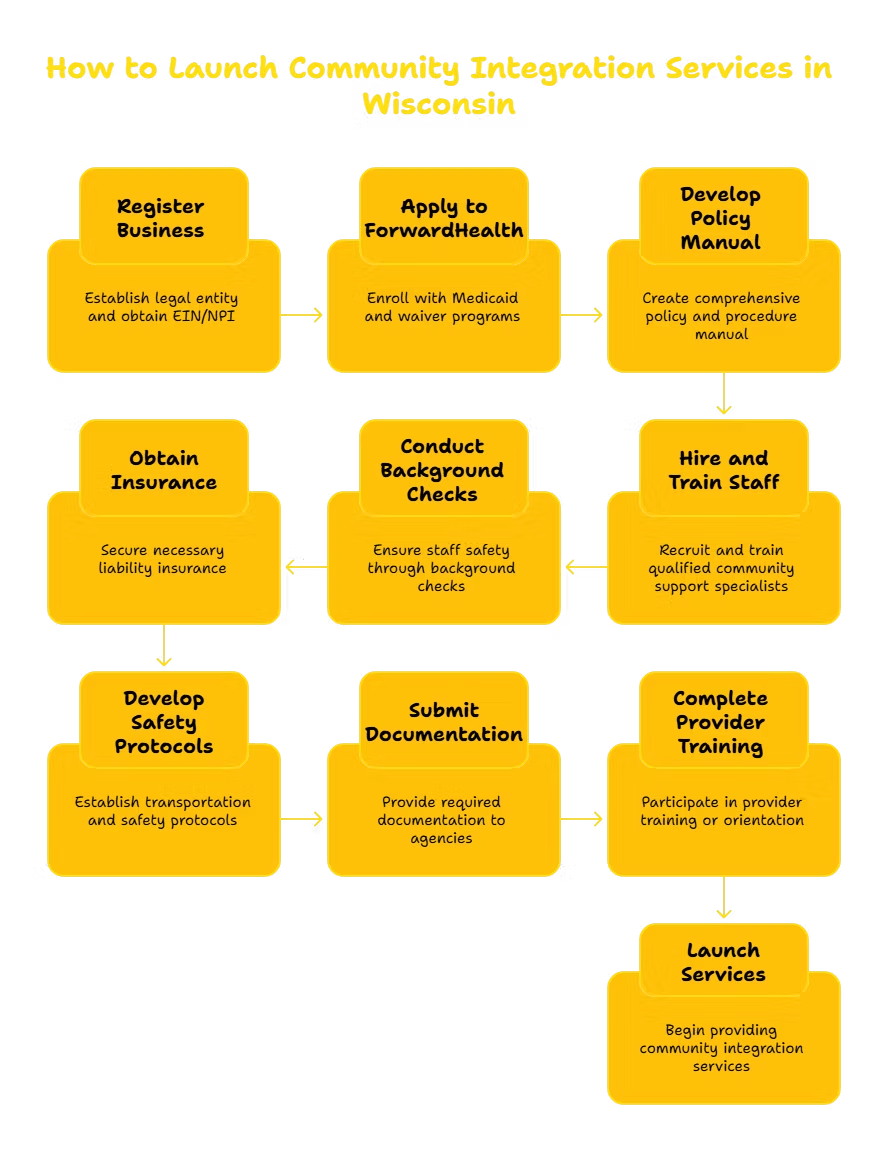
Launching a community integration agency in Wisconsin involves a systematic approach to business and compliance requirements. While many community integration services do not require specific clinical licensure, providers must still meet rigorous administrative and safety standards. Before initiating services, agencies must be formally recognized as legal business entities by the Wisconsin Department of Financial Institutions (DFI) and possess a Federal Employer Identification Number (EIN) and a Type 2 National Provider Identifier (NPI).
The enrollment process is structured to ensure that only qualified providers enter the Medicaid network. Prospective agencies must complete the ForwardHealth enrollment process and gain status with the relevant IRIS or MCO waiver programs. This involves the submission of a comprehensive Policy & Procedure Manual that covers everything from staff training protocols to safety and incident reporting. Establishing a robust documentation system at the outset is critical for future audits, ensuring that every service hour is accounted for in relation to the participant's Individualized Service Plan (ISP).
Developing the Internal Infrastructure for Quality Service
A successful community integration program relies heavily on the quality of its support staff and the rigor of its internal policies. The Community Support Specialist or Integration Facilitator is the face of the agency. These professionals require more than just technical skills; they need a strong grasp of person-centered practices, disability rights, and HIPAA compliance. Hiring should prioritize candidates who have direct experience supporting individuals with diverse needs in community settings, paired with the necessary CPR/First Aid certifications.
Internal documentation serves as the backbone of your agency's compliance. Beyond the core Policy & Procedure Manual, an agency must maintain:
- Person-centered planning and activity tracking logs.
- Strategies for social-emotional development.
- Clear policies regarding transportation coordination and client supervision.
- Protocols for protecting participant rights, choice, and dignity.
- Safety and risk mitigation procedures for outings and community events.
- Cultural competency and inclusion policies.
- Structured tools for engaging community partners and gathering feedback.
Navigating the Launch Timeline and Waiver Integration
The path from business registration to the delivery of services typically follows a multi-phase timeline. The initial phase—focused on business registration and the drafting of the Policy & Procedure Manual—can generally be completed within two to three weeks. Following this, agencies must dedicate 30 to 45 days to rigorous staff recruitment, background checks, and the implementation of onboarding and orientation training. The final phase involves enrollment with ForwardHealth and specific waiver programs, which can take between one to three months depending on processing times.
It is important to remember that services can only be billed once a participant has been referred and their specific service plan has been approved by the relevant MCO or IRIS consultant. Agencies should be prepared to operate within the frameworks of the IRIS Waiver, Family Care/Partnership programs, the Children’s Long-Term Support (CLTS) Waiver, and, in specific cases, programs like Children Come First (CCF) or PACE. Each of these programs has unique billing requirements and documentation nuances that must be clearly understood during the setup process.
Frequently Asked Questions
Is professional licensure required to provide Community Integration Services?
Licensure is generally not required for these specific services unless your agency plans to provide ancillary supports such as clinical interventions or personal care services. However, all providers must meet the specific administrative and safety requirements outlined by the Wisconsin Department of Health Services and maintain enrollment through ForwardHealth.
What qualifications are necessary for staff providing these services?
While requirements can vary, staff members should generally hold a high school diploma or GED, with an associate’s or bachelor’s degree in a human services field often preferred. Mandatory certifications include CPR and First Aid. Additionally, all staff must undergo criminal background checks and receive ongoing training in disability rights, person-centered practices, and HIPAA.
How are these services funded and authorized?
Funding is provided through Wisconsin’s Medicaid HCBS waivers, such as IRIS, Family Care, or CLTS. Before services can be initiated or billed, they must be identified as a functional need in the participant's Individualized Service Plan (ISP) and authorized by the participant's Managed Care Organization (MCO) or IRIS consultant.
Key Takeaway: Successful provision of Community Integration Services in Wisconsin hinges on a combination of strict regulatory adherence, robust staff training, and a deeply person-centered approach that honors the autonomy of the participant while ensuring safety and compliance within the Medicaid waiver ecosystem.
Last verified: October 2023. Disclaimer: This article is for informational purposes only and does not constitute legal or professional advice. Always verify current state statutes, ForwardHealth updates, and DHS policy guidelines before making business decisions or submitting enrollment documentation.