COMMUNITY INTEGRATION SERVICES PROVIDER IN OREGON
By Fatumata Kaba · 2025-10-06 · 5 min read
Community Integration Services in Oregon are essential Medicaid-funded supports designed to facilitate full participation in everyday community activities for individuals with intellectual and developmental disabilities (IDD), physical disabilities, or aging-related limitations. As a core component of the state’s Home and Community-Based Services (HCBS) Waivers and the K Plan (1915(k)) under the Oregon Health Plan (OHP), these services empower participants to build meaningful relationships, access public resources, and engage in diverse recreational, educational, and cultural opportunities.
Understanding the Governance of Community Integration Services
The delivery of Community Integration Services in Oregon is governed by a multi-layered regulatory framework involving state and federal oversight. At the state level, the Oregon Department of Human Services (ODHS)—through its Developmental Disabilities Services (DDS) and Aging and People with Disabilities (APD) divisions—is responsible for approving and monitoring providers, while also coordinating with local Community Developmental Disability Programs (CDDPs), brokerages, and APD case managers who authorize individual service plans.
The Oregon Health Authority (OHA) maintains broader oversight regarding Medicaid enrollment and ensures that all service delivery complies with the stringent standards of the Oregon Health Plan. Simultaneously, the Centers for Medicare & Medicaid Services (CMS) ensures that Oregon’s waiver and K Plan offerings remain in alignment with federal Medicaid guidelines. Finally, providers must ensure their business operations are legally recognized within the state by registering with the Oregon Secretary of State (SOS).
What Are the Core Components of Community Integration Services?
Community Integration Services are inherently person-centered, designed to reduce social isolation and foster greater independence by connecting individuals with their local environments. Providers act as facilitators, helping participants navigate the social and physical landscape of their communities. Through these services, individuals develop the confidence and skills necessary to move from passive participation to active, meaningful community membership.
Approved providers generally deliver the following support categories:
- Community Mapping & Access Planning: Identifying specific local resources and activities that align with an individual’s personal interests and goals.
- Social Skills Development: Coaching participants on communication strategies, social interactions, and how to navigate various public settings comfortably.
- Volunteer & Civic Engagement: Providing assistance in identifying, securing, and maintaining meaningful volunteer roles or community service projects.
- Recreational Activities: Facilitating attendance at cultural events, public parks, fitness centers, or faith-based gatherings.
- Travel Training: Instructing individuals on how to effectively use public transportation systems or navigate specific travel routes.
- Safety & Independence Coaching: Providing guidance on street safety, maintaining appropriate social boundaries, and emergency preparedness.
- Documentation & Progress Tracking: Maintaining accurate activity logs and outcome tracking to meet Medicaid-compliant reporting requirements.
How Do Agencies Become Approved Medicaid Providers?
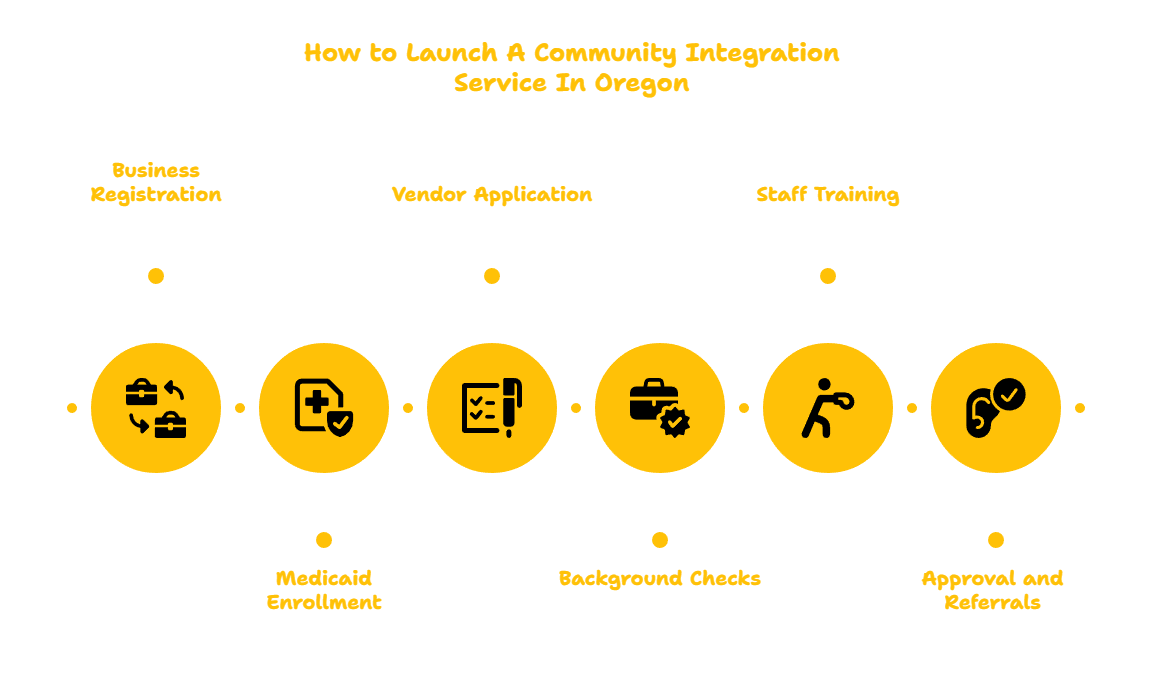
Becoming an approved provider is a systematic process that requires adherence to specific state and federal prerequisites. The journey begins with establishing the legal business entity and securing the necessary federal identifiers. Once the foundational business structure is in place, providers must navigate the enrollment process through the OHA Provider Portal to become recognized under the Oregon Health Plan.
Following OHA enrollment, the provider must seek specific vendor approval through the appropriate ODHS/DD or APD office, which will govern the types of referrals and authorizations the agency is eligible to receive. During this time, the agency must develop a comprehensive Community Integration Services Policy & Procedure Manual. This document is critical, as it must demonstrate full compliance with Oregon Administrative Rules (OARs) and provide a roadmap for service delivery, staff training, and risk management.
Essential Documentation and Compliance Requirements
Maintaining high standards of documentation is the cornerstone of a successful Community Integration agency. Regulatory bodies require providers to demonstrate that their services are both effective and safe. This begins with maintaining organized corporate records, such as Articles of Incorporation and evidence of active general liability and workers’ compensation insurance.
Beyond administrative records, the provider must maintain internal policies that safeguard participant rights and ensure service consistency. These internal documents should cover:
- Comprehensive activity planning and participant-specific risk assessment procedures.
- Clear protocols for transportation and the level of supervision provided.
- Evidence of participant choice and documentation of rights protections.
- Standardized daily documentation forms, service logs, and billing templates.
- Robust emergency protocols and safety guidelines tailored to various community settings.
- HIPAA compliance measures and clearly defined grievance reporting mechanisms.
Staffing and Professional Training Mandates
The quality of service delivery depends largely on the staff members acting as Community Integration Specialists or Direct Support Professionals (DSPs). Because these staff members operate in the community, they must be well-trained in person-centered planning, safety, and proactive communication. Program Coordinators are required to oversee staff performance, ensure scheduling is consistent with participant authorizations, and maintain rigorous documentation standards.
All staff members are mandated to complete a specific suite of training modules to maintain their eligibility to provide services. These requirements typically include abuse prevention and mandatory reporting training, HIPAA compliance and confidentiality modules, and instruction on activity safety and behavior support strategies. Furthermore, providers must implement a system for ongoing professional development, ensuring that all staff receive annual training updates and documentation refreshers.
Frequently Asked Questions
What is the typical timeline for launching a Community Integration program in Oregon?
Launching a program generally follows a sequence of phases: business registration and manual development typically takes 1–2 months, followed by a 2–3 month window for Medicaid enrollment and ODHS vendor approval. Staffing and training usually require an additional 30–60 days, with service activation beginning once the agency has received its first official service authorizations.
Which Medicaid waiver programs cover these services?
Services are authorized through several programs, including the Comprehensive Waiver and Support Services Waiver for individuals with IDD, the K Plan (1915(k)), APD waivers for aging adults and individuals with physical disabilities, and the Children’s DD Waiver for youth with developmental disabilities.
How does the agency demonstrate "person-centered" service delivery?
This is demonstrated through documentation that shows service activities are directly linked to the individual’s goals, preferences, and support needs identified in their service plan. Providers must maintain clear logs that reflect the participant’s choice and engagement in the activities provided.
Key Takeaway: Establishing a successful Community Integration provider agency in Oregon requires careful alignment with ODHS and OHA regulations, a firm commitment to person-centered documentation, and a well-trained workforce. By prioritizing compliance, safety, and the meaningful inclusion of participants, providers can effectively navigate the Medicaid landscape to deliver vital community-based supports.
Last verified: 2024. This information is intended for educational purposes and does not constitute legal or professional consulting advice. Prospective providers should verify current requirements directly through the Oregon Department of Human Services (ODHS) and the Oregon Health Authority (OHA).