COMMUNITY INTEGRATION SERVICES PROVIDER IN NORTH DAKOTA
By Fatumata Kaba · 2025-09-18 · 5 min read
Fostering Independence Through Active Community Participation
Community Integration Services in North Dakota are essential Medicaid-funded supports designed to empower individuals with disabilities, chronic conditions, and age-related challenges. By focusing on social inclusion, independent living skills, and active participation in local life, these services ensure that participants can live meaningful lives within their own communities rather than in institutional settings. Authorized under North Dakota Medicaid Home and Community-Based Services (HCBS) waiver programs, these services are a critical component of a person-centered care model.
For provider agencies, establishing a Community Integration program requires strict adherence to state and federal standards, robust documentation, and a clear commitment to fostering independence. This guide outlines the regulatory framework, enrollment pathways, and operational requirements necessary to launch and maintain a compliant, high-quality service provider agency in North Dakota.
Which Agencies Govern Community Integration Services?
The regulatory landscape for Community Integration Services in North Dakota is managed through a collaborative structure involving state and federal oversight. The North Dakota Department of Human Services (NDDHS) serves as the primary agency responsible for administering Medicaid waiver funding, overseeing provider enrollment, and managing the authorization and reimbursement process for these services.
Complementing the NDDHS, the North Dakota Medical Services Division (MSD) manages the specific Medicaid waiver services and monitors provider participation to ensure fiscal and clinical integrity. For programs targeting elderly individuals and adults with disabilities, the North Dakota Division of Aging Services provides additional oversight. At the federal level, the Centers for Medicare & Medicaid Services (CMS) sets the standards for quality, safety, and person-centered care, ensuring that all Medicaid-funded services align with federal mandates.
What Are the Core Components of Community Integration Programs?
The primary goal of Community Integration Services is to improve the social, vocational, and independent living capabilities of participants. By connecting individuals to local resources and social networks, providers help move participants away from isolation and toward active community membership. Approved service delivery models typically include a broad range of life-enrichment activities.
Providers are expected to deliver structured support that is tailored to the individual’s person-centered plan. This involves not only direct facilitation but also the systematic documentation of progress toward independence goals. The essential service elements include:
- Social Skills Development: Facilitating communication training, relationship-building, and interpersonal interaction.
- Community Participation: Organizing involvement in local clubs, recreational activities, and public events.
- Vocational Skill Building: Assisting individuals in preparing for community-based employment or volunteer roles.
- Independent Living Training: Teaching practical skills such as personal budgeting, navigation of public transportation, and daily decision-making.
- Peer Support Groups: Encouraging social connections through organized and structured group interactions.
- Advocacy and Self-Determination: Promoting the development of self-advocacy skills and personal choice.
- Transition Support: Assisting individuals moving from institutional settings back into the community.
How Do Providers Navigate Enrollment and Licensing?
The enrollment process for Community Integration Services is rigorous and demands meticulous preparation. Before initiating an application, an agency must be properly formed as a business entity with the North Dakota Secretary of State and secure an EIN from the IRS along with a Type 2 NPI. Providers must also maintain comprehensive general and professional liability insurance to protect both the agency and the individuals served.
Once the business structure is established, the provider must enroll through the North Dakota Medicaid Management Information System (MMIS). This process involves a formal program readiness review where the NDDHS and MSD evaluate the provider's operational capacity. The review focuses on safety protocols, staff qualifications, and the adequacy of the agency’s internal policies regarding community engagement and participant rights.
What Documentation Is Necessary for Compliance?
Maintaining compliance requires an organized documentation system that covers both administrative and clinical requirements. During the enrollment phase and subsequent audits, providers must demonstrate that they have a comprehensive Policy and Procedure Manual. This manual serves as the foundational document for daily operations and staff expectations.
The required documentation must be easily accessible for state oversight and quality assurance monitoring. Key components of this documentation library include:
- Business Registration: Official Articles of Incorporation or equivalent business licenses.
- Insurance Certificates: Evidence of current liability coverage.
- Service Protocols: Detailed guidelines for social skill development, personal safety, and advocacy.
- Staff Records: Up-to-date documentation of background checks, health screenings, and training history.
- HIPAA and Privacy: Clear policies regarding client confidentiality and grievance procedures.
- Outcome Tracking: Standardized forms for activity tracking and Medicaid billing reconciliation.
What Are the Staffing and Training Mandates?
Staffing quality directly impacts the success of community integration outcomes. The program requires specific roles to be filled by qualified professionals, starting with a Community Integration Program Director who typically holds a Bachelor’s or Master’s degree in social work, human services, or a related healthcare field. This leader is responsible for overseeing the clinical direction of the program and ensuring that the services provided meet the needs of the waiver participants.
Support staff, including Community Support Specialists, Peer Mentors, and Activity Coordinators, are the front-line representatives of the agency. Their training is paramount to maintaining the quality of care. Mandatory training curricula for all staff must encompass HIPAA compliance, participant rights, safety and emergency response procedures, and best practices in social skills facilitation and documentation. Annual competency evaluations are required to ensure that all staff remain proficient in delivering high-quality, person-centered services.
Frequently Asked Questions
Which Medicaid waivers cover Community Integration Services in North Dakota?
These services are authorized under the Aged and Disabled Waiver, the Technology Dependent Waiver, the Developmental Disabilities Waiver, and the broader Home and Community-Based Services (HCBS) Waiver framework.
What is the typical timeline for launching a new provider agency?
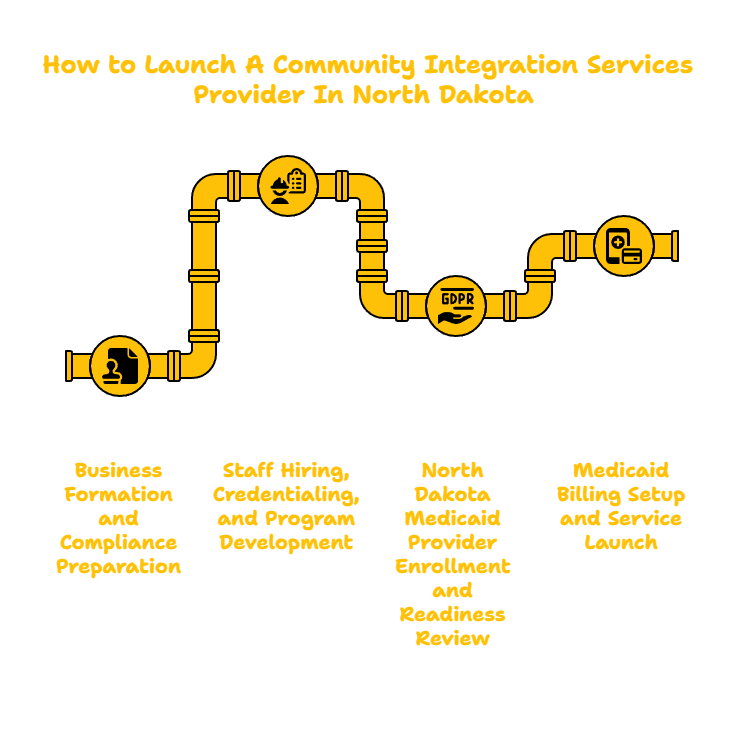
The timeline varies but generally spans 6 to 9 months. This includes 1–2 months for business formation, 2–3 months for staff hiring and development, 60–90 days for state enrollment and readiness review, and 30–45 days for final billing setup.
What is the primary role of the North Dakota MMIS in this process?
The North Dakota Medicaid Management Information System (MMIS) serves as the centralized portal for provider enrollment, service authorization, and the submission of claims for Medicaid reimbursement.
Key Takeaway
Successfully operating as a Community Integration Services provider in North Dakota requires a balance of administrative rigor, clinical expertise, and a commitment to the person-centered mission of HCBS waivers. By focusing on detailed documentation, staff training, and proactive compliance with NDDHS regulations, agencies can ensure they provide meaningful and sustainable support for individuals striving for independence.
Last verified: May 2024. This content is provided for informational purposes only and does not constitute legal or professional advice. Requirements for Medicaid provider enrollment are subject to change by the North Dakota Department of Human Services (NDDHS) and the Centers for Medicare & Medicaid Services (CMS). Agencies are encouraged to consult directly with state authorities for the most current regulatory updates.