COMMUNITY INTEGRATION SERVICES PROVIDER IN NEW HAMPSHIRE
By Fatumata Kaba · 2025-07-27 · 5 min read
Community Integration Services in New Hampshire represent a vital component of the state’s Medicaid Home and Community-Based Services (HCBS) waiver framework, designed to empower individuals with disabilities or chronic conditions to live independently while remaining active participants in their local neighborhoods. By facilitating personalized support for social engagement, life skills, and vocational exploration, these services help mitigate social isolation and foster meaningful community connections. Providers operating in this space must adhere to rigorous quality and person-centered standards mandated by the Department of Health and Human Services (DHHS) to ensure positive outcomes for program participants.
What Are Community Integration Services and How Do They Support Participants?
Community Integration Services are purpose-driven interventions authorized under various New Hampshire Medicaid HCBS waivers. The primary objective is to bridge the gap between clinical care and daily living, ensuring that individuals are not merely residing in the community but are actively integrated into its fabric. These services shift the focus from traditional institutional care to community-based settings, utilizing individualized plans to help participants achieve personal independence and self-sufficiency.
The scope of these services is intentionally broad to accommodate diverse needs, ranging from basic social skills training to complex life-skills development. By working within the participant’s Individualized Service Plan (ISP), providers ensure that every activity—whether it is learning to use public transportation, practicing budgeting, or participating in a community club—directly supports the participant's long-term goals for social inclusion and personal empowerment.
- Social Skills Training: Focused curriculum on communication, active listening, and self-advocacy.
- Community Access Support: Facilitating participation in civic, recreational, and social events.
- Life Skills Development: Practical instruction in meal planning, financial literacy, and personal care.
- Vocational Integration: Providing job shadowing and volunteer opportunities to prepare for employment.
Which Agencies Govern Medicaid Community Integration Programs in New Hampshire?
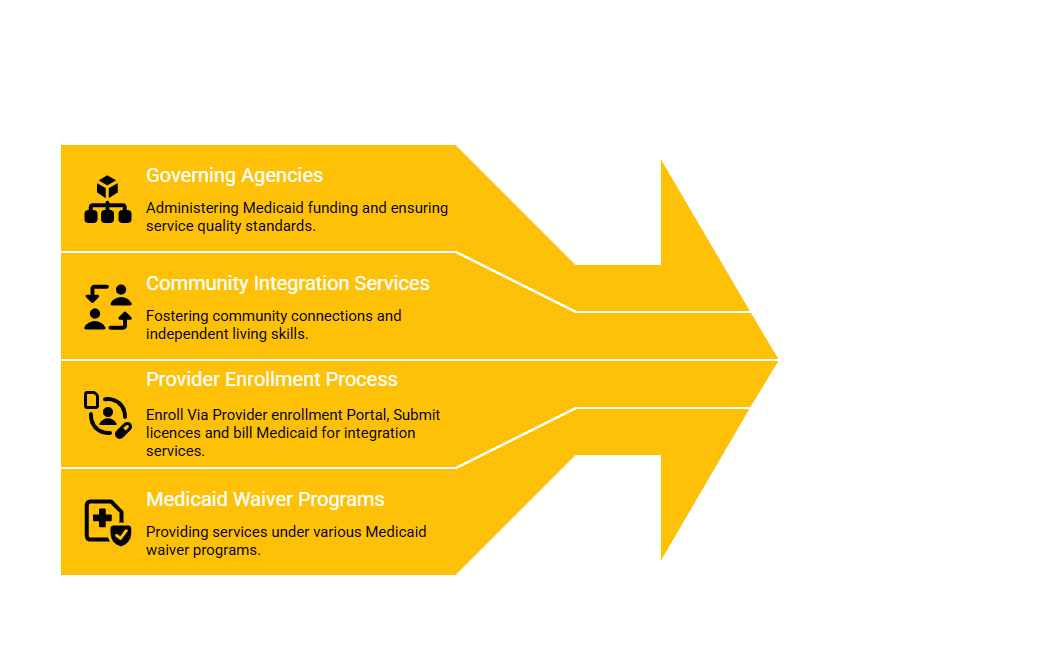
The regulatory landscape for Community Integration Services involves a tiered hierarchy of oversight, ensuring that both federal funding and participant safety are prioritized. At the state level, the New Hampshire Department of Health and Human Services (DHHS) serves as the primary authority, managing the overall administration of Medicaid waiver funding, provider enrollment protocols, and service reimbursement frameworks.
Within the DHHS, the Bureau of Elderly and Adult Services (BEAS) plays a crucial role in maintaining quality standards. BEAS is responsible for overseeing service delivery, conducting compliance reviews, and ensuring that providers follow the established rules of the HCBS waiver programs. Additionally, the federal Centers for Medicare & Medicaid Services (CMS) provides overarching regulatory guidance, ensuring that all state programs adhere to federal laws regarding person-centered planning, participant rights, and protection against abuse or neglect.
How Do Providers Navigate the Enrollment and Readiness Process?
Transitioning from a business idea to an approved Medicaid provider requires a structured approach to compliance. Prospective agencies must first ensure their business entity is legally established with the New Hampshire Secretary of State and possesses the necessary federal credentials, including an Employer Identification Number (EIN) and a Type 2 National Provider Identifier (NPI). This foundational work is the prerequisite for any interaction with the state’s healthcare reimbursement systems.
Once the legal structure is in place, providers must navigate the New Hampshire Medicaid Provider Enrollment Portal. This process involves submitting comprehensive documentation, including professional liability insurance, staff qualifications, and robust policy manuals. A critical stage in this journey is the Program Readiness Review, where DHHS and BEAS personnel assess the provider's capacity to deliver safe, compliant, and effective services. Approval is only granted when the agency demonstrates that its protocols for safety, participant advocacy, and clinical documentation meet state standards.
- Business Formation: Official registration and procurement of EIN/NPI.
- Policy Development: Drafting manuals for community access, safety, and HIPAA compliance.
- Readiness Review: Formal evaluation of the agency's operational readiness by DHHS/BEAS.
- Final Approval: Activation of billing codes for Medicaid reimbursement.
What Are the Essential Staffing and Operational Requirements?
Quality of care is inextricably linked to the caliber of the staff providing services. New Hampshire mandates specific educational and experiential benchmarks for key roles within a Community Integration agency. The Program Director, for instance, is expected to hold a bachelor’s degree in a human services discipline, reflecting the need for strong leadership in clinical and community-based support environments. Similarly, Community Support Specialists and Peer Mentors must undergo rigorous background screenings and health assessments before interacting with participants.
Operational success also relies on ongoing professional development. All staff must participate in training that covers HIPAA privacy rules, crisis intervention, and effective communication strategies. Agencies are responsible for maintaining detailed records of these trainings and conducting annual competency evaluations. By institutionalizing these requirements, providers ensure that their personnel remain equipped to handle the complexities of community living and the evolving needs of the individuals they support.
Frequently Asked Questions
Can providers bill for transportation under Community Integration Services?
Yes, Community Integration Services include support for travel planning and accessing community resources. Providers assist participants in navigating transportation options to ensure they can attend community activities as outlined in their Individualized Service Plan.
What documentation is required for the Medicaid Readiness Review?
Agencies must provide proof of legal business status, insurance, and a comprehensive Policy and Procedure Manual. This manual must address community access planning, staff training records, safety and crisis protocols, and HIPAA-compliant data handling procedures.
Which Medicaid waivers authorize these services in New Hampshire?
Community Integration Services are available under several programs, including the Choices for Independence (CFI) Waiver, the Developmental Disabilities (DD) Waiver, the Acquired Brain Disorder (ABD) Waiver, the In-Home Support (IHS) Waiver for Children, and the broader HCBS Waiver programs.
Launch Strategy and Support for New Providers
The timeline for launching a Community Integration agency is typically divided into four distinct phases, totaling approximately six to ten months. This includes the initial business formation (1–2 months), the hiring and program development phase (2–3 months), the formal state Medicaid enrollment and readiness review (2–3 months), and the final administrative setup for billing and service launch (1–1.5 months). Agencies that engage in thorough preparation often face fewer delays during the critical state review periods.
Waiver Consulting Group provides targeted assistance for agencies aiming to enter this sector. Our scope of work includes guiding administrative teams through the complexities of Medicaid enrollment, drafting compliant policy manuals for community safety and social integration, and establishing robust quality assurance frameworks. By ensuring all documentation and operational systems are audit-ready from the start, agencies can focus their resources on delivering high-quality, person-centered support to New Hampshire residents.
Key Takeaway: Establishing a successful Community Integration Services provider in New Hampshire requires meticulous adherence to DHHS and BEAS regulatory requirements, a commitment to high-standard staff training, and a clear, well-documented operational plan that prioritizes the participant's independence and social inclusion within the HCBS waiver framework.
Last verified: October 2023. Disclaimer: This information is for educational purposes and does not constitute legal or professional advice. Always verify current state regulations and policy requirements directly through the official New Hampshire Department of Health and Human Services (DHHS) and Medicaid provider portals before making business decisions.