COMMUNITY INTEGRATION SERVICES PROVIDER IN KANSAS
By Fatumata Kaba · 2025-07-24 · 5 min read
Community Integration Services in Kansas function as a critical Medicaid-funded support system designed to empower individuals with disabilities and chronic conditions to live, work, and thrive within their local neighborhoods. By facilitating skill development, social participation, and community navigation, these services ensure that participants move beyond home-based care to achieve genuine inclusion and self-determination under the KanCare program.
What is the Scope of Community Integration Services?
Community Integration Services are designed to bridge the gap between clinical support and daily life. The primary objective is to assist participants in acquiring the social, communication, and functional skills necessary to navigate public spaces, engage with peer groups, and utilize community-based resources effectively. These services are person-centered, meaning they must be explicitly tied to goals documented within an individual’s Individualized Service Plan (ISP).
Providers delivering these services are responsible for facilitating meaningful engagement rather than simply supervising presence. This involves active coaching, safety instruction, and the fostering of natural support networks. By focusing on outcomes such as increased self-advocacy and community presence, agencies play a vital role in the transition toward greater independence for Kansans with disabilities.
- Community-based skill development and supported outings
- Socialization and peer interaction opportunities
- Participation in volunteer activities, civic engagement, and clubs
- Training in using public transportation and community navigation
- Support in attending religious, educational, or recreational events
- Coaching for appropriate social behavior and safety in public settings
- Encouragement of natural support development and community memberships
Which Agencies Govern Kansas Medicaid Integration?
The regulatory landscape for Kansas HCBS services involves a multi-tiered oversight structure. At the state level, the Kansas Department of Health and Environment (KDHE) - Division of Health Care Finance oversees the fiscal and administrative aspects, including Medicaid reimbursement, provider enrollment, and claims management. Concurrently, the Kansas Department for Aging and Disability Services (KDADS) establishes the clinical and operational standards for Community Integration, ensuring that services remain compliant with state policy and quality benchmarks.
At the federal level, the Centers for Medicare & Medicaid Services (CMS) provides the overarching regulatory framework, ensuring that all state programs adhere to federal requirements for person-centered outcomes and community inclusion. Locally, Managed Care Organizations (MCOs) act as the primary operational partners. These entities authorize individual service plans, coordinate multidisciplinary care teams, and conduct ongoing quality assurance audits to ensure that the services delivered meet the established needs of the participants.
How Do You Meet Licensing and Enrollment Prerequisites?
Launching a Community Integration agency requires a structured approach to administrative compliance. Prospective providers must first solidify their business identity by registering with the Kansas Secretary of State and obtaining an Employer Identification Number (EIN) from the IRS, along with a Type 2 National Provider Identifier (NPI). These are the fundamental legal building blocks required for any entity seeking to contract with state health systems.
Beyond legal registration, agencies must develop a robust operational foundation. This includes the creation of a comprehensive Community Integration Policy & Procedure Manual that governs every aspect of daily service delivery, from participant rights and HIPAA compliance to emergency response and safety protocols. Once the internal infrastructure is established, the agency must enroll with the Kansas Medical Assistance Program (KMAP) and complete the credentialing process with each KanCare MCO to secure authorization for service delivery.
- Register business with the Kansas Secretary of State
- Obtain EIN from IRS and Type 2 NPI
- Enroll with Kansas Medicaid through the Kansas Medical Assistance Program (KMAP)
- Maintain liability insurance and staff coverage for community settings
- Create a Community Integration Policy & Procedure Manual
- Establish risk management, safety, and participant rights procedures
- Hire staff with experience in disability services, inclusion, or community outreach
What Are the Standard Staffing and Documentation Requirements?
Effective delivery of community-based services relies heavily on the qualifications and training of the staff. Community Integration Specialists and support workers are expected to bring relevant experience in disability advocacy, community outreach, or educational support to their roles. All personnel must clear comprehensive background checks and, if their role involves transporting participants, maintain valid driver’s licenses and clean driving records.
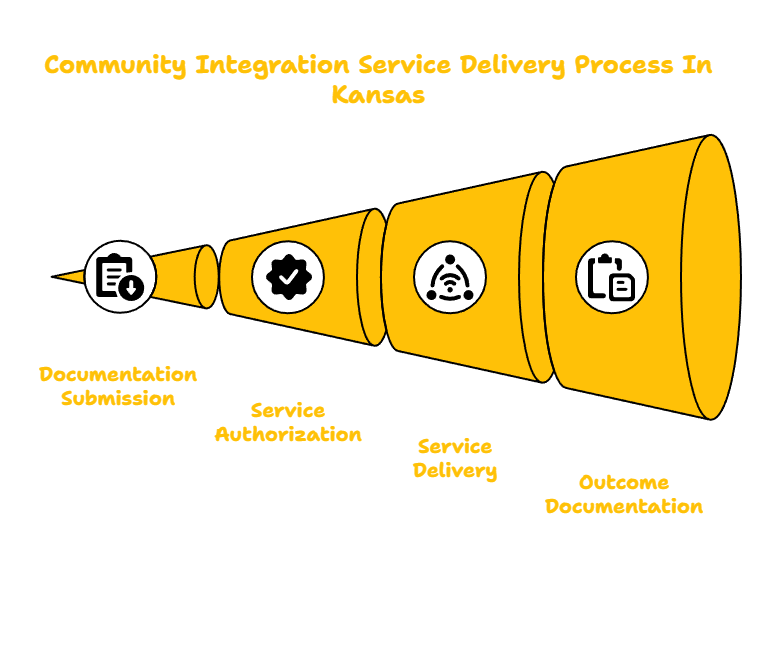
Documentation is the backbone of Medicaid reimbursement. Agencies must implement systematic processes for tracking progress toward ISP goals. This includes maintaining meticulous daily progress notes, incident reports, and staff training logs. Regular chart audits are conducted by MCOs to ensure that the services billed are not only documented but are demonstrably contributing to the participant's stated integration outcomes.
Frequently Asked Questions
Which Medicaid Waivers cover Community Integration services?
These services are authorized under several HCBS waivers in Kansas, including the Intellectual/Developmental Disability (IDD) Waiver, Brain Injury (BI) Waiver, Physical Disability (PD) Waiver, and the Autism Waiver. The Frail Elderly (FE) Waiver may also cover these services on a case-by-case basis depending on the participant's specific needs and plan of care.
How long does the launch process take?
The timeline for launching a program typically spans several months. Business formation and manual development generally require 1–2 months, followed by an additional 1–2 months for staffing and KMAP enrollment. MCO credentialing and safety planning typically require 60–90 days, with a final 30–45 day phase dedicated to ISP coordination and initial program launch.
Where can I find official contact information?
Providers should coordinate directly with the Kansas Department of Health and Environment (KDHE), the Kansas Department for Aging and Disability Services (KDADS), and the Kansas Medical Assistance Program (KMAP). Additionally, the three KanCare MCOs—Sunflower Health Plan, UnitedHealthcare Community Plan, and Aetna Better Health of Kansas—maintain specific portals for provider relations and service authorization.
Expert Assistance for Program Development
WCG supports disability service organizations, advocacy groups, and direct support agencies in developing inclusive, Medicaid-compliant Community Integration programs. The scope of professional assistance covers the full lifecycle of program development, including business registration, Medicaid enrollment, and MCO credentialing. Additionally, WCG aids in the development of essential infrastructure, such as Community Integration Policies, participant safety plans, and ISP goal-tracking templates.
By implementing robust quality assurance tools, agencies can better demonstrate engagement outcomes and maintain high levels of participant satisfaction. Whether establishing a new agency or refining the operations of an existing one, professional guidance ensures that administrative and clinical systems are fully aligned with the requirements set forth by KDHE, KDADS, and the respective MCOs.
Key Takeaway: Successful Community Integration providers in Kansas prioritize the intersection of regulatory compliance and person-centered care. By maintaining rigorous documentation, clear safety protocols, and a focus on measurable community engagement, providers can effectively navigate the KanCare system to deliver high-quality, sustainable support services.
Last verified: October 2023. Disclaimer: This article is for informational purposes only and does not constitute legal or professional medical advice. Always refer to the official KMAP provider manuals and KDADS policy bulletins for the most current regulatory requirements.