COMMUNITY INTEGRATION SERVICES PROVIDER IN INDIANA
By Watchen Roberts · 2025-08-13 · 6 min read
Community Integration Services in Indiana are specialized Home and Community-Based Services (HCBS) designed to facilitate the full inclusion of individuals with disabilities into the fabric of their local communities. As an authorized provider, organizations play a critical role in helping participants acquire, retain, and improve the adaptive, social, and self-help skills necessary for a more independent life, moving away from segregated center-based models toward genuine community engagement.
What Are Community Integration Services and Who Oversees Them?
Community Integration Services function as a bridge between a participant’s home and the diverse opportunities available in their local municipality. Unlike traditional day programs, these services are inherently mobile, focusing on the participant’s personal interests, vocational goals, and social development. The objective is to foster a sense of belonging by providing the necessary support for individuals to access libraries, volunteer sites, public transportation, and recreational venues.
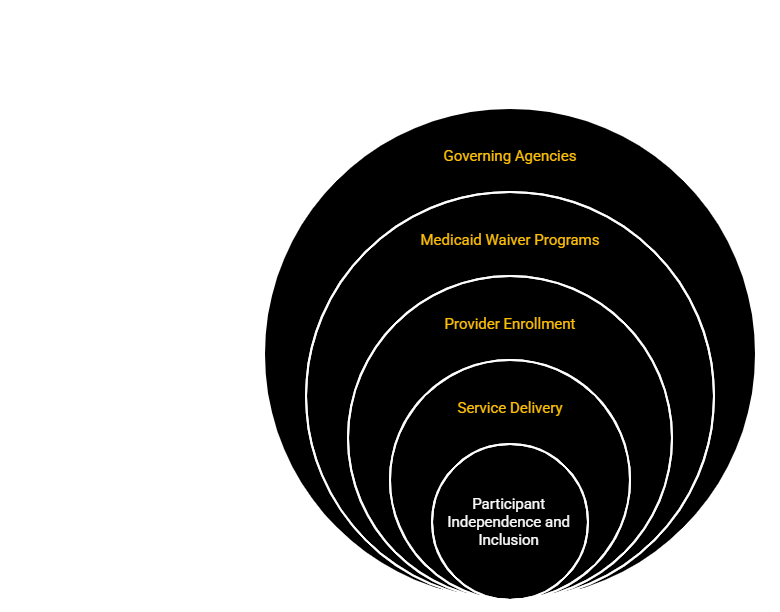
The governance structure for these services is robust, ensuring that providers meet stringent state and federal standards. At the state level, the Indiana Family and Social Services Administration (FSSA), specifically the Division of Disability and Rehabilitative Services (DDRS) and the Division of Aging, serves as the primary regulatory body. They manage provider enrollment, oversee service authorizations, and conduct quality monitoring to ensure participants receive services as dictated by their Individualized Support Plan (ISP). Simultaneously, the Indiana Office of Medicaid Policy and Planning (OMPP) facilitates the financial aspects of the program, including reimbursement and claims processing.
Nationally, the Centers for Medicare & Medicaid Services (CMS) provides the overarching regulatory framework. CMS ensures that all services comply with the HCBS Settings Rule, which mandates that settings must be integrated into the greater community and provide individuals with full access to the benefits of community living. Compliance with these federal standards is mandatory for any agency seeking to operate as a qualified Medicaid provider in Indiana.
How to Establish a Compliant Provider Agency in Indiana
Launching a provider agency requires a rigorous commitment to administrative and regulatory compliance. Before engaging with the Medicaid enrollment portal, prospective providers must first establish a formal business entity with the Indiana Secretary of State. This includes obtaining a Federal Employer Identification Number (EIN) from the IRS and a National Provider Identifier (NPI) Type 2 for the organization. These identifiers are non-negotiable prerequisites for billing Indiana Medicaid for waiver-funded services.
Once the business structure is established, the provider must build an operational foundation that satisfies FSSA DDRS service-specific standards. This involves developing a comprehensive Policy and Procedure Manual that addresses every aspect of service delivery, from participant intake and assessment to safety protocols and incident reporting. Providers must also secure the appropriate level of general and professional liability insurance to protect both the agency and the participants. The emphasis here is on creating a scalable system that prioritizes participant rights, person-centered planning, and fiscal accountability.
Navigating the Medicaid Enrollment and Readiness Review Process
The enrollment process is a multi-phased journey designed to ensure that providers are fully prepared to support the needs of the HCBS population. Initial registration occurs through the Indiana Medicaid Provider Enrollment Portal, where applicants must submit detailed documentation, including articles of incorporation, proof of insurance, and evidence of staff credentialing. Following the initial application, the agency will undergo a program readiness review.
During the readiness review, the FSSA (DDRS) evaluates the provider’s operational capacity. This includes a review of service activity plans, staff training records, emergency response procedures, and documentation audit systems. Because Community Integration Services involve navigating public spaces, the state places a high value on an agency’s ability to conduct thorough risk assessments and maintain high standards of supervision. Successful completion of this phase results in the issuance of Medicaid billing codes, allowing the agency to begin receiving reimbursement for hourly services provided to eligible participants under the Community Integration and Habilitation (CIH) or Family Supports Waiver (FSW).
Staffing Standards and Competency Requirements
The quality of Community Integration Services is fundamentally tied to the caliber of the personnel delivering the care. A successful agency must recruit and train a team that understands the nuances of community-based support. The Program Director or Community Integration Supervisor is typically required to hold a bachelor’s degree in a human services field and possess verifiable experience in community-based service delivery. This individual is responsible for overseeing the development of participant-specific goals and ensuring that staff are adhering to the ISP.
Direct Support Professionals (DSPs) serve as the frontline for service delivery. While a high school diploma or GED is the minimum educational requirement, all staff must undergo mandatory training before providing independent support. This training regimen includes:
- HCBS Settings Rule and Person-Centered Planning principles
- HIPAA compliance and the protection of participant privacy
- Abuse prevention and the reporting of critical incidents
- Community navigation techniques and public transportation safety
- Emergency response and basic first-aid protocols
Frequently Asked Questions
What are the primary waivers under which Community Integration Services are delivered?
These services are authorized under two primary Indiana Medicaid Waivers: the Community Integration and Habilitation (CIH) Waiver and the Family Supports Waiver (FSW). Each waiver has specific eligibility criteria and service limitations defined by the FSSA.
How long should a new agency expect the setup process to take?
The timeline varies based on organizational readiness, but the typical lifecycle includes 1–2 months for business formation, 1–2 months for staffing and internal policy development, 60–90 days for the Medicaid enrollment and readiness review, and 30–45 days for final billing system setup.
What does the "Readiness Review" actually examine?
The Readiness Review is a diagnostic audit conducted by the DDRS to ensure the provider has the infrastructure to meet safety, billing, and quality standards. Examiners verify that policies are not just written, but implemented, and that the agency has a concrete plan for tracking service outcomes and protecting participant rights.
Operationalizing Your Service Delivery
For agencies looking to specialize in these services, success depends on the integration of technology and person-centered planning. Implementing robust documentation systems ensures that every community outing is tracked, verified, and mapped to the participant’s individualized goals. Whether a participant is learning to use a bus, volunteering at a local food bank, or attending a community college class, the provider must demonstrate that the service is actively fostering independence rather than simple supervision.
WCG supports day service agencies, employment support providers, and community-based organizations in launching Medicaid-compliant Community Integration Services. The scope of work involves business registration, development of the mandatory Policy & Procedure Manual, staff credentialing, and the creation of audit-ready billing systems. Building these systems from the ground up requires attention to detail regarding state-mandated documentation and a clear focus on the unique, person-centered needs of the individuals served by Indiana’s Medicaid waivers.
Key Takeaway: Establishing a Community Integration Services agency in Indiana requires strict adherence to DDRS and OMPP regulations, a commitment to the HCBS Settings Rule, and the development of rigorous internal policies to ensure safety and quality. By focusing on compliant, person-centered service delivery, providers can effectively support the independence and social inclusion of individuals served by the CIH and FSW waivers.
Last verified: May 2024. This content is for informational purposes only and does not constitute legal or professional advice. Requirements for Medicaid provider enrollment in Indiana are subject to change by the FSSA and OMPP. Providers should consult directly with official state resources and the Indiana Medicaid Provider Enrollment Portal for the most current regulations and policy updates.